The Story of the Kamiya Family

Here is the story of my family as written by my dad, Kenneth Kamiya.

The story for the Kamiya family in Hawaii begins with the immigration of my grandfather, Kama Kamiya, in 1911 to work for Honokaa Sugar Company in Hawaii. He was 23 years old. In 1913 grandmother, Manchi, arrived in Hawaii and the family settled in Kukuihaile, Hawail.

Tomonobu Kamiya as a young boy in Okinawa

During this period my father, Tomonobu, was too young to immigrate to Hawaii and he remained in Okinawa to be raised by an aunt until 1924 at which time he joined his parents in Hawaii at the age of 17.

The aunt who raised my grandfather

As with other immigrant families who found plantation work to be very demanding, the family moved to Oahu in 1925 to begin working in the dairy business. Some of the original dairies were located in the present day Waikiki area, but as development progressed in Honolulu dairies were established on the windward side of Oahu and the family followed. It is a known fact that because of all the dairy farms in Kaneohe, day or night you knew you were entering Kaneohe because it had that distinct dairy odor of abundant cow manure.

The early days of the dairy in Kaneohe

My father continued to work with dairies owned by prominent Portuguese dairymen such as Campos, Souza, and Freitas. His brothers, Tom, Don, and Larry, also continued to work in the dairy business and eventually established the Kamiya Dairy which was located near the present day Halekou Street and across the present day Hawaiian Memorial Park Cemetery. This dairy eventually moved to Maili, Oahu, and became one of the largest dairy in Hawaii.

Mom and dad’s marriage was a traditional “arranged” marriage and this occurred in 1935, about the time by older brother, Paul, was born. In 1941 my parents eventually settled on a farm site in Kaneohe where the Keaahala subdivision is now located. Here, my parents raised various crops including taro, hogs, cows, bananas, papaya, and vegetables. I was born at this time and my sister, Ruth, and brother, Lawrence, were born in 1946 and 1947 respectively. It should be noted that Mr. T. lida generously helped my parents build their first home at this site.

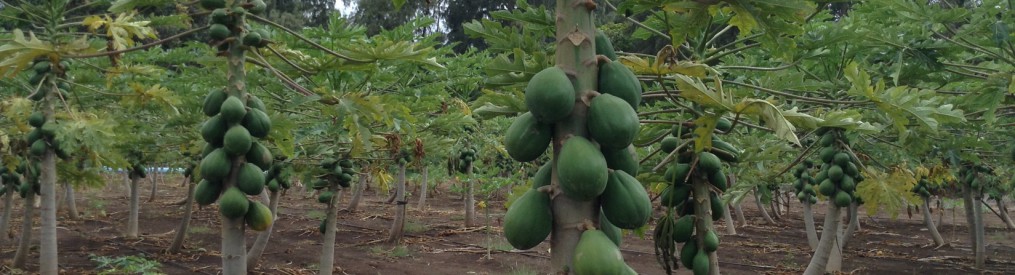
Banana fields

Although the family was poor we had a great time living on a farm. Kaneohe was a small town and neighbors and friends were always willing to lend a hand for whatever needed to be done. My recollection of Kaneohe was that it represented a true community.
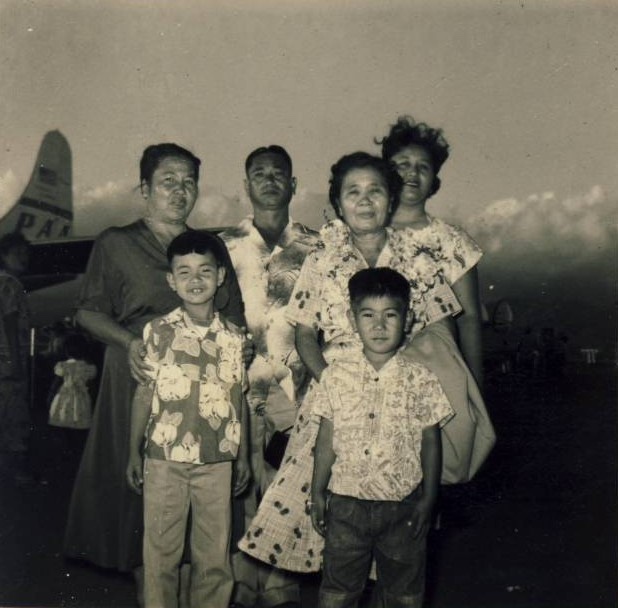
People took care of each other and crime was almost nonexistent. An indication of this fact was houses and cars were never locked. Fishermen shared their catch, farmers shared their produce, and tradesmen helped put things together. Conversations in gatherings included storytelling, history, and the sharing of good happenings. Of course, the bad things were also covered.

Because the location of our farm was mauka of Kaneohe stream and because stream flows during heavy rains prevented bridge building the stream was constantly graded to allow crossing and access to our house. As children, it was always a thrill riding a car or truck at this crossing. It was more thrilling if you had to walk home and cross on a 12X12 beam. Night time foot crossing was all the more thrilling. But as children, flooding in Kaneohe was always welcome because it gave us a valid excuse to stay home from school and play.

Growing up in Kaneohe elicits fond carefree and fun memories. In my formative years Kaneohe was “country” with lots of open spaces, a small tidy town that served the needs of the community and with abundant opportunities for adventurous activities that would test the creativity of country kids with limited funds. There were open pastures with lots of guava trees and as we explored we all knew which trees were “sweet guava” and which trees were good for mom to make guava jelly.

There were many streams and these streams provided unlimited fun and activity. For one, we could fish for crayfish and with an empty coffee can and a little salt the boiled crayfish would make a modern day gourmet jealous. And to fish for crayfish all that was needed was a short pole, a length of cotton string saved from the rice bags, a suitable pebble, and handful of dried shrimp or ebi for bait. Lower this rig in a calm part of the river and within seconds you would have a crayfish dangling on the line. If mom didn’t want to part with a handful of ebi, one single ebi was enough to catch the first crayfish which was then used for bait to catch everything therafter.

The river also provided fishing for oopu and “puntat” or catfish. Upstream large mouth oopu was the best for pan frying. Here again a short pole that was easy to maneuver in the underbrush, 20# sugi line fitted with a lead sinker and a good size hook was all that was needed. A can with earthworms served as bait. Of courses having a sharp eye to “spock the bugger” was also necessary. Carefully lower the hook baited with the earthworms in front of the oopu without scaring it and “wham” you had a one pound oopu hanging.

For “puntat” or catfish a different method was used. Using a longer bamboo pole with heavier sugi, sinker, hook and earthworm bait and at night we could hook a small number of catfish. I believe that this fishing method was more of a excuse to horse around on the river at night. 

Incidentally, we soon learned from our Filipino friends that to catch catfish just go after them with bare hands in the holes on the river banks. Stick your hand in the holes, feel for their sharp spines, put the one spine between your thumb and index finger and the second spine between your ring and little finger, squeeze and pull the fish out.

Very simple if you were brave enough.

To me catfish was not very tasty or eye appealing so if we did catch any catfish we tried to sell them to the old Chinese workers.

Along with oopu, crayfish, and catfish the river also provided for lots of frogs or bull frogs as differentiated from toads. In the evening during certain seasons it was common to hear the frogs sing their lullabies. This was the best time to go “frogging.” As soon as night fell, with a strong flashlight in hand and a bag to hold the catch, wade in the river and shine the light to locate the frogs; when one is located carefully hold the light on it to keep is mesmerized and with the other hand grab it from the back. You had to be quick and certain when you grab because the frogs can be slippery. If lucky the catch was sold to any vendor willing to take it. We ourselves were adverse to eating frog legs; only rich people considered it gourmet food. How we missed out!

Aside from the fishing, the river also played an important role in the lives of children growing up in the country. Because there were no public swimming pools back then I learned how to swim in the river. We learned from the older kids who made the river a natural water playground. Kaneohe was fortunate because of the many rivers flowing from the Koolaus to the bay. At certain spots due to the contour of the land and artificial dams built to accommodate irrigation for the rice paddies and taro fields, the river created deep pools perfect for swimming.

My dad harvesting grasses for his waterbull

We had the Haiku pool just below the present day Kahekili Highway, “green lake” pool near Benjamin Parker School, and of course “blue lake” pool next to our farm. As long as the river flowed and the swimming holes remained intact most of the neighborhood kids made the river their playground throughout the year. It was never ending fun. 

Pools that had high banks were perfect for high dives, “Buddha jumping,” and special “Paea” jumping the object of which was to create a specific directed splash. As with all creative children we also enhanced these swimming holes by damming the downside with rocks and branches.

At these swimming holes we also created our own athletic events without any formal organization, but with simple and specific rules. We played water “chasemaster” the object of which was to avoid being “tagged” and becoming the “it.” We also played “submarine” the obiect of which was to pass through a line of swimmers without being detected or “tagged.” This game required good underwater breath control and very strong underwater swimming skills.

In addition to swimming we built “tin” boats made from a sheet of salvaged corrugated roofing iron, pilfered tar from roofing kettles, and any discarded 2X12 and 2X4 lumber.

Depending on the length of the roofing iron or “totan” boats were six to eight feet long and able to carry one or two riders. Although these tin boats served their purpose they did have their drawbacks. If overloaded they sank easily. Also, they were not stable and would capsize if not skilled. And finally by nature of their design they had sharp sides and riders had to be extra careful not to get scraped from roofing iron edge. We also became creative by joining two boats together to make a river catamaran.

Although many young girls and boys enjoyed the swimming holes, I recall a specific tragedy near one of our favorite swimming spots. It happened in the late 40s or early 50s when a boy who was not a good swimmer tried to ride one of the tin boat and it capsized in deep water. He was found tangled under the river edge grass. After this incident this swimming hole was avoided by all for fear his ghost was still there to suck you in.

As Kaneohe experienced more development and new people and as our generation out grew our swimming holes we turned to the ocean and our skills learned in the river served us well to take to the ocean. Our playground became larger as we fished, dived and surfed all the beautiful beaches on the windward side.

Although change is inevitable and despite new subdivisions, highways, shopping malls, and the many families moving in Kaneohe of old will always be a part of me. There are too many friends, many who have moved away or passed, and memories that are still vivid in my mind that make Kaneohe my home always.
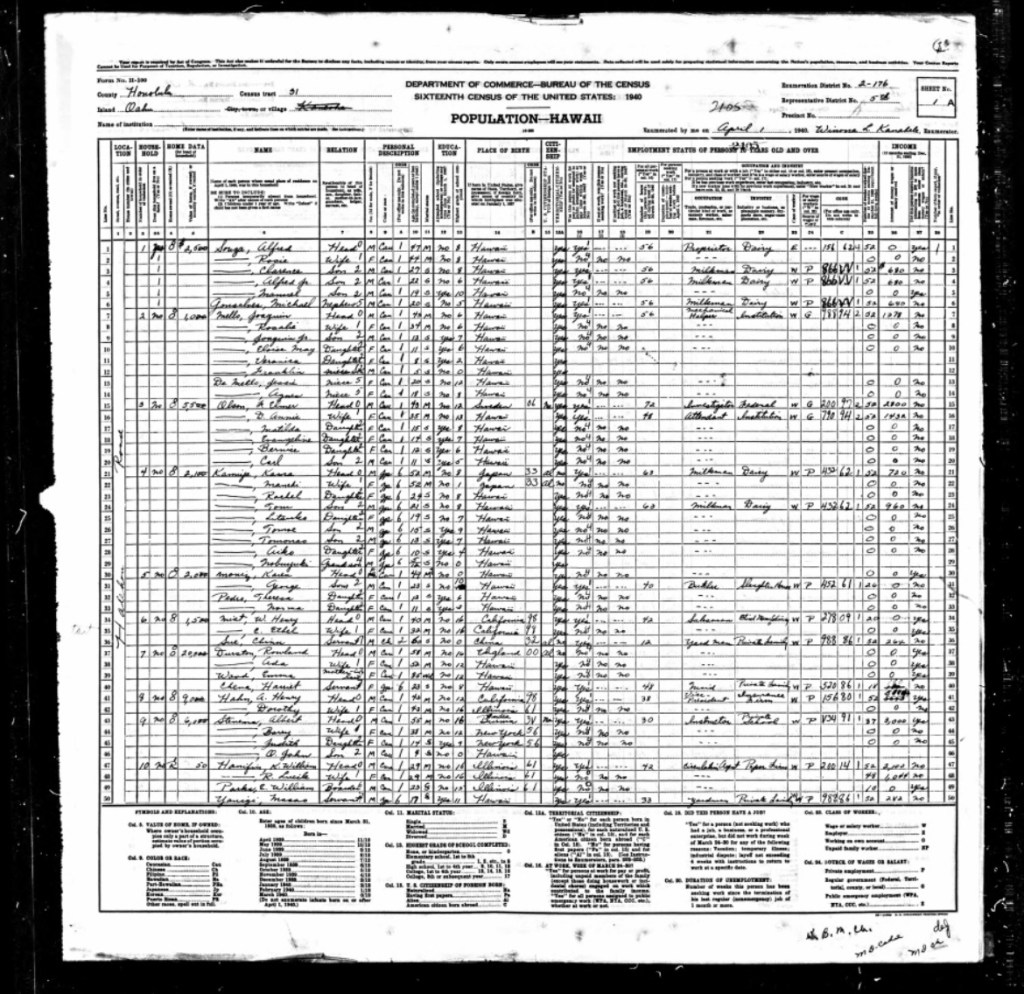
1940’s Census

I Caught COVID

Well, I was just thinking that I might be able to miss catching COVID this year. I was wrong.

I had so many exposures through work over the last 3 years and somehow avoided getting sick. I felt it was due to religious use of PPE that kept me safety. I never did think that it would be my own family member who would be the source.

I woke up last Friday with a diffuse headache in the back of my eyes, fever, runny nose, and a majorly sore throat. I had tested the day before due to my exposure from my husband and was negative. I retested they say I had symptoms and was still negative and called work. I was out for the count.

The next several days I had increasing congestion on top of the symptoms I started with. It wasn’t bad like the flu but it was not pleasant being all stuffed up. I was advised to take the test yesterday and was indeed positive.

I can’t imagine what it would be like to be unvaccinated and getting this. It is no surprise why so many people died from this disease early on with no defenses. The other variants were very virulent that caused severe illness and disability. So far, 3 out of 5 of my household turned positive in a matter of a few days. So far, 2 of the kids are still negative.

So it is a good thing that most people are getting the mild variant right now with the immunocompromised still being at risk for severe disease. The bad thing is that we still have anti-vaxxers polluting people’s minds and spreading disease in the name of organic foods and supplement sales.

If the majority of people followed the anti-vaxxers beliefs, we would have a very unproductive society. Many people would be hit by disease and we all would feel the trickle down effects. An ill child keeps a parent home and they can’t provide for the family and it exponentially increases as we have opened up as a society again. The amount of disease spread would be enormous but thankfully, many have chosen to take the vaccine.

I’m still under the weather on day 6 with headaches, loss of appetite, runny nose, coughing, and sore throat but I feel I’m on the mend. I’m glad I got the mild symptoms of this disease while being vaccinated. I feel it has protected me and my family over the last 3 years along with PPE use. It is frustrating that 3 years later we are still affected by COVID. That is most likely due to ongoing disinformation campaigns.

Disinformation has a cost on society and we cannot stop fighting it. Our health depends on it.

Rooted in Tradition

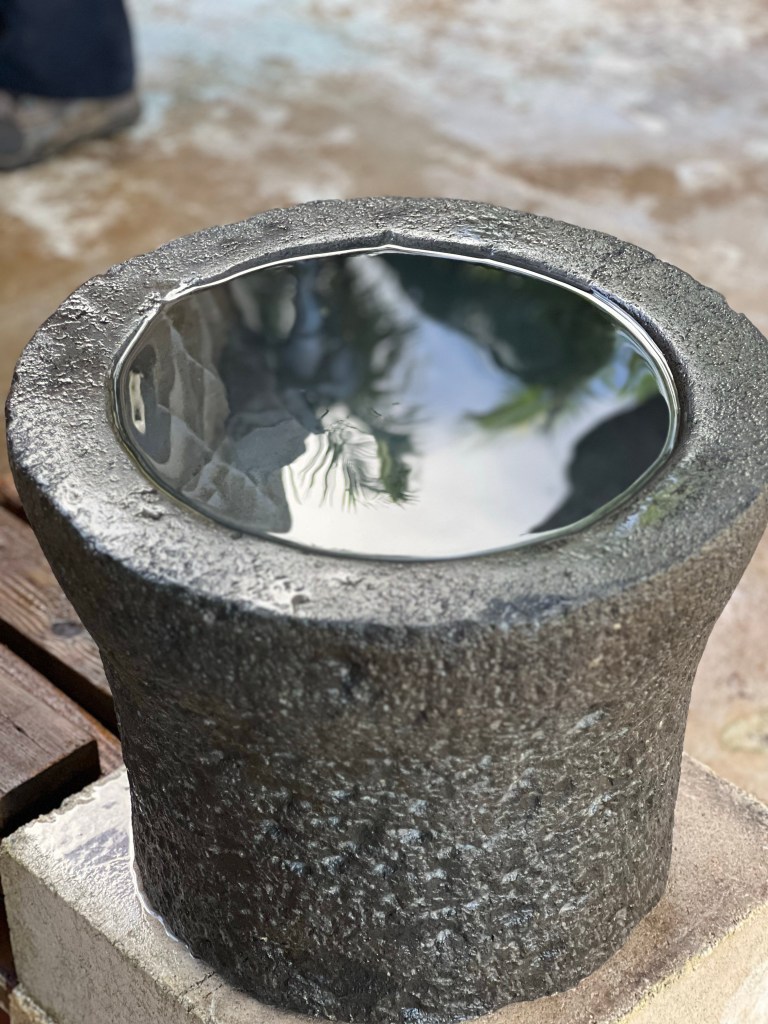
My grandmother’s mochitsuki usu

After 3 long years of not being able to gather, my folks decided it was a safe time to restart our annual family tradition of pounding mochi.

We are fortunate to have the mochitsuki usu, the stone for pounding sticky rice into those delicious pillows of deliciousness. It is a tradition that was started centuries ago by my ancestors in Japan. When my great grandparents immigrated from Japan to the sugar plantations of Hawaii, they continued this tradition.

These stones were carved from basalt to replicate what was used in Japan and passed on to families over the years. Our usu was sitting under my grandma’s house for years until my aunt discovered it while cleaning up.

My dad studied how to make the hammers needed using ironwood from the farm. He mastered the craft and taught it to my nephew to help smooth the hammer to make a good pounding surface.

My mom was having my girls prepare the rice by washing it and soaking it to prepare to steam it the next day. It takes a good 24 hours to have the rice grains ready to be made into mochi.

The morning of pounding is setting up the steaming and washing of the stone. Water must also be boiled to prep the pounding and keep the hammers from sticking. Once that is all ready, it is time to pound.

It takes many people to pound the rice then hand form the mochis. We can add the traditional fillings or even add new stuff like peanut butter or Nutella. The old ways meld with the new but always keeping to the tradition of gathering and working together.

The very stone we use today connects us to the past. It is a reminder of where we came from and ties us to our roots. We know where we came from and share in the traditions that our ancestors started.

It is the same when we stand under the stars and look at the sky. My ancestors did the same as they traveled across the ocean in hopes for a better life. I am grateful for their bravery of leaving the comforts of home to make it better for the next generation.

It may be a new year ahead of us but we must remember that we share a connection to our past in so many ways. I was reminded of that today as my family did what my ancestors did for centuries.

Preserving the Past to Guide the Future

Today was the first day of the 40th annual Hawaii Okinawan Festival at the convention center in Honolulu. I remember as a kid going to Kapiolani Park listening to music at the bandstand and getting tried and true Okinawan cuisine. It was a yearly event that my parents made a priority to go to.

The festival has really grown from food and music to something even greater. There are many exhibits that focus on remembering our roots from displays of each village that our great grandparents descended from and learning about one’s genealogy. More unheard of stories are also being preserved through documentary stories on how the Okinawans banded together to help relatives back in Okinawa following the war.

I now take my kids to the festival with a new set of eyes on why we must know our past to guide our future. By understanding where we came from and what our ancestors did, we can gain a better perspective on where we want to go in life.

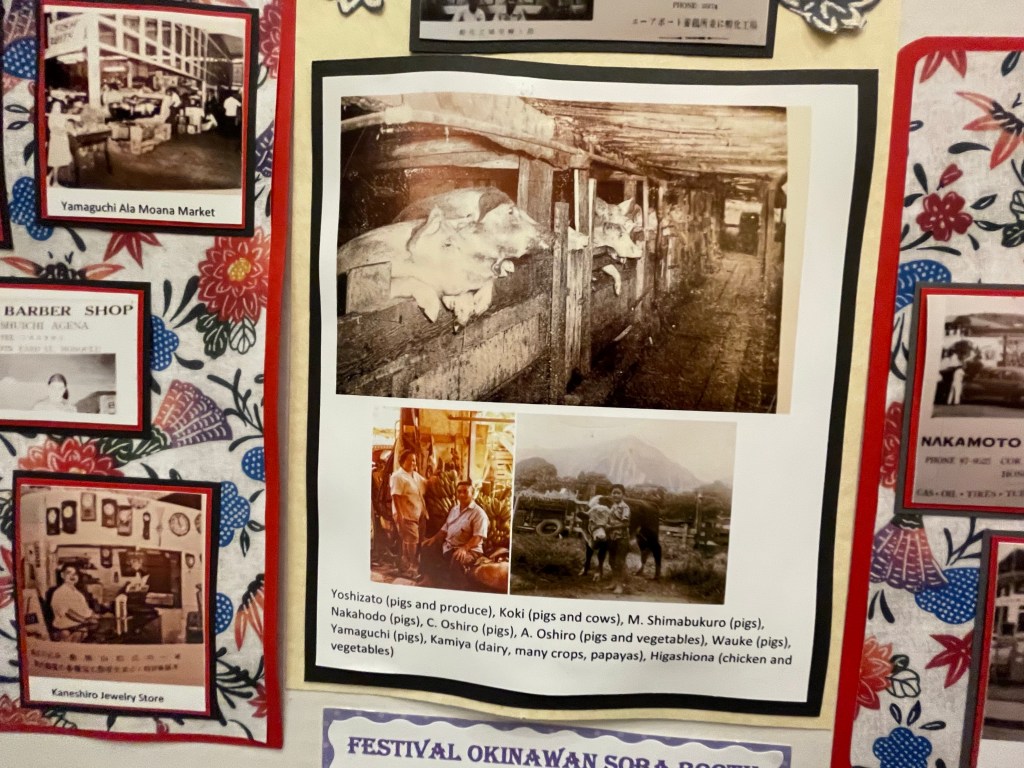
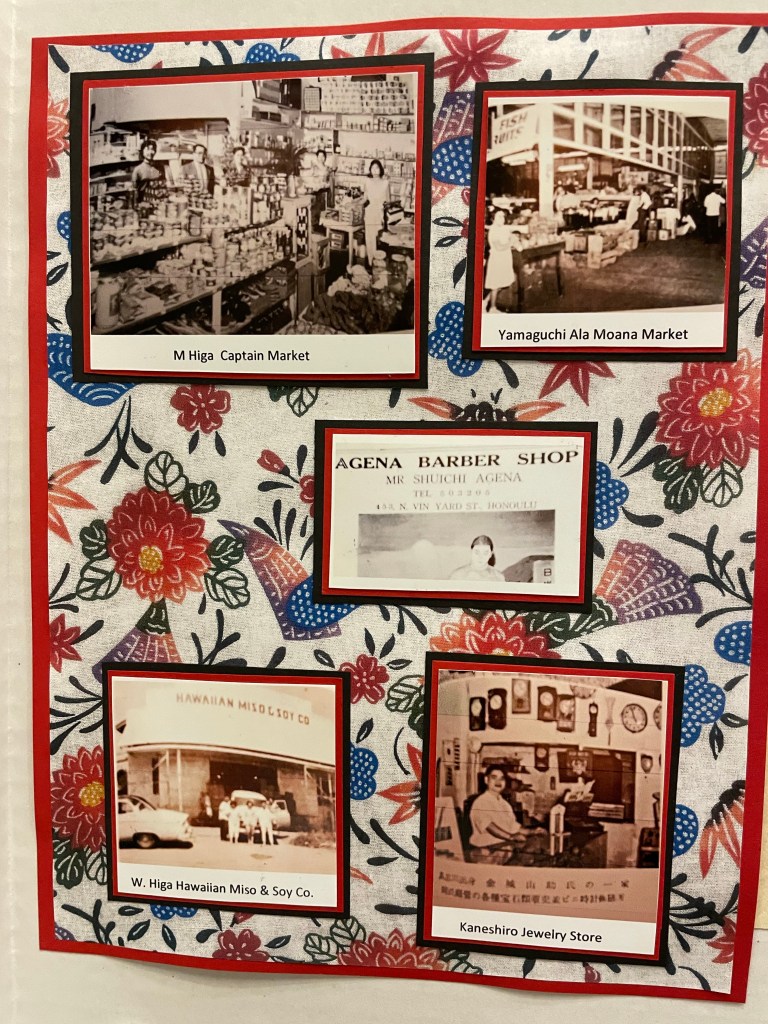
My kids were thrilled to see photos of my dad and his prized steer on the Gushikawa Shijin Kai board as well as their great grandparents who started the farm. I even saw a photo of the Yamaguchi Market posted and told them about how that family loaned my grandparents thousands of dollars back in the 1950’s to start the farm. By sharing their good fortune to us, my grandparents were able to help feed their family and eventually the greater community.

To see so many fellow Okinawans working together to showcase our culture was inspiring. It didn’t matter what political party or belief system one followed, we all ate together, sang, danced and learned as a group and community, which is something sorely lacking in this day and age. People from all ages volunteered to help preserve our heritage so that the younger generation can hopefully appreciate their roots to guide their future. We stood together as a community to tell our stories and show our Uchinanchu Pride!

The Okinawan Festival continues tomorrow.

Visit their site for more information!

Ignoring the Science for Ideologies

For too long. the public has been manipulated by disinformation spread across the news and social media. Some claim it is harmless to believe in false information.

Russian bots spread anti-vaccination messages across the social media

Story here and here on anti-vaccine rhetoric traced back to Russia that backfired on them.

What was the result of that? 957,000 deaths to date.

Russian disinformation on GMOs

Biotech in agriculture has been seen as a product of the Western world and disinforming the US spread across Europe. That in turn prompted Putin in increasing exports of non-GMO and organic products globally. This campaign stalled agricultural innovation and even banned GMO technology across the world keeping improve seeds from so many small farmers. It keeps farmers from maximizing their productivity and ability to adapt to climate change across the board.

History has shown that the Russians have conducted disinformation against scientists for a very long time, including starving a key plant geneticist, Nikolai Vavilov. Before being imprisoned, his last trip was to Ukraine to collect seeds to address famine.

Hawaii depends upon Russian oil for 30% of its energy needs

I was listening to NPR yesterday where it was quoted that up to 30% of Hawaii’s energy needs come from Russia. Other outlets have states that nearly half of our energy comes from Libya and Russia, two regimes full of corruption. It has been suspected that NGOs do not disclose much of their funding and have long repeated false information around the energy issue. We are now faced with sourcing energy domestically given the invasion at hand. Will we now be willing to consider geothermal or continue to fund Russia’s war effort?

Do we have the political will to work from facts already?

War is ugly as we are seeing in Ukraine. It is evident that there is a huge impact on the many refugees fleeing a country to find safety and families. For too long, the idea towards false balance has promoted the very propaganda that has led up to this war because we had to give the other side input. If we are to create a grounded and balanced decision on an issue, we need to work from facts already.

We don’t need to have to have an anti-vax mom’s opinions repeated on a news feature about getting COVID vaccinations for their kids. We as a society need collective efforts to address real issues at hand in this day and age. We also do not need a well-funded activist influencing laws on agriculture when she is not part of the effort to grow food for the community. What we need right now are the real problem solvers working on the ground to make change in the right direction.

Years ago when I gave birth to my son, I hoped for my kids that they will never have to see the horrors of war. I fight for the facts now to return to a peaceful world. We have seen what disinformation has done in the pandemic and now we see the invasion of Ukraine. I am heartbroken to see the suffering happening.

The dissenting Russians are protesting are chanting, “No more war.” I fully agree with them for the sake of the children.

Read more on what’s happening here. We have seen this coming and chose to ignore the evidence and block innovations globally. The entire world will pay the price for following ideologies.

With Great Love

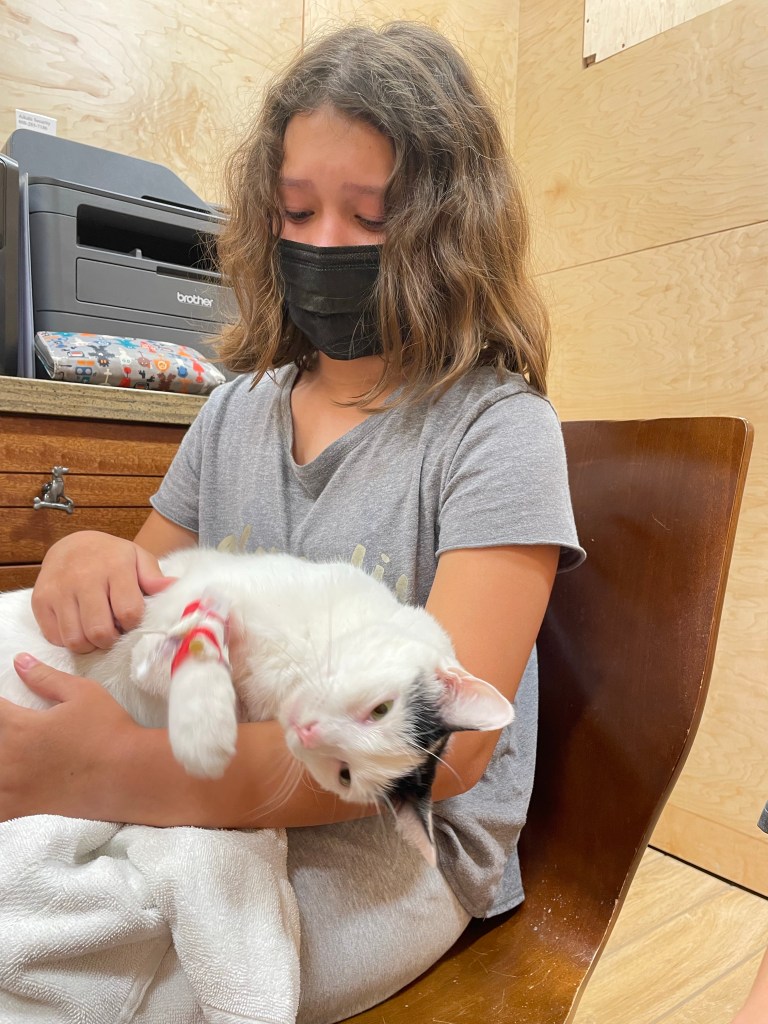
Yesterday we had to send our beloved cat, Asher, over the rainbow bridge. He had come down with a urethral blockage that could not be fixed and was suffering. It is never easy to make that decision but I could not let that poor cat be in pain and discomfort.

Thankfully, the vet allowed all of us to be present for our last goodbyes and that was just heartbreaking driving there with my 3 kids. I had to keep wiping back tears as we made the drive that evening while the kids sobbed.

The whole event made me realize that with great love comes great sadness when life ends. Across the world, so many others are crying too when peace ends. We’ve had so many years of peace that we must go through a war to learn the true value of what it really means.

Our kids had so many great years with our Asher cat and had so much love for him. We are reminiscing all the funny stories and cuddly moments we had with him. He gave us so much love and we to him. We will truly cherish our memories of him yet still grieve he is not with us.

I hope that the people in Ukraine stay strong and safe in these tumultuous times and those not in the war really understand the value of peace.

Tunnel Vision

Once again, the legislators in the state of Hawaii are saying one thing but doing another. At the start of this new session, so many proclaimed that they want to support agriculture but their actions say something else.

Take into point the raising of the minimum wage to help Hawaii’s low wage workers over 4 years.

With inflation, our small business costs are rising. This means the cost to deliver our goods to the store is much higher as fuel continues to run over $4.30 a gallon. That also translates to increased costs for our fertilizer, tractor parts, potting mix, and other supplies. Not only has those costs increased, new labeling laws have come into effect which means the printing of new boxes that costs more. Meanwhile, what we earn per pound has not changed to meet these costs.

To compound this even further, property taxes have increased and one of our vans had a catalytic converter sawed off. More money out and less in means we have to question our decisions on whether we can survive and plan for the future of our business.

Many farmers like Richard Ha and Dean Okimoto have stated that farmers are only going to farm if they can make money. Yes, we are a farm but also a small business. We may show profits on a ledger but most of it stays right on the farm to invest in it. We can’t share or grow if we don’t cover our costs.

I know that legislators see a very limited vision of how this will impact workers in the hotel and restaurant industries but fail to see how it trickles down to hurt the most vulnerable, our kupuna.

As costs for labor rises, caregiver costs have risen significantly. The wage for an hour caregiver is close to $30 to $35. With 3 hour minimums, a senior in need of care is paying over $105 a day if they can find one.

Not only do the cost of care rise but the cost of basic good also goes up. So many of my clients rely on takeout food for meals and a plate lunch has risen to $13. So many forget that their retirement income does not go up and as bills for basics go up, they have less to cover it.

Another consideration is that higher costs means that volunteerism can go down for those who service seniors. I know of several retirees who would love to volunteer to deliver meals but their costs to do so affects their ability to use that time to help others or work to meet their financial needs.

As a headline maker, raising the minimum wage sounds good in theory but in reality, is it going to help the local folks overall when small businesses are still being impacted by the pandemic?

After 2 years of dealing with pandemic and being a health care worker, I am tired. I am tired of having to wear PPE for work that leaves me hot, dehydrated, and sore. I do it to protect my family and others. The pollution of information by politicians have clearly demonstrated the dangers of it as we lost an opportunity to apply science to minimize the impact of this disease. The cost so far is over 800K lives lost and counting.

The legislature appears to be dead set on ignoring the entire impact of short term solutions and catchy soundbites. Over the years we’ve had bills attempting to label GMOs, legalize raw milk shares, anti-vaccine laws, buffer zones, and bans of who knows what proposed. We need to stop and ask if these time consuming legislative measures have served the needs of people of Hawaii or is it knee-jerk, serve serving for votes?

We all the know the answer.

Vaccinated Kids!

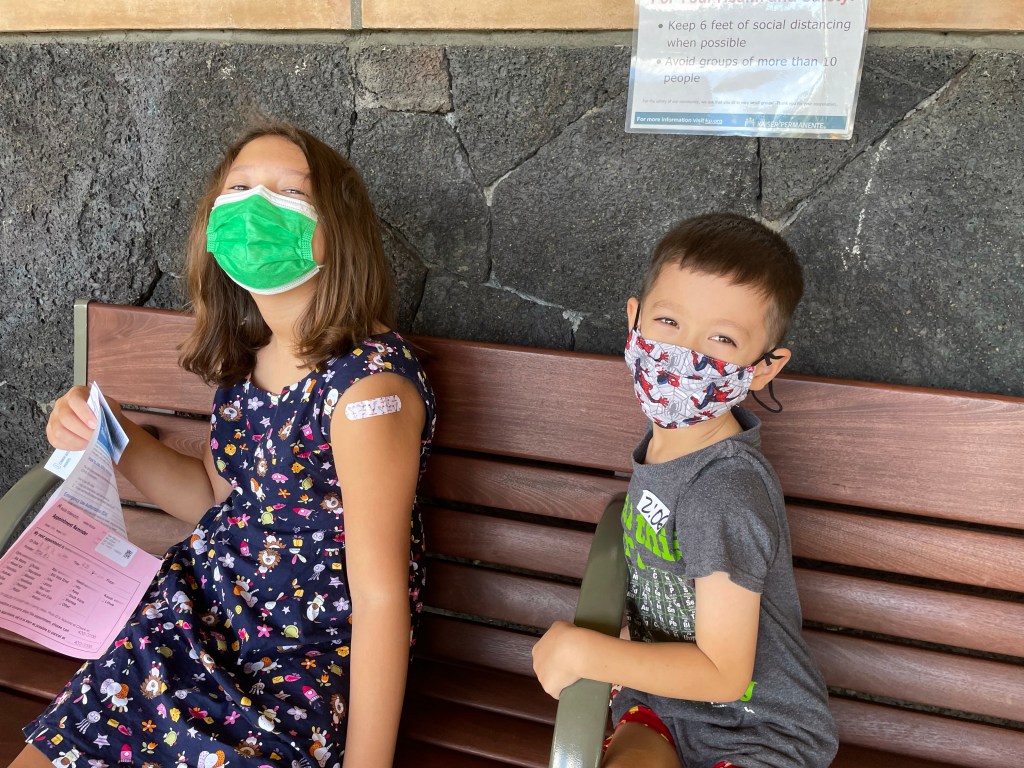
Yes, I did it. As soon as I got the word my 2 youngest kids could get their COVID shots, I scheduled it.

They were excited to be able to get it. Day 2 and the only side effect was a sore arm. No other changes noted.

Late afternoon day 2 and there are no issues other than an achy arm. No fever, no fatigue, no headaches.

The Cost of Disinformation

As of yesterday, Governor Ige signed an executive order clearing liabilities to health care facilities for the rationing of care during this pandemic. That just made my heart sink a thousand times. It also means health care providers are going to have to make the decision on who has the highest chance of surviving to receive care. That is no decision anyone who took an oath to care for people wants to make.

Why have we reached this point? How did we get here?

As a pro-science advocate, the writing was on the wall for a very long time. As much as politicians caved to the squeaky wheels who crafted the anti-ag laws over the last 15 years, this was bound to happen. Hearing after hearing, the least informed made so many false claims and none could ever be corroborated with data. Like a virus, that same disinformation was repeated over and over until it was believed as fact. Not one politician asked these testifiers for evidence ever. Even our former Department of Education Superintendent, Christina Kishimoto, fell for the anti-glyphosate predatort scheme. False claims were accepted as fact to create punitive laws. The main ones hurt by this were the farmers and their reputations.

The enforcement of these laws were written up where a private party could sue for a violation for mislabeling of a GMO, very much mirroring the anti-abortion Texas law. If a papaya farmer’s product lacked a sticker to label it, a consumer could sue that farmer for $1000 and court costs for each item. The state would not be the enforcer but consumers would be through litigation. It was like a job security jackpot for lawyers. Fortunately for us, it did not advance here.

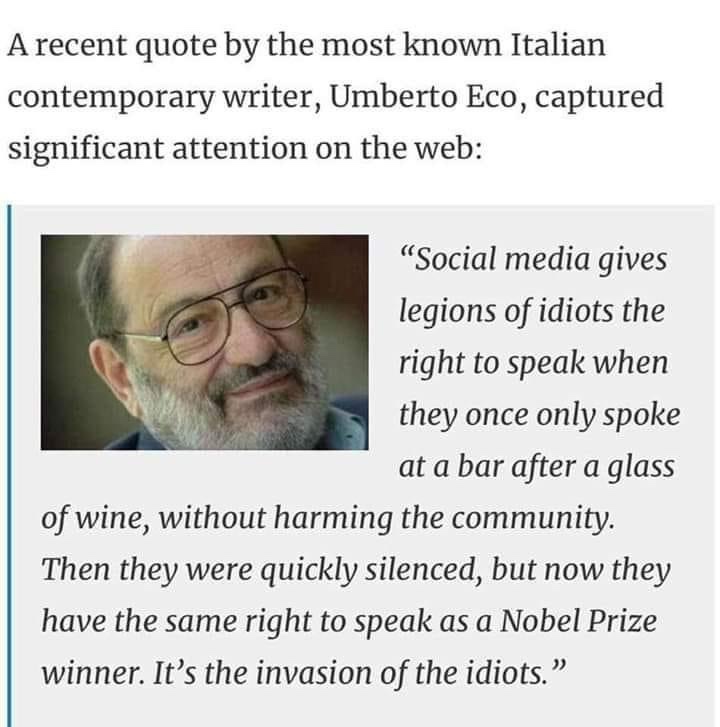
I truly wish that our Hawaii legislators had the guts to stick with evidence based laws from a long time ago. They flirted with anti-vaxx laws and raw milk shares. The fact that the anti-GMO laws made it to the legislature allowed the disinformers to be legitimized in the public’s eye. Legions of backyardeners bolstered their claims through repeating false information.

Our educational system has also failed us when an adult can’t think critically when faced with disinformation. I suspect it has to do with the issue of false equivalency. My oldest daughter hated doing debates on vaccines and GMOs because she knew that evidenced based info was highly lacking in the anti side yet was presented as facts. High school kids who were not taught how to research science based information were flirting with those tales that sucked folks into simply believing it without asking questions. My daughter just despised listening to the ridiculous claims from her own classmates. Instead of debate, there should be instructions on how to research claims as well as teaching kids how the scientific process operates to provide knowledge instead of propaganda.

I have seen countless uneducated comments on COVID related stories where so many make these outlandish claims leading me to ask for evidence. I find it horribly sad when I get some off the wall YouTube video or link to some crank posted as evidence. It gets me even more angry when I see so many of my own classmates posting fake links spreading it among others. Critical thinking and an actual desire to learn has been lost in society and those who are educated and experts in their fields are ridiculed and called shills and sheep.

So what is the cost of disinformation? Lives are being cut short and quality of life is on a downward trend because someone chose to listen to the Aloha Freedom Coalition with their anti-vaxx and anti-mask attitudes. There is no freedom when you cannot breathe nor will you have a choice with what treatments your body undergoes. You will have zero choices on whether you live or die because a doctor will decide if you’ll make it. You are also denied any freedom to have your loved ones around. Your choice has forced you to be in a very lonely situation.

From this day on, I hope our politicians realize the need to support evidence based laws and be responsible for the information shared with the public. As we have seen, disinformation is deadly and highly infectious much like the delta variant. There has been great damage done to our communities right now where so many have died or maimed by COVID.

Right now, we need science more than ever to get through this pandemic. Follow the scientific data in your everyday lives from getting vaccinated, washing hands, and masking up. We as a community have to work together to overcome this pandemic.

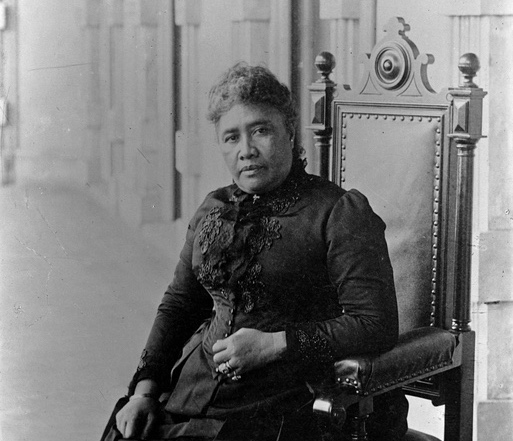
Honoring Queen Liliuokalani

I received a timely email today from Congressman Kahele that is pertinent for what is happening in Hawaii and across the US. The lesson learned in her time should be heeded now.

From Representative Kai Kahele’s emal:

Today, as the the delta variant of COVID-19 surges throughout our community, we also reflect on the 183rd birthday of our beloved Queen Liliʻuokalani, who led Hawaiʻi’s people through the smallpox pandemic when it reached the Hawaiian Islands. Here was the then-Princess’s guidance to the Hawaiian people at the time:


“Know that my heart is filled with sadness, and that I am hopeful that this disease will not spread amongst us. I am doing, and will continue to do, everything within my power to prevent its spread, and I am strongly asking everyone to assist me in doing everything to defend against this disease by obeying the directives of those in power along with the medical doctors, and I am strongly urging that people go in large numbers to vaccination sites and to stop gathering in places where there are large amounts of people, and to report those infected with the disease to government officials.”