The Anti-Intellectuals: Earthjustice and the Center for Food Safety

image

The anti-GMO folks say some pretty amazing things and have very incredible ideas as to what it is.  To those who have no clue on some basic science, logic, and critical thinking, it’s easy to get sucked up into this because there is a lot of repetition and emotion in all of the anti-GMO messaging.  Every once in awhile, some of them will piece the information together and say some really wild things.

I can tell that these folks really don’t critically analyze what their saying.  Most don’t have enough of a background to come up with a decent understanding of the science and will never go back to actually learn, which shows the anti-intellectual nature of this movement.  Nor do many people even remember what they have said before and easily get called out it.  The impulsive nature of what they say and do is reflection in the lack of self control and only leads to unforeseen consequences that further shows the true colors of the movement itself.

I happened to pick up a flyer from the Food Babe event put out by the Center for Food Safety the other night from their community education table.  Like their previous publications, there is never any sources for a person to go back to for referencing the source, nothing.  The unsuspecting person will get entranced by the beautiful imagery of taro fields, babies, and grass huts nestled in a valley.  The colorful nature of the booklet and high quality printing gives the illusion of something legitimate to the public.  The printed materials are written very much like a religious handout to get people to believe in the cause.

It looks so good that it would not be something deceptive but in reality, is completely a facade.  Looking at this would not make you want to question the info presented because it looks so important.  It easily fools so many people into believe that CFS is a “legitimate” food safety group despite nothing in the booklet referring to food borne illnesses and actual safety issues in our food supply.  There’s nothing mention of the food recalls at all or anything on the hepatitis A outbreak in Hawaii.  You simply get the feeling that their there to save you from poisoning.

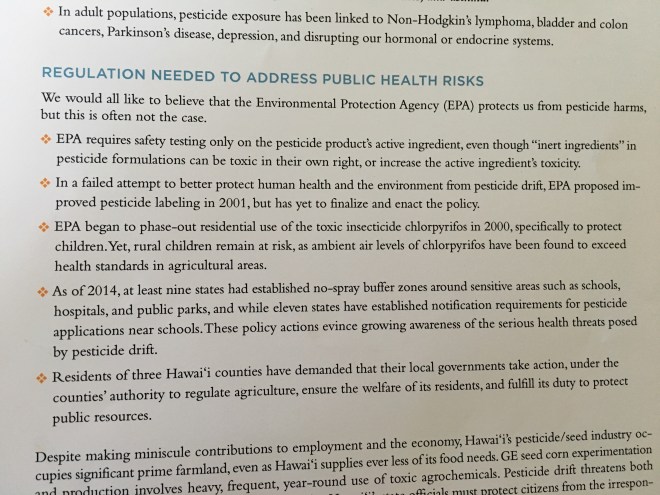
In one of the handouts, I read an interesting passage on the EPA and regulation of public health risks.  (Note: nothing mentioned about REAL health risks and the Food Safety and Modernization Act that does protect people.)

image

The Center for Food Safety is telling people that the EPA can’t be trusted.  Their specialty is creating doubt in people who will never take the time to critically question what’s being presented.  The typical anti-GMO believer just repeats these phrases.  (Note: The “minuscule” contribution of the seed industry is not mention that it’s valued at over $150M to our state’s economy and leads in agricultural activity.  But hey, that’s not important to mention!)

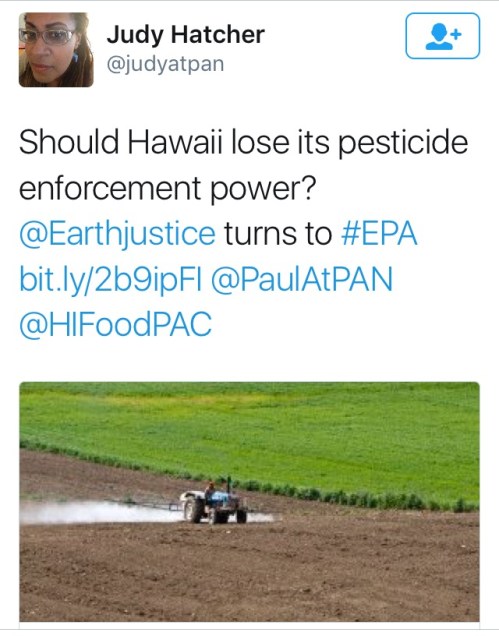
In order to critically think about an issue, one must be able to synthesize all information being presented.  That includes remembering anything else that was said earlier by other people.  Not even a month ago, Earthjustice’s attorney, Paul Achitoff, announced that they were suing to get the EPA to regulate pesticides in Hawaii because the state was allegedly “failing.”

image

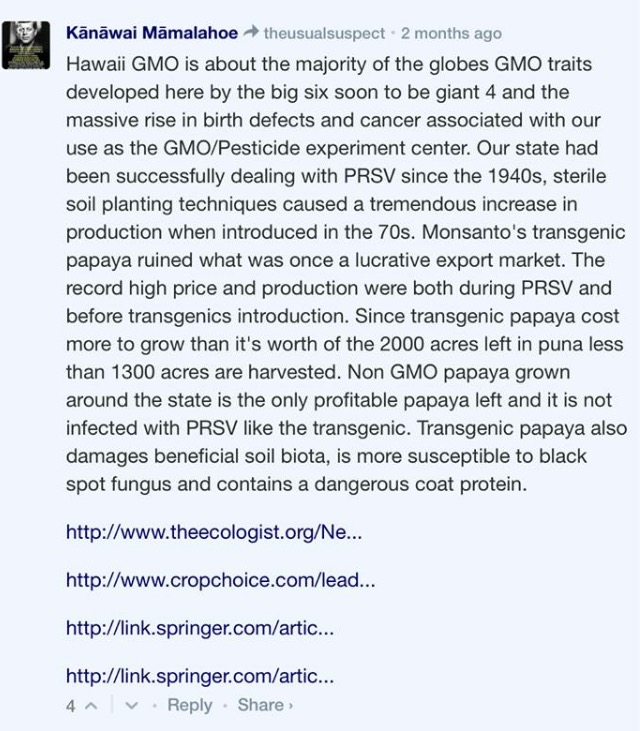
Let’s see here.  Earthjustice and the Pesticide Action Network wants the EPA to regulate pesticides in Hawaii, meaning that they will trust the agency.  However, back in 2013, they headed to the Kauai County Council, under Councilmember Gary Hooser’s lead, to have the county regulate pesticides and GMOs because they didn’t trust the EPA or state.  They also tried to pass county ordinances on Maui and Hawaii alleging that the state and federal government were not regulating the issue adequately.  Now they are changing their tune and trusting the EPA again???

Do the GMO free folks think everyone is absentminded???  These folks say one thing and then take a different action that completely contradicts themselves.    Ashley Lukens of CFS has repeatedly said that she wants the state to pass a buffer zone law but then her pal, Paul Achitoff of Earthjustice doesn’t trust the state and wants this regulation held with the EPA.  If buffer zones become law, will Ashley suddenly trust the state’s handling of the matter?  Before that they wanted the county to regulate and confidently told taxpayers that it was this piece of legislation was legal, dismissing the county’s legal review that it wasn’t in it’s scope.  The courts have ruled that the environmental groups were wrong and in reality, deceived the public.

These groups are causing mass chaos and confusion in the public to.  They’ve been at it for the last 3 years.  Three years of constant fear mongering in our communities has consequences to even small farmers.  Some hardcore believers continue to follow them blindly and never bother to think about what’s being said.

The beautiful thing about this mucked up movement is that some people are waking up and swimming out of the ocean of fear.  Remember the incident a few months ago when my dad was verbally abused and threatened by the lady who lived uphill from our farm?

image

That same woman showed up on our farm again this past Monday.  Everyone working that day had a sinking feeling when they saw her approach my dad on the field. My brother was ready to jump off the tractor to defend him if it was needed.  However, instead of yelling at my dad, she did something completely different.

She proceeded to apologize to my dad.  She told him that she had realized what she did was completely wrong and she was sorry and asked for his forgiveness. Taken by surprise, he did forgive her.  He was thankful that she came back to talk with him.  She then went up to him and hugged him and left.

In the midst of massive fear and confusion, there is beauty.  People can change if those in the agricultural communities keep speaking up and telling our stories and what we face.  Our stories of what we do will be heard above those who seek to destroy us.  We must never forget that the farmers are the pillars of our communities.  It’s their work that gives us the freedom to not be on the farm.

It is through learning that people can change.  Who is ready and willing to commit to learning about farms from farmers? We can’t continue to move forward if people are having to defend their work.  We have to start listening to the right people who are on the fields, working the lands and feeding us.  That’s the pono thing to do.


The Allure of Anti-Intellectualism

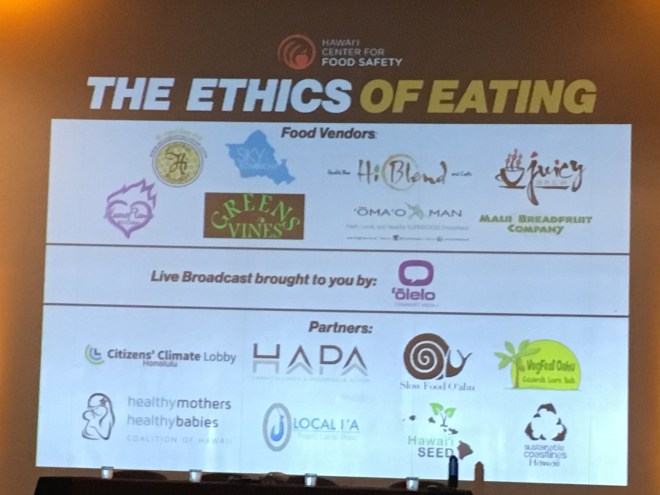
Tonight I decided to attend the “Ethics of Eating” sponsored by the Center for Food Safety and featuring Vani Hari, the Food Babe.  It was a free event held at the University of Hawaii thanks to a Dr. Robert Perkinson, an American Studies professor, who helped to get this event a venue at the Architecture School Auditorium.  I wanted to hear what this “food activist” had to say and see what kind of people attend these events.
image

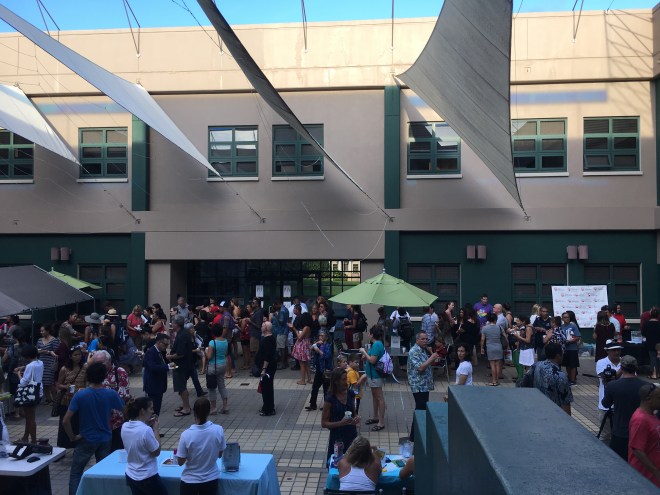
I got there with my friend, Sarah, at 5 pm to check out the True Food Market held out in the courtyard.  I decided to wear my March Against Myths I love GMO shirt to distinguish that I wasn’t a true believer.  I did get some odd looks but no one approached us which told me the anti-GMO emotional tones must be settling down a bit.


In order to get something to eat, you had to pay $5 to get a bunch of tickets for various vegan foods.  I didn’t think that there would be food, so I had gotten a plate lunch from L&L BBQ prior.  Not realizing that the event was vegan, I still sat there and ate that piece of unethical, Monsanto grain raised, industrial piece of chicken and some GMO macaroni salad.  It smelled delicious but I bet it raised some eyes in the crowd smelling it. I already started the evening showing how unethical I eat apparently.
image

As more people started to gather in, it was fascinating to see so many people crowding into listen to a person who has no background in what she’s talking about.  There was an older woman with long scraggly hair and collagen pumped up lips, some Hawaiians, older adults, people of all walks of life there.  There were even young kids with their parents joining in too.  I estimated that at least 250 came to listen to her.
image

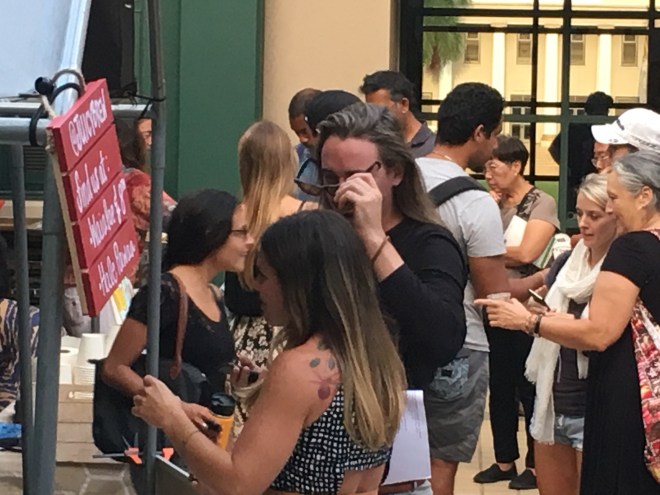
Lots of GMO cotton was being worn in the courtyard this evening.  People were wearing t-shirts, jeans, sundresses, cargo shorts, and aloha shirts that were clearly made from biotech cotton.  Not only was there a lot of cotton, Ashley Lukens, the director of CFS, pictured in the black and white jumpsuit was baring her tattoos and her freshly chemically treated hair too.  She had a “Community Propaganda Education” table set up with all of her flyers touting that people were being poisoned by GMOs and pesticides.  I had a feeling that she’d use this event to “inform” people about GMO ground zero.

Eventually, we finally got to enter the auditorium and find a seat to actually hear the panelists and the Food Babe herself.  It started off with Ashley Lukens talking about how “f**king amazing” some people are and more curse words in front of all the young children sitting the the audience.  I was appalled of how classless it was to openly swear knowing that young kids were  in the audience.  I thought it was inconsiderate to those parents who were there.  But then again, this is how the anti-GMO folks forget to be considerate of others much of the time.

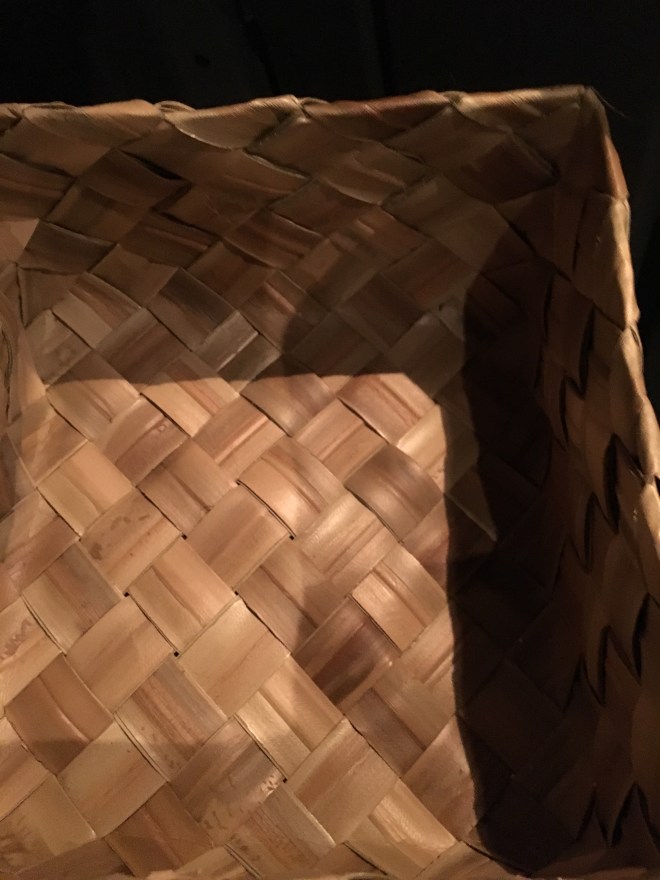
They were passing out cards to fill out any questions also.  It was quite funny how these question cards somehow was passed around us and that when the basket came back, it was empty.  I guess it was symbolic that in this cult-like atmosphere, questioning the authority is never tolerated.
image

After Ashley gave her profanity laced introduction, Hanohano Naehu, from Molokai did a rap song about the evils of corporations and GMOs.  The malama the aina bit came out and no pesticides got mingled in the lyrics too.  The battle cry came out too that they had to protect people by fighting this perceived bad guy.  He even decried that science was bad.  I almost felt that I was in a church service where people start singing hymns to get the congregation going, especially when they’d get the crowd to throw in the “ea” chorus.  He had some choice words put in his song too that were not appropriate for young children.

Then the panel started off with their stories about what brought them there.  There was Kaui Sana, from Mao Organics, a Doorae Shin, from the Kokua Foundation, and the Food Babe herself.  I honesty think that the most reasonable person on the panel was Kaui who talked about the need to return to the land and learn how to grow food.  The stuff that Doorae was saying about veganism and her encouragement to watch movies to learn about food was typical preaching with no promotion of critical thinking.  The Food Babe was doing her typical story of unhealthy eating led her on this mission, and how biotech is after her personally, and even how a Southern Kauai baby has liver cancer from pesticides. (She even had to throw in the dramatic cries too when telling the story of the baby.  Problem is, there’s no GM farms in Southern Kauai, but the true believers don’t even think to ask.)  The funniest thing she said was that she was glad she didn’t go to law school and became a food activist, likely knowing that it’s much more profitable.

I had to leave early from the event to get back to my kids but left the event really sad in many ways.  How is it that a place of higher learning like the University of Hawaii can bring in a charlatan who takes advantage of people’s ignorance and fears under the guise of of “education?”  It was an American studies professor that helped get the facilities to have her “preach” her message too.  Meanwhile, the people at the College of Tropical Agriculture and Human Resources are doing work to develop better plants and methodologies as part of it’s mission as a land grant college.  The law school, Hawaiian studies program, and now an American studies’ professor is participating in touting the anti-GMO rhetoric that can impede research and innovation.  That is utterly disturbing to me at at time when Hawaii “intellectuals” were all talking about the need to do something about climate change.

The social justice warriors, backed with anti-corporate conspiracies and emotions, are all energized by how they feel and their need to feel like their saving the world with how they eat.  The repeatedly say that they don’t need science and that they aren’t against science, which is truly sad.  These folks are about how they feel and using simple ways, a heuristic, to make better decisions about what they eat and how they live.  Food Babe is the preacher to the masses as we are seeing when she states things like don’t eat things you can’t pronounce or go organic.  You’ll never see her talk about the physiology of eating, human metabolism, exercise, or other evidence based ways to become healthier or live better.  She will never talk to people about DNA, plant breeding, crop protection, or basic farming either to encourage learning.  People love her because she’s the simple way to better their lives without really having to think hard about it.  She encourages others to just believe her and don’t question because everyone is attacking her and not her information.  Any contrary information is all a conspiracy and media manipulation despite her being very much involved with those actually manipulating the media.  Wanting to learn about science is condemned by people like Ashley and Vani.

I get it that people want to be healthy and what the Food Babe touts is easy to follow and boosts self esteems.  Who doesn’t want to feel better about themselves?  She really creates true believers that don’t think or question information to make good decisions.  It’s just easier to go after things that they think are making them healthier with her Food Babe Army.  She encourages people to go after companies and “change” them without even disclosing that she makes money each time she does that through affiliate links and other ways.

I feel like I lost brain cells tonight after listening to much of what was being said.  I’ve also realized that this isn’t anti-science but more of anti-intellectualism.  No one needs science is what activists always yell.  From the TMT, to fishing, to GMOs, and any other issue, the science and facts are totally rejected.  When we reject those objecting measures of what we are seeing, we can never find a common ground to work together from.  There’s no critical thinking that will utilize a good rationale to help people think and problem solve together.  They just want quick and easy solutions and a mob of believers is the way to do it.

Without an intellectual conversation about our world, we can’t solve the real problems at hand.  Obscuring facts and impeding progress with conspiracies are only blocking innovation and genuine ways to address saving our planet.  Though the Food Babe may make people think she’s making the planet better, she is actually contributing to problems by blocking progress and profiting from her efforts to misinform.  Ashley Lukens and her Center for Food Safety followers are also impeding the world’s ability to do things better by attacking a technology that could make it cleaner.  It’s all about what “they” eat and how it makes them feel better and nothing about what anyone else has to eat, which is a selfish, pompous way of thinking.

People involved in an intellectual movement will know some basic tenets on how to do things.  They will research the issue well and learn all side of the it by talking to all parties.  When it comes to Hawaii, they must consider the culture, people, and history to create a collaborative way to address the problem at hand.  People involved must have a willingness to learn and work together to come up with a good plan for the future.  They will seek facts and go to the sources to develop a plan based on those facts.  The Center for Food Safety and the Food Babe clearly show that that they aren’t about intellect and creating a real plan to address their perceived problem.

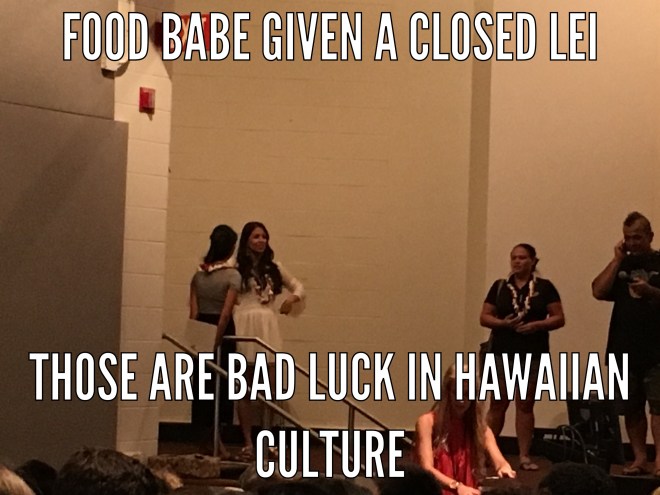
As much as they claim to want to “help” Hawaii, the know nothing about agriculture and local ways when they give Vani a closed lei while being 6 months pregnant.  It’s taboo to do that according to Hawaiian culture.  Even the Hawaiian rapper didn’t even notice it on Vani either.  She wore that lei all night.

I heard a great quote that social justice warriors tend to protest the things they know nothing about.  Need evidence of it?  Just look at the characters involved.
image


For the Love of Family

img_2866

Today was an absolutely crazy day.  Somedays go as planned and some days are plain old crazy.  I had been hoping for a light day at my day job so I could get to the Hawaii Chamber of Commerce’s agriculture discussion and then head out to take my kids to the dentist.  Well, part of those events happened but not all of it.

I had been hoping to get off of work early and leisurely head down to the luncheon to transport the 150 lbs of fresh papaya for the guests.  Well, I got caught up at work and had to hustle to get downtown to the event.  As I got parked and unloaded the papayas onto my wheeling cart, I discovered that the elevators were down two ramps and down about 10 stairs and behind a door.  One by one, I had to carry each 25 lb case down the step and pull the door open and drop it in the lobby.  Thankfully, a fellow farmers, Josh Uehara, came by and helped me to carry down the remaining 75 lbs to the lobby.  Then it was time to wheel those cases down the parking garage elevator and up yet another elevator.  By the time I got in, I was sweating and felt like I had a workout.

The Chamber of Commerce event was really great in that this year, it was about how can we grow agriculture in Hawaii.  The hot topic debate on GMOs had subsided and now we could get to the real goal of saving farms here and maybe even growing more.  I was fortunate to be a panel member with Paul Brewbaker, Dean Okimoto, Josh Uehara, and Shin Ho.  These folks were great advocates for agriculture and long time farmers in our community.  We all got to tell our stories of what’s happening on our farms.

I did get to meet up with lots of long time friends and allies after and then needed to head back to work.  After finishing up work, I had to run around picking up my kids to get them to the dentist on the other side of the island.  There was no way for me to make it to Kahala from Kaneohe so I had to cancel and just head home to feed my gang.

When I got home, my brother gave me a call asking me how it went.  He was initially asked to be a panel member but decided he was too busy to take it on.  He was super excited on the phone stating that he had heard me talk on the local Hawaii Pacific Radio station a few minutes ago.  I had mentioned on the panel that people think nothing of dropping $5.99 for cherries but when locally grown papayas are sold for $0.10 more at $1.89,  they complain!  That attitude doesn’t help our local farmers stay in business while costs rise, we can’t raise our costs to cover expenses.

To hear that glimmer of happiness that his frustration on running a farming business had been told to the public gave me a sense of inner peace for him.  My brother, who has no formal education in agriculture and armed with a business degree, jumped into this field to continue our family’s legacy.  It’s been a tough learning curve for him and I hear it in his voice when he needs someone to vent to.  Our family and workers provide thousands of papayas for people every single week for the last 40 plus years already.  The amount of sweat, pain, and energy needed to do this deserves respect.  If it weren’t for farmers, we’d have no local foods and we’d better start changing our views on them or we lose them forever.

After getting off the phone with him, I decided to call my dad to talk story with him.  Although he’s hitting 75 years old this year, he still dreams of a Hawaii with more farmers and really wants to see Governor Ige’s goal of doubling food production happen.  He’s toured the world to see what works and what doesn’t and learned where we need to go to make this happen here.  He wants more research and development, more university support on these endeavors, more education, a better business environment, and a freedom to farm the way he chooses.

Farming families have dreams that we can preserve this way of life here in Hawaii.  We love the open spaces of the country and seeing the land produce something that nourishes people.  We are stewards of the land that provides us with it’s fruits and we want to continue that way of life.  We also care for our community members who rely on our work to have food on their tables reliably year after year.  If we are to be sustained, we need the public to learn our stories and help us become a respected figure.  I think it’s time that we honor our farmers again as that is the reason why we have the freedoms to do more than toil in fields.  If you’re hands aren’t dirty from the farm, be sure to thank that farmer every single day.

Harsh Realities

dsc_1437

Every week for the last few months, I’ve been working on Sundays to be off on Tuesdays.  I may not work my regular job but I do spend a full day at my folk’s farm.  I decided to take on working 6 days a week to help them out since I do have that flexibility.  For that I’m blessed that I have the ability to do that.

Working back on the farm is a huge reminder of how hard it is to really get food put on our tables week after week. It’s something too many of us take for granted when we get to drive to air conditioned markets and pull out a shopping cart and leisurely pick up what we want to eat each week.  That is really a luxury that each and everyone has while living in modern times.  For some people, that is just hard work because they have to go through hundreds of selections to decide which is the best for them.

As I stood over the large papaya bins this past Tuesday, I really was up close with nature.  I had several nice big, brown spiders crawl up my arm and down my leg.  Some earwigs made their way up my arm.  A yellow jacket came buzzing close to my head as I leaned over to grade the papayas picked the day before.  Some ants crawled up my arms and bit me on my neck leaving me with itchy welts.  Occasionally, I find a baby centipede crawling around too.  I picked up papayas weighing just a few ounces to some weighting nearly 3 lbs.  Multiple that by the over 1000 I likely sorted out.  Working on the farm is plenty exercise in a day and I wasn’t even the one picking papaya the day before either.

The sun was beating down on my legs as I pulled the fruit out one by one and sorted them into two washing tubs.  An occasional rain would hit and then the feeling of mugginess would come over us as we washed, graded, packed and stickered the fruits.  It’s pretty monotonous work that very few people want to take on.  When my brother’s young farm hand left to try his luck on the mainland, we had very few applicants wanting to work on the farm.  With the cost of farming going up, it’s hard to have lots of workers on hand to help do all of the labor involved.  It’s almost unaffordable given all the regulations we face as a farm and as a business.

It’s even maddening to see leaders like Governor Ige touting to increase local food production to the World Conservation Congress.  His idea is to give loans to young farmers.  Seriously, how is that one approach going grow our food when the young people aren’t even the least bit interested in getting their hands dirty?  Much of their experiences of growing things are coming from teachers and school gardens.  Part of some teacher’s curriculum is to show movies like Food, Inc. to plant thoughts about our food systems rather than to go to the science of food production.  Skewed ideas and opinions form from these sources unfortunately.  Learning to grow things in gardens is a start but teachers must realize the economics of farming includes how to produce food year round for the masses.  Learning about farming must come with asking more questions rather than giving kids what to think.  If you’re garden doesn’t grow, what will a kid do to get food?  For many kids, the answer is go to the store.

I almost think it needs to be mandatory for every policymaker to come and work on the farm before they can even talk about what policies they want to make.  I’ll never forget the meeting the Farm Bureau set up with legislators some 3 years ago to educate them our needs in terms of legislation we needed.  While they sat and listened to the stories of my dad, Dean Okimoto, and others in the business, so many nodded their heads in agreement.  Then at the end of it, Senator Donna Mercado Kim said that she heard us out.  She continued on and said, “Well, I have a suggestion.  The farmers need to do  more to educate the public.” Then I saw all the other politicians nod in agreement with her on that statement.

I’m not one to have my blood boil, but that day, I truly felt so angry that I have never forgotten those words and the people in that room.  I really get mad when I see them talking so much about supporting the farmers and then in action, they do something completely different.  Simply going after a law to stop ag theft isn’t going to make farming easier.  Raising wages without any consideration for the economics of our business isn’t going to grow more food.  Adding more regulations like food safety and other things like pesticide disclosures don’t add to people wanting to farm or even being able to financially cover those costs to start selling their products.  The world of rules and laws that aren’t thoroughly vetted out is what keeps adding to the burdens we face.

Every Tuesday, I come home dirty, sticky, and tired.  My hands and body aches sometimes from the labor of the farm.  My home still has work to do from picking up my kids, feeding and bathing them, doing homework, and getting them to bed.  I could be totally fatigued by all the daily things I do but I’m not.  I don’t let those things get to me.  I want people to learn the story of our farm and family.  Our story isn’t much different from any other farming family’s one either.  Whether you’re a consumer or a politician, realize that the food that nourishes you was grown by someone who has worked tremendously hard to make it easy for you.  You’re unbelievably lucky to have the life you do because of us family farmers.

Priorities

In just a few days, the World Conservation Congress will be convening in Hawaii to talk about the environment.  President Obama will also fly here and make an official announcement of the Papahanaumokuakea Monument expansion.  We are also in the midst of a tropical storm and a hurricane.  It’s a culmination of some interesting events but only telling of our priorities.

As an island state, we are highly dependent on outside sources of food and basic necessities.  It’s estimated that some 90% of our basic goods are imported because we can’t produce these necessary items here.  Not only are the local people dependent upon imports but so are all of the tourists that come year.  That includes all of the attendees of the conference too.  Everything from rice, bottled water, and even toilet paper tend to be hot ticket items when a possible storm hits us.  The canned goods also go flying off the shelf when we know that there might not be any food or power.

When we are forced to deal with the effects of Mother Nature, we won’t be turning to a tree hugger for our needs.  While environmentalists in Hawaii are celebrating the loss of ocean access to our fishermen, I mourn the loss of some of the most essential people in our state.  When there is no food, we will need to turn to those who are skilled in providing it.  They are the farmers, fishermen, and hunters of our islands who will be there to provide us with sustenance.

Every single one of us in Hawaii will turn to those that have their hands in the soil, oceans, or forests.  The farmers are the people who know how to use that soil to turn it into food.  They also have heavy equipment that’s very useful for unplugging flooded streams or moving large boulders.  Their large delivery trucks can help get food and supplies across the island to those who are in need.

The fishermen have the skills and know how to gather food from the oceans.  They have the gear to fish for those who can’t fish or feed themselves.  They also have boats that can help transport good across the state to other when other access points aren’t available.  These folks have amazing skills in catching food, but also traversing the oceans.  The fishermen can help provide additional rescue services if there is a need as they know the oceans like the back of their hands.

The hunters are skilled in knowing the landscape and forests.  They too can gather food from the wild animals and feed many people with their skill sets.  They know the terrains and the forests to recognize changes in the landscape.  When the markets have no meat, the hunters can set forth in the forests to find food for people who can’t.

So if that storm hits us, I hope that it’s a wake up call to President Obama and all the environmentalists celebrating the loss of fishing in Hawaii.  The environmental movement has decided to focus on taking away access and tools to the farmers, fishermen, and hunters.  It’s easy to do when you’re refrigerators are full and you’ve got all what you need.  Those who feed us can’t keep doing our jobs if we are faced with attacks that impeded our ability to preserve our ways of living.  What the tree huggers don’t realize is that when all is said and done, they will be turning to us to feed them.  All of the environmentalists depend on someone to feed them because they can’t feed themselves when worst comes to worst.

Even the politicians like President Obama, Senator Brian Schatz, Senator Mazie Hirono, and our Governor can’t feed the masses and have never fed the masses.  None of them have any skill set to turn that soil into productive land for generations or can turn to the ocean and feed hundreds of people with what they catch.  None have shown that they can go into the forests to find food to feed families year after year and for generations to come.  However, despite their lack of skills, they are more than eager to make policies that affect Hawaii’s ability to feed itself.

There’s something very wrong with the environmental industry in Hawaii when it sets forth to put those who feed us out of business.  The very people who have the skills and resources to nourish us deserve praise and appreciation for the hard work that they do, not demonization that have no factual basis.  When it comes down to the reality, you know that the tree huggers will ultimately have to eat and who will they turn to?  The very people they disparage.  Is that really the pono thing to do?

If someone tells you that the farmer, fisherman, or hunter are just terrible people, before you believe it, ask that person if they can feed you.  It’s most likely that the person saying those things can’t ever feed themselves.  It’s about time that we realize who we really need in Hawaii.  If that tree hugger isn’t feeding you, should they be the ones taking away the way of life from those who actually are?

Environmental policies must be evidence based and should never be used to take away resources that feed the population without good reason.  The green movement has to stop misinforming people and either show a better way to do this or get out of the way.  When there is no food, you know that you’ll be turning to those who are providing the food.

img_5425

Fake Food Group: The Center for Food Safety

image

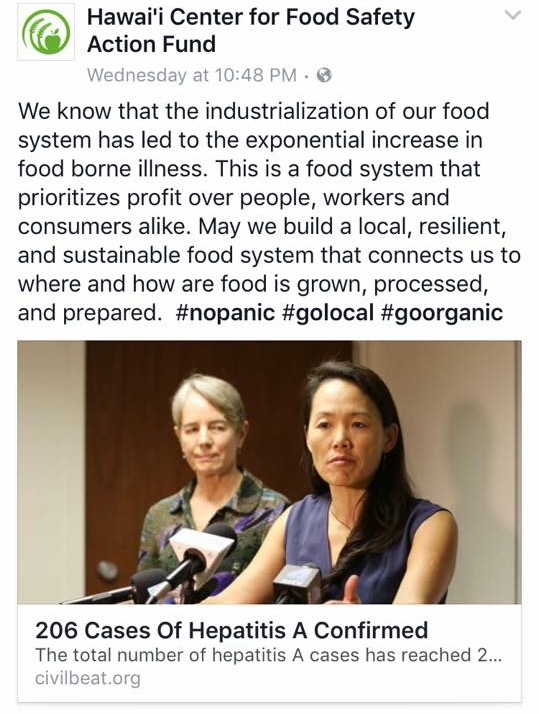
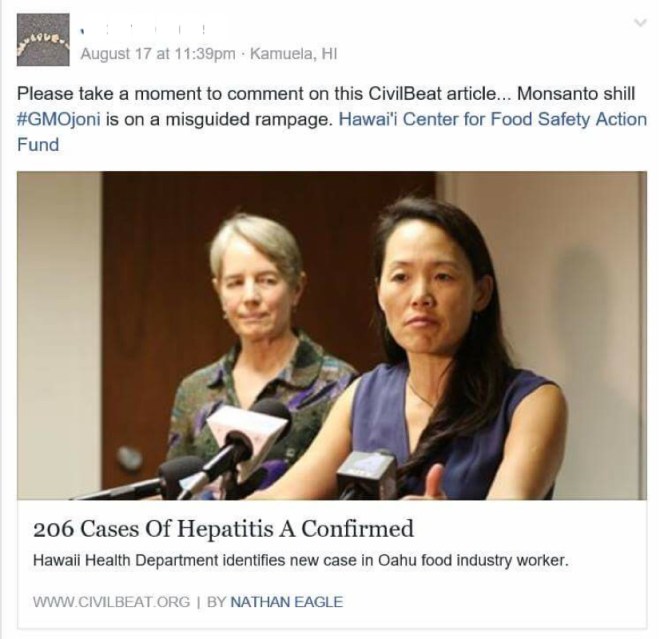
Since June 12, 2016, Hawaii has been experiencing a hepatitis A outbreak.  This indeed is a food safety issue that the Hawaii Department of Health has been trying to solve.  Some 206 cases have been reported and the source has been found, frozen scallops from the Philippines.

Since June, there has been no peep from the Hawaii Center for Food Safety or its parent group, the Center for Food Safety, warning the public of this at all.  Now if this were truly a food safety group, wouldn’t they be focused on this very real issue sickening people? Even more so, you’d think they’d even be helping people get information on where to get the hepatitis A vaccination also.  None of this was ever posted on any of their media to notify the public.  It wasn’t until this past Wednesday that they actually posted that comment on their Facebook page.

So what prompted them to address the issue nearly 2 months late? I decided to post a comment on the Civil Beat article asking why they were doing nothing about it.  Well, it clearly shows that Ashley Lukens and her boss, Andrew Kimbrell, aren’t anything about food safety.  They represent nothing other than a front group for the organic industry.  Look at their hashtags and the truth is shown.

Their comment on supporting local food is even more funny because the increased demand for organic foods have forced much of it to be grown internationally!  Is organic food from China safer that what we grow in Hawaii?  They supported a ban of GM papayas that saved one more  local source of food here!

I’d love to pressure CFS to even question the expansion of the Papahanaumokuakea monument if keeping food local is so important.  They should be against the expansion that would increase our need for foreign seafood sources.  They even should drop their lawsuit against the GMO salmon if we want more domestic food sources!

The kicker of this whole issue is that they are proposing to block the GMO mosquito too, which has nothing to do with food safety.  I wouldn’t be surprised if CFS is behind the scare campaigns being launched in various cities to block GM mosquitos and pesticide spraying.  Maybe CFS wants us to be the human experiment of what happens to people when they ignore or block science.

Then again, their might be an agenda that we aren’t really seeing here.  If more organic food is recalled for contamination, it means more hospital stays and in hepatitis A, a vaccination.  If I thought like an anti-Monsanto conspiracy theorist, it might be that CFS is really a big pharma to get people vaccinated!  You know that we don’t want to become human guinea pigs!


image

Well, the Center for Food Safety must be getting pretty desperate when they pull the “woo” over folks by bringing in the Food Babe.  That estimated $15k they are paying her to come makes for a great vacation in Honolulu where she will face living in GMO ground zero.  She’ll have to eat her GMO hotel food and sleep on Monsanto cotton sheets too.  How dreadful!

I know I must be creeping under their skin when I get a hashtag too, #GMOjoni.  I honestly am not intimidated by their personal attacks.  I basically want a few things from them if they wish I’d stop calling this stuff out.  Ashley and her wanna be farm folks need to stop lying about farmers and learn first.  She needs to take a tour or visit CTAHR professors other than Dr. Valenzuela.  Then I want her sugar daddy’s group to drop those lawsuits against the salmon and GM mosquito.  Let progress happen instead of blocking things and giving no alternative.  Take your political science and law degree to learn how you can use science to improve people’s lives instead of endangering all of us by stirring up ignorance and the angry mob.  Got that Ashley?

image

Pain and Suffering

I felt plain old horrible yesterday.  I had some major pain along my ribs that ached.  I suspected that it was caused by the crack I heard after being smashed by 185 lbs of children on a carnival ride.  I had to breathe shallow and hunch to avoid pain.  Even with some ibuprofen, I still felt awful.

I took myself and my 3 kids to the urgent care right after work.  Luckily my husband could pick them up since it would mean a long night.  I waited over two hours to get seen and have an x-ray.  Luckily, nothing was broken, but I did have mastitis, which contributed to my pain.  The doctor gave me pain meds and a course of antibiotics.

With each of my kids, I’ve tried to nurse them as long as possible.  My eldest nursed until she was 27 months old.  My second child took the cake and kept at it well past 3 years old.  I had to take a trip to get her to stop.  My son is still nursing at 20 months.  He’s my erratic nursing monster so I’ve had my share of mastitis with him.

Usually, I’m able to take care of it without medication, but this time, I could not.  It was unbelievably sore, to the point where I cried in pain when my chest was bumped by him trying to snuggle.  My poor son was so confused as to why I wouldn’t let him jump on me.

Thankfully, I managed to get in a dose of antibiotics that reduced my infection significantly this morning.  After suffering yesterday, I couldn’t imagine what would happen if I didn’t get medication.  Then it hit me how important antibiotics can be for animals too.

While many activists are demonizing the use of antibiotics and food companies are jumping on the bandwagon, I can’t help but think how cruel this antibiotic free label is for animals.  If someone denied me medicine, I’d be suffering.  If a sick animal was not given medicine, it would be suffering also just because a non-food producing activist doesn’t understand the process.

The more I see these non-profit advocacy groups trying to fear monger and dictate policy, I can see that these poorly vetted decisions indeed cause suffering.  These food fads aren’t making agriculture any better.  It actually promotes the very thing that we want to avoid in many cases.

After feeling so sick last night, I’m going to avoid any food company who touts anti-scientific food fads. Those behind those bad decisions aren’t helping anyone but marketing to ignorance and fear.  The ignorance and fear industry can only criticize but haven’t shown us a better way of doing things.  If they can’t come up with an actual better practice, they are only talk.  Those talkers need to do some science and prove that their way is better.  image


Fleeting Beauty

imageAs I’ve gotten older and have had several relatives pass away, I’ve come to realize how short life is and the value of the time we have on earth is so temporary.
When my maternal grandfather passed away nearly 15 years ago, our family had the arduous task of going through his belongings.  It was very painful to have to give up the things that reminded me of him.  I didn’t want to part with those aloha shirts that he loved to wear to parties.   They weren’t any brand names or fancy prints.  These shirts were just the typical Sears or JCPenny types.   To me, that was my grandpa.

As the years went on and my heart healed from his passing, I found it wasn’t the things that gave me comfort.  The pieces of clothing eventually made its way to Goodwill for someone else to bring life to again.  What I did manage to do was years before his passing, I made a tape recording of us talking story about the day Pearl Harbor was bombed.  Hearing his voice and his story was so comforting.  Even all the pictures I took with him were stories of the time I had with him.

I’ve lost so many dear relatives in the last several years and I miss them so much.   None were rich but they all left me with rich memories that money could never buy.  They taught me so many lessons in life about generosity, kindness, and happiness.  Those are things a million dollars could not give anyone.

In the age of social media and selfies, I’m not one to be there posting about me.  I don’t wear expensive designer clothes or drive a fancy car.  Nor do I spend tons of money on any makeup or beauty products.

For a short time in college I almost got swept up into the materialism of makeup and clothes but reality hit when it came time to go to grad school and I had to foot my own bill.  My folks were not wealthy so it meant working my way through school.  I gave up on the outer beauty expenses and focused on what I could do to give back to my community with education.

I still believe in the power of education today and my hope is that my children will also have that opportunity to better their lives.  We can talk about solving problems like climate change politically, but the real problem solvers will be those who are educated to solve them.  We will turn to science to track these issues and figure out ways to do things better for the next generation.

You won’t see me spending $7939 on media opportunities ever.  My white hair is showing as well as the wrinkles and age spots on my face.  I’ll still go to my hair dresser who has cut my hair for the last 30 years at a local salon.  I’ll still drive my 8 year old car with all the secondhand car seats in it.  I’ll still shop at Times Supermarket in search of the best deals.

What you will see me doing is giving support for education and leading by example to my children in the fulfilling their maximal potential for the future. I will teach them to not fear hard work and critical thinking.  I hope that they will have a sense of appreciation for the life they have and where we came from.  I hope that they will always strive to do their best and give it their all in life.  My journey will help to create the paths for them to follow and eventually go on their own path.  I won’t need a Coach bag or a $1000 spa day to do that either.


A Dream and a Vision

What can one person do to change things for the better?  Some people will say not a whole lot and it’s just wasted time.  Some will defy those odds.

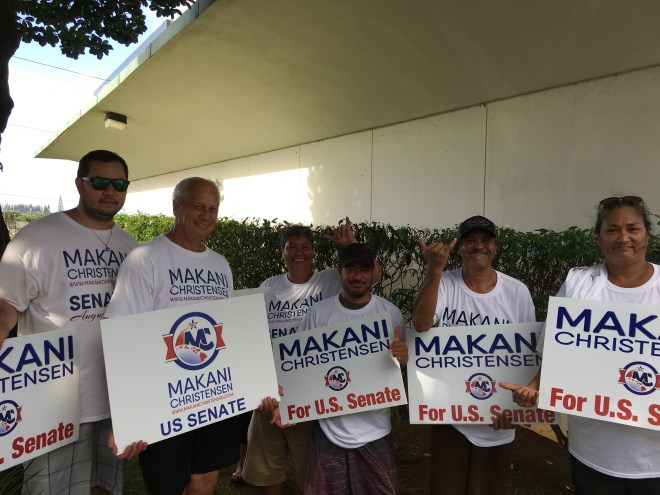
Meet my friend, Makani Christensen.  He had a dream to have the local people’s voices heard.  He has a vision for Hawaii that he wants for his family and it is just like what others want too.

I met Makani over a year ago through mutual friends.  I was invited to attend a talk story group organized by the fishermen and hunters.  Leaders in these groups had seen access to the resources slowly dwindling and a groundswell in politics promoting a loss of those island ways of living.  These folks wanted to do something to preserve their ways of living off the land and ocean.  As we all talked story, we all realized that we were in the same boat.

That group included long time local folks from many islands that decided something had to be done or we’d lose out.  There were folks from the Big Island, Kauai, and Oahu there.  Many wore their t-shirts and rubber slippers to the meeting.  As I listened to everyone’s story, it hit me that our voices weren’t being heard and if we could band together, we’d have a much louder voice as a group.  That’s where Makani led the charge to form the Hunting, Farming, and Fishing Association.

We were a small group of just 6 of us folks fighting to continue our rights to farm, fish, and hunt.  We had no money, but we did have passion and energy to do something about the loss of ways of living.  The very people who were against us, weren’t going to back down and collaborate on the plan to include these ways of living into policies.  From the animal rights folks down to the anti-GMO and anti-fishing folks, who were backed with full time paid activists and lots of money for media, they used any means possible to dictate the narratives that our groups were horrible people.  It simply was wrong but it didn’t matter to those who don’t live like us like this because they focused on only the end goal of taking people off the ocean and land.  Collaboration is not part of the mainland activists’ vocabulary.

Without any fancy public relations or huge social media presence, our group was disadvantaged to begin with.  That never deterred Makani.  Even some people within our group was anti-GMO and skeptical of it but Makani still pressed on to have people learn more before they formed an opinion.  It was hard to get people to educated when popular opinion was to be anti-GMO and most of their friends and family were leaning that way.  He helped to organize people to help show up at hearings to speak up for farmers and was threatened by none other than Dustin Barca himself.  He was not afraid to speak up for our farming family despite the huge opposition.  I was inspired that he’d put himself out there.

When it was time for the other user groups to be heard, I showed up at a hearing and learned their issues to speak up for them.  I had just had my son less than 8 weeks prior but still made the trek over to speak up for them.  With my baby sleeping over my shoulder, I gave testimony for the hunters that I had met and learned their stories.  Despite me not being a hunter, I was put on the news for speaking up.

This year, after much persistence, the hunters got their bill passed that helped create a gaming commission that amplified their voices in policies before the fact.  It was through hard work and lots of relationships developed in the community that worked to change policy in their favor for once.  It really was a collaborative effort on all sides to help each other out.

One person can’t do much alone and that’s clear. One person can make change that can be heard even in Washington, DC.  He didn’t need tons of money and the backing of powerful people to be heard, but he still accomplished to get the local voice heard.  Makani was that person who inspired so many to help speak up to preserve Hawaii’s ocean access to people.  He didn’t get paid or was backed by any non-governmental organization or non-profit funded by the wealthy to get the local folks heard but what he did have was the passion to speak up.

Several years ago, there was a proposal to expand the National Humpback Whale Sanctuary in Hawaii.  That expansion would have limited many ocean activities that are a part of life here in Hawaii.  Despite the glaring fact that the humpback whales were recovering without the expansion, there still was a push for this monument.  Makani and several others worked tirelessly to get organized and have people’s voices heard to stop this from happening.

image

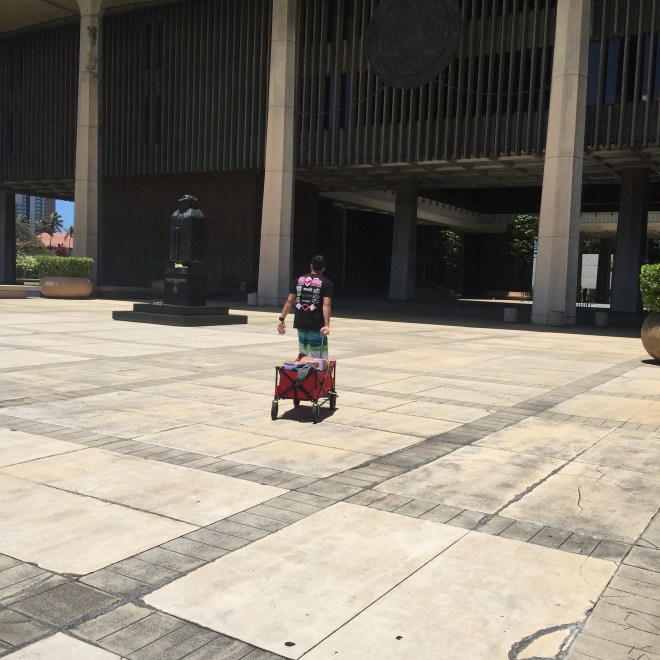
So what could this one person do?  With his leadership and inspiring others to help increase awareness of this issue, he got the local folks’ voice heard.  With his t-shirt, board shorts, and a red wagon, he walked over 10,000 signatures to Governor Ige’s office.  That monument did not expand to take people out of the oceans and policy that was not soundly based in evidence did not prevail.

Many people think that Makani’s lack of “official” political experience is a concern.  Lots of people questioned this choice to begin with.  The old school wants a long timer in office to bring in lot of money to Hawaii but is that really helping out the local folks who continue to struggle to make ends meet?  Are their needs being heard in Washington, DC?  When our young students leave Hawaii, are they coming back with their hopes of working here or are they leaving because of the lack of opportunities?  There are many families who long to return home but simply can’t because of what’s happening here.  Is that how we are going to keep our island home special when all the local folks can’t even come back?

Well, one guy in his t-shirt and shorts did an amazing feat to get the local people heard loud and clear.  In fact, he’s a Hawaiian who got all the people’s voice heard in Washington, DC.  You won’t see him talking bad about others and in fact he’s been on wanted posters for the unpopular stances he’s taken, which is what has happened to me.  He did all of this with no money and for the local folks.

Actions speak louder than incessant radio commercials and I chose to go with those who have been in our communities and listened to the local folks’ stories.  I put my trust in Makani making Hawaii a better place for my children and for all the families of Hawaii.  He defied the odds and got our voices heard and continues to lead others to do the same and speak up for what is right.  My vote goes to Makani Christensen for US Senate because he not only wears the rubbah slippahs, he will speak for the rubbah slippah folks of Hawaii.

image

The rubbah slippah folks want to be heard!


“Civility and Cooperation”

“Civility and Cooperation”

Senator Brian Schatz clearly has a lot of money in his coffers because I hear his radio commercial nearly 6 times during my commute around town, Kaneohe, and to Waikane.  I keep hearing that he’s touting “Hawaii values of civility and a cooperative attitude.”  I’m skeptical of that claim for several reasons.  image

I was at the State Capitol the other day in support of the fishermen.  Behind the crowd stood 3 individuals far removed protesting at the rally.  They weren’t interested in learning what leaders like Governor Ariyoshi, Senator Akaka, OHA’s Peter Apo, and several other Hawaiian civic group presidents had to say about it.  They stood there holding up their signs referring to the quotas.  (Oddly, the proponents of the Papahanaumokuakea Marine monument have stated that this wasn’t about closing fishing down but then all carried signs attacking fishermen.)  These people clearly weren’t about coming to the table to work with groups affected by this decision.  It was their way or no way and their actions show that they want no concessions.  That tells me that Schatz is disingenuous about this value of cooperation.

Not only did the protesters there show none of the values stated in Schatz’s radio commercial, but the infamous, Chelsea Lyons Kent, also demonstrated the lack of the value he calls for: civility.  Her flipping of the bird on national TV as part of Hawaii’s delegates to the DNC and the lack of an apology for it shows no civility.

image

Chelsea hasn’t been one of civility for sometime as she  has marched with the most disrespectful bunch of women before, the Babes Against Biotech.  (Remember that the BABs told me that she’d leave the papaya farmers alone.  That was a complete lie.)

image

She even asked people to fund her trip to the DNC to represent Hawaii and received quite a sum of money to go.  One person who supported her to represent Hawaii is none other than the anti-GMO candidate running in my district, Patrick Shea.  He gave this “representative of Hawaii” some money too!

Screen Shot 2016-07-28 at 10.21.47 PM

We should not forget who else has been associated with these people either, but my congressional representative, Tulsi Gabbard.  Both she and Schatz touted this conspiracy based “Monsanto Protection Act” to the people of Hawaii.

IMG_2457

So what’s wrong with all of this?

img_3418-1

One is a reflection of their associations and what’s said by one reflects upon the entire group, whether you like it or not.  By choosing to spread misinformation against GMO technology, Gabbard and Schatz, have promoted their message.  It appears fine and dandy to share memes and feel good about fighting this so called “evil.”  The problem is you’re spreading it to people who have little to no real understanding of the issue and it turns these people fearful to the point of being irrational.  When one is irrational due to fear, they can no longer learn or process a rational discussion.

That irrational behavior showed up at our farm yesterday in Punaluu.  A caucasian woman came up to my dad as he was working on the field and started yelling at him that he was poisoning her.  She apparently lives up the street from the farm and had seen them spraying the trees.  He had been spraying sulfur to protect it from disease and insects.  She wouldn’t listen to him and insisted that he was harming her.  She became even more outraged to the point that she destroyed two of his trees right in front of him.  Being that it was late, nearly 5 pm and there was still harvesting to be done, he was shocked by it.  What’s even worse is that my 13 year old nephew had to witness his papa being verbally abused by this woman too.  (A police report will be filed against this woman for what she has done since she has made accusations against our farm before several times but never destroyed property.)

Those papayas still had to be processed and packed and everyone had to work well past dinner to get it out for tomorrow’s deliveries.  It didn’t help that the Punaluu field had been blocked off because of a water main break either back on Monday when it’s usually picked.

image

The 20 x 12 x 8 foot sinkhole from a water main break that held up work in the field.

My heart is just aching inside from seeing the destruction of local ways and values that politicians only talk of but don’t seem to exemplify.  Bad behavior and a lack of accountability by leaders and news sources are not helping anyone.  Between the attention given to the anti-GMO groups like Earthjustice, the Sierra Club, the Center for Food Safety, and the Pesticide Action Network, each of these groups purge out evidence-less claims that the media outlets like Civil Beat and even the Star Advertiser have amplified.  When I saw the attacks unfolding against the seed companies several years ago, I already knew that it would trickle down to us as farmers, which has happened.  Politicians like Senator Schatz and Representative Tulsi Gabbard have pandered to the “environmental” industry and a public that’s so far detached from farming to promote themselves at the expense of farmers and others who feed Hawaii.

My dad is limping with a torn calf muscle at the age of 74 but he still puts on that backpack sprayer to take care of his crops in the sweltering 95 degree heat.  He also sits on a tractor for hours on end to get his papayas picked.  He plows the fields and transplants seedlings one by one.  He drives a big rig truck to haul tractors between fields to get it harvested.  He even moves 400 lb bins on and off roller to get the papayas processed.  He is washing those fruits to ensure cleanliness and compliance with the Food Safety and Modernization Act.  He lifts hundreds of boxes of 25 lb and 50 lb boxes of fruit several days a week.  After that, he helps deliver them to all the people who rely on him for their weekly fruit staple.  Not only does he work like a dog, my brother too works along side him.  If anyone epitomizes the value of hard work, it’s anyone who works on a farm and makes it their livelihood.

A politician can work from a clean, air conditioned, cushy office day in and day out.  He can talk farming but if he can only do that, he doesn’t speak for farming.  Farming is the oldest occupation in the world that changed society.  If it weren’t for a farmer, there would be no politician.  Like I told the anti-GMO political candidate, Patrick Shea, don’t talk farming to a farming family.  Come down and work on the farm and then let’s talk there, while you’re working with us.

Real leaders go to the source to learn and encourage others to learn.  During this election season, be sure to look at your leader and see that he or she is setting the example for others to learn and foster learning.  Learning is what will help establish collaboration and lay the foundation the future for our keiki and their keiki.  We are all a part of a community and communities help each other and isn’t it about time we start to heal our bonds?