An Old Lesson

image

Several years ago, my eldest daughter had asked for a globe for Christmas.  Santa loves toys that are educational and timeless, so he brought it for her.  As she’s turning into a tween, her interest in it has waned but my kindergartner has become very intrigued by it since our adventure to Ithaca last year.

As Katelyn, my soon to be 6 year old, was trying to figure out her place in the world, she started asking questions about many of the fellows that she met at Cornell.  Her first question was where was Nassib from.  We started to talk about Uganda.  She was even more curious and wanted to see what Uganda and other African countries were like.  She randomly pointed her finger at the globe and landed in Zambia.  She then said, “Momma, what are the kids like there?”

Well, I decided to search on YouTube Zambia and children.  As expected, videos about feeding children came to the top of the search.

I showed Katelyn the video without even screening it.  I explained to her that there are children who only get to eat one meal a day.  She was simply shocked.  I asked her how she would feel if she only ate once and she said she would not like it.  We had a great discussion about why momma went to Cornell to help kids who weren’t as lucky as she was.  I emphasized to her how can you play when you’re always hungry?  She said she can’t do anything when she is hungry.  Sadly, there are so many in the world who are in this situation.

As the video played, I could not help but think about how many times I was told that the “feed the world” message is “propaganda” by corporations.  That message doesn’t resonate with people who have it all. As I watched the video of the children eating happily, a biblical passage came up.  I’m not an ultra religious person but I can appreciate the moral lessons in the bible.

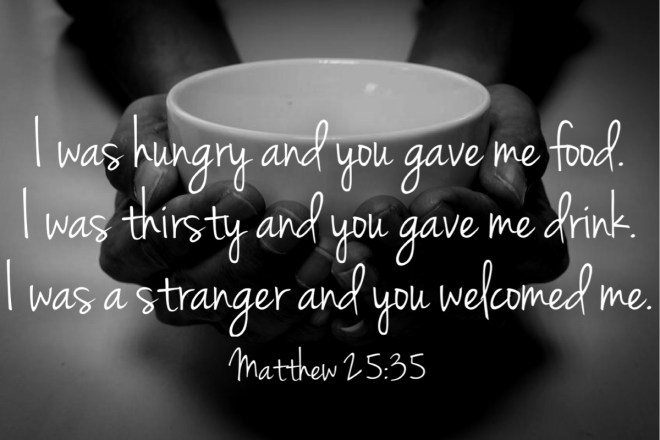
“I was hungry and you fed me.  I was thirsty and you have me drink.  I was a stranger and you welcomed me.”

The concept of feeding others isn’t something new at all.  It’s no different than Jesus’ lesson on teaching a man to fish is better than giving it to him.  The theme of Sharing our food is an ancient lesson that helped to build our societies and communities.

As I showed Katelyn where her ancestors came from on the globe, it’s clear to me that we all came from some place far away.  Hawaii was an area of global convergence thanks to agriculture.  We cannot forget our roots in the global community.  The Hawaiians descended from people that travelled from the Polynesias.  They were travelers of the world themselves.  We are global citizens.

We can live under the fallacy that Hawaii is not key to the world but that’s operating under a false assumption.  What we do in Hawaii affects the world and not helping others, especially the children, is selfish. We can teach our children to be self centered people or we can teach them some of the old lessons, which focused on compassion and thoughtful person to help their fellow friend across the world and in their communities.

My kids will not learn the lesson of “me,” but a life lesson that it’s about “we.”


If

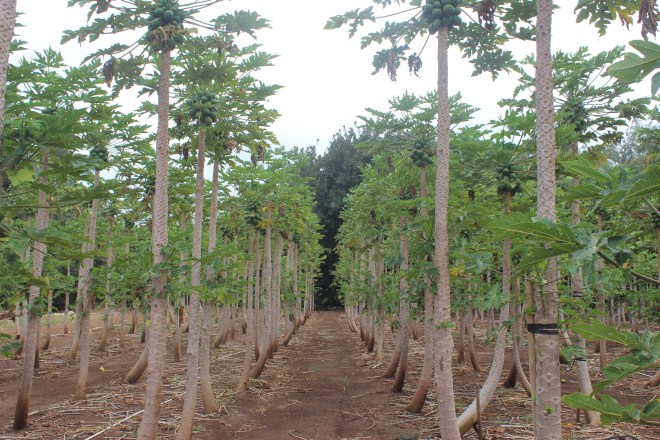
If you took away biotechnology from the Hawaii papaya farmers, we’d have no papayas anymore.

If we stopped vaccinating children, we face the heartbreak our great grandmothers witnessed as their infants died in their arms from diseases we can now prevent.

If we block a telescope that can expand our knowledge of the origins of our universe, we will lose the ability for our local kids to witness in groundbreaking discoveries.

If we take away water and deny fair access to the resources, our beloved  agricultural lands will turn into developments that will take more precious water.

If we allow social science majors to impede science discoveries at the University of Hawaii, the mission of the land grant college will never be fulfilled to its potential.

If we do not embrace education in science to play a role in elementary schools, our children cannot be prepared for future careers that can help innovate and adapt.

If we continue to romanticize the old days, we neglect to learn from history the hardships our ancestors faced to get us where we are now.

If our leaders give up access to the oceans, our youth cannot learn skills on how to feed themselves and learn a sense of appreciation for the food we have.

If we fence off hunting lands from the hunters, a father cannot teach his son how to provide for his family using the resources available and how to conserve the environment.

If we allow ideology of the kalo plant to dictate policy, when disease and pests decimate it, we won’t be ready to have knowledge on how to save it.

If we don’t speak up now and take action, Hawaii’s future will be in jeopardy.img_2869


Old Hands

image.jpeg

My real job that supports my family is working with senior citizens to rehabilitate them after illness or injury.  You could say that I’m a therapy shill because I do work in the rehabilitation industry.  I’ve worked with seniors and adults with disabilities for the last 20 years already as a care companion, activity assistant and director, and as a learning coordinator at an assisted living.  I really love my work and seeing people get better and return to their prior level of function.  The best thing about living in a modest size community is that I get to see my patients thriving after they recover.

In my training as an occupational therapist, we are taught to look at the occupations, or the everyday activities, that we do in our daily lives.  From the simple act of getting dressed to preparing a meal, these activities are essential to our lives.  Once our basic activities of daily living are fulfilled, we are able to pursue other things like leisure activities that help bring meaning into our lives.  A balance of these activities help put our lives in a state of flow, where we are functioning well.

In this day and age, people long for a sense of belonging and want to do something meaningful.  As many people are living much longer, more people are facing age related declines where they will eventually need basic self care help.  It’s a fact of life when people start aging well into their 90’s.  Having such a high cost of living in Hawaii has made it hard for families to care for their elders at home and many need long term care.

Many of the folks I know are still sharp in their minds but can’t walk too well.  They long to talk to others and love kindling friendships with others.  Many people forget that just because someone is in a wheelchair, it doesn’t change their desires as humans.  They still want to be engaged and fulfilled as an individual.  In a care facility, their basic care needs are all met.  After it’s done, there is activities that they can participate in, which many enjoy.

One of my residents had stopped me and told me that she wanted to do something to help out.  Being retired for nearly 30 years means lots of time for volunteering.  No matter what age they are, the desire to help others is still motivating.  I pondered it for sometime to think about what could be done.

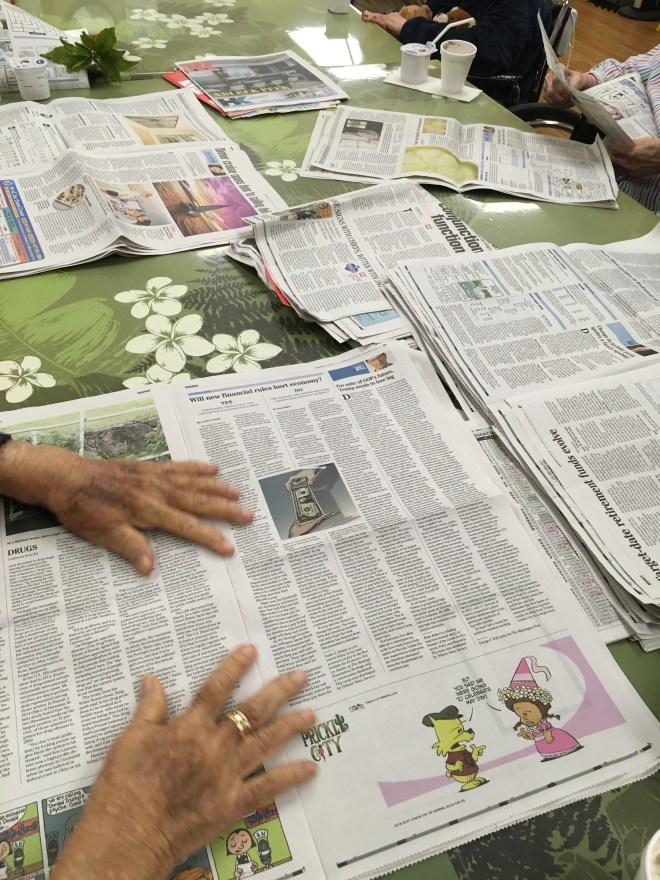
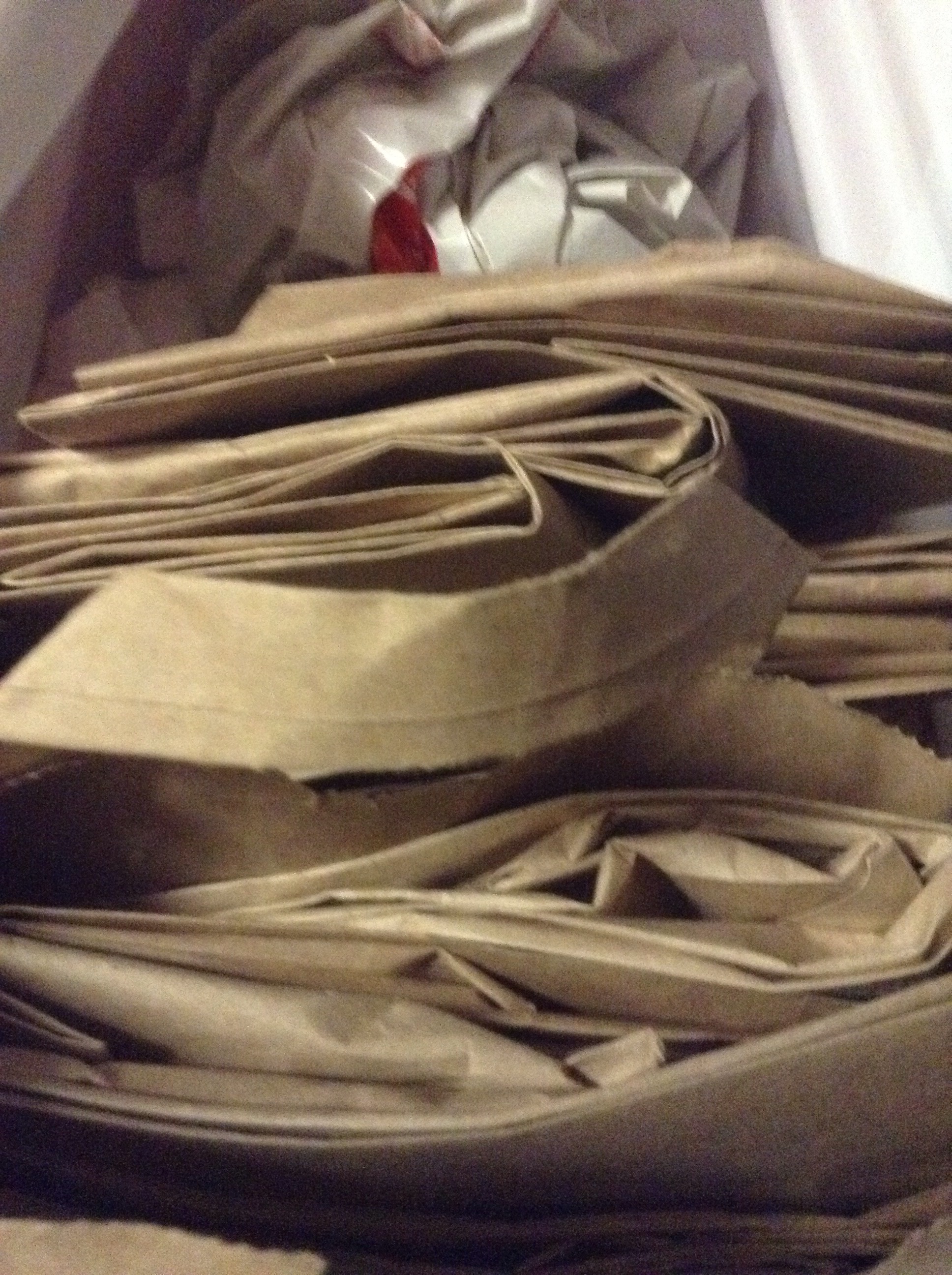
It struck me a few months ago of a perfect “job” that would fit the bill.  Everyday, the Pohai Nani Care Center gets lots of newspapers.  When you’re 90, you have no desire to use an iPad to read it.  They want the real paper.  At the end of the day, the papers are recycled.  That’s the end of the paper.

Seeing the piles of paper made me think that unfolding the paper out and rolling it up would be a great job for many of the residents.  They would be recycling these papers to be used to help us pack our papayas into the cases.  We had just recently lost my brother’s partner’s father who faithfully used to roll out papers for us for years and had to add that task to the list.  I spoke to the activity director, a long time friend, and a meaningful activity was born.

At first we started with 2 residents helping with the paper recycling project a month ago.  As they were proudly talking about how they were helping our farm, other residents became more interested in it.  It is a big social event now for our residents to do this.  There is now about 5 regular residents who get together to do this several times a week.

As I think about this, it’s really an example of community.  A farm relies on the community that supports it.  The farmer works hard to produce a product that is useful for people.  My dad and brother are busy producing papayas for the people here in Hawaii.  Not all people can farm and rely on those able bodied folks to feed them.  Many elderly folks can’t be farming but they indeed can help the farmer in many ways.  The simple act of unfolding and rolling these newspapers to help us is a humble act that our farm is grateful for.  This meaningful activity has given them a huge sense of purpose and fulfills their desire to contribute to helping others.  Just because their hands may be old, it doesn’t mean that it’s not useful.

So thank you to the staff and residents of Pohai Nani for supporting our farm get papayas to so many others!


Feel the Bern?

Nope.  After seeing so many anti-GMO activists with those bumper stickers and knowing what they have done, I definitely do not #feelthebern.

I do not want my children to ever act like this.  They will not be buying people’s domain names and making up fake websites for them.  Nor will they put threats of crop destruction or hate comments about issues they aren’t educated about.  They will be held fully responsible for their actions and know it.

In a world where there is too much bad behavior already, I won’t add to a new generation that accepts it.  We need more upstanding citizens that will work together and be collaborators and think about the future, not at the issue of the moment.  We need critical thinkers and not hobby activists who threaten our future.  We need problem solvers and innovators.  We don’t need insulting, childish, and blockers progress in the name of conspiracies.  These people will lead us no where and when a real problem arises, they will turn to science to solve it.  That is the truth that they refuse to accept.


image

The Ideology War

IMG_3385

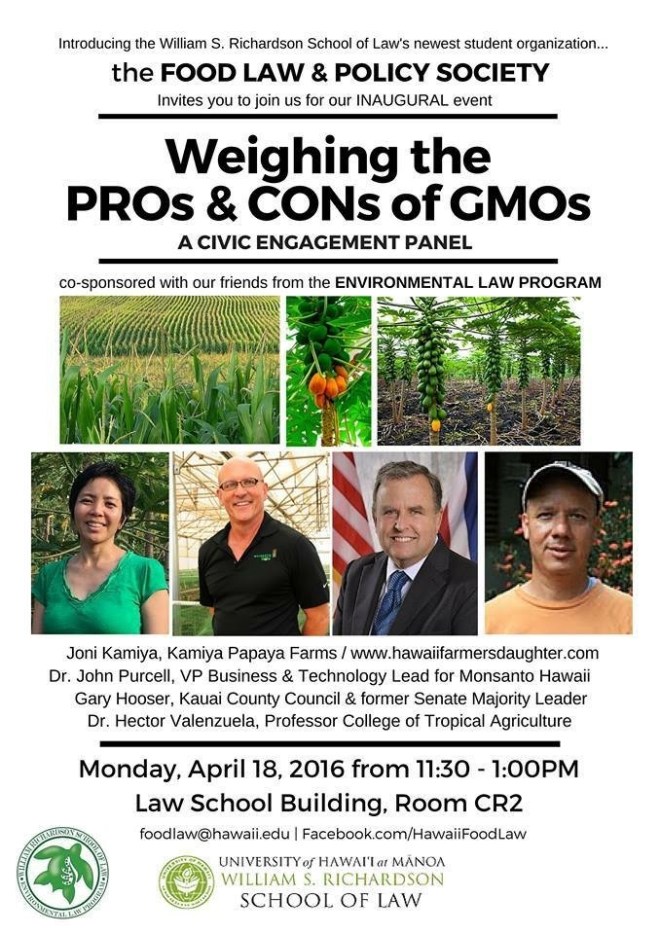
Yesterday I had a chance to participate on a civic and civil discussion about GMOs and Pesticides in Hawaii.  I was on the panel with John Purcell of Monsanto, Dr. Hector Valenzuela, and Kauai County Council member, Gary Hooser.  I took a day off of work to participate and sent my baby to his sitter to do this.  My hope was to get students and the general public a better grasp on this issue affecting Hawaii.

It was not surprising that several anti-GMO activists were in the audience, which I thought was good because they need to hear about this issue.  As I prepared for this discussion, I had stumbled upon some very interesting findings that pointed to me that this is environmental radicalism front and center in Hawaii.  I was told that people had come to our various islands to consult to them about issues in their community that they wanted taken care of.  The group was called the Community Environmental Legal Defense Fund that’s based in Pennsylvania.  I had discovered this group through a radical environmental group known for it’s militant tactics called Deep Resistance Green.  The things I read about these two groups were disturbing.  There was assumptions that all corporations were bad and that government could not be trusted.  The course of action was to create a protest and use sabotage and various methods legal and illegal to help protect nature at any cost.  It was the doom and gloom scenario that man was ruining the planet and it must be saved.  It’s no wonder that Gary and Hector kept repeating the words corporations and chemicals over and over.

As I thought about it more, facts just don’t matter in this debate.  This is a debate in ideology if you think about it closely.  Here, the farmers and scientists, are operating under the assumption that we are feeding the world and looking for ways to do it better and differently.  They rely on concrete data and measures and collected observations to make this happen.  They are optimistic and hopeful and look for ways to sustain themselves.  There is a embracing of technology  and advancement.  On the opposing side, they simply believe that this technology is not natural and will ruin the earth and biodiversity.  They embrace the old ways of doing things and want to reject these technological advances for themselves and for others.  Giving the technology to farmers in developing countries will spell out advancement in these cultures and a move to a more modern life, something that they find dissatisfying.  They consider tampering with nature something utterly horrible to the species.  They are protecting the rights of nature at every cost, which explains the lack of intellectual honesty throughout this movement.

The most concerning issue that I worry about is this attitude that there is no need to consider feeding the world.  If I follow the radical environmental lines of thinking, they think that feeding the world means more people and more harm to earth and that is the war that they are fighting to save.  This shortsighted thinking lacks the realization that we are a global community and that we are ever changing and progressing as humans.  Some of us in modern societies have lost a sense of appreciation and can’t find meaning, they turn to saving the planet as their meaningful activity in life.  I now can see clearly why the feeding of the world message simply doesn’t resonate in the public.

So why do I care so much about this issue?  We are global citizens and my three young children will grow up in the world that I can help create.  I can chose to not speak up and get people to think or I can do it.  I do not subscribe to the belief that nature is greater than humans.  We have to find balance in how we grow our food and use the environment to do so.  We must be able to adapt to the changing climate and be prepared for the future if anything.  To completely shut down any advancement or new technology can only set us back and actually cause harm in protecting it.

The movements of the moment like the anti-vaccination, anti-fishing, anti-dairy, anti-hunting, expansion of the national whale sanctuary, community based fishing management, as well as the anti-ag are suddenly clear to me as I read on some of the backers of it.  This is an industry of itself, the protest industry.  Here’s just one of the groups in it.

The “Deep Ecology Platform,” as the movement’s credo is called, emphasizes the relative worthlessness of human life, rating it as no more important than that of plants or animals. The Platform considers human beings as a mere “interference” with nature, and openly aims for a “decrease of the human population.” It wraps up with a call to action, suggesting that people need to abandon the idea of “adhering to an increasingly higher standard of living,” and instead should pursue “changes in policies” that affect “basic economic [and] technological structures.”

Because it shoves humanity into a role of relative unimportance, Deep Ecology has been a fringe movement since its birth in 1970s Norway and Romania. With the backing of Doug Tompkins’ money, however, Deep Ecology and its logical offshoots have quietly moved to the front of the environmental feeding trough, passing “shallow ecologists” (what used to be called “conservationists”) on their way to a stunning level of influence.

This man, Douglas Tompkins, made his money through corporations like Esprit and North Face as well as Patagonia.  Once he was rich, he decided he needed a cause and started funding these environmental groups, one of which is the Center for Food Safety.  As much as Ashely Lukens of the Hawaii Center for Food Safety likes to portray the image of someone who is out to protect people, let’s be very clear here, that is not the end goal.  This groups operates under the assumption that we don’t need more people on this planet and giving tools to feed people means more harm to the environment.

I’m floored to have come to that realization and remain stunned.  The rich, well fed people have funded a selfish movement that ultimately denies every human the right to food.  I’ve seen a comment stating that just educating people in developing countries will solve the birth rate.  Um, no, it’s not that simple.  If you don’t eat or lack enough nutritious foods, you can’t develop properly and think or problem solve well.  A hungry person can’t be productive at all and become a contributor to their countries.  If your mother isn’t fed well, her baby is already disadvantaged from the start.  It’s a really vicious cycle that isn’t easily escapable.

Some people will think that because we don’t see those people, some 795 million based on UN estimates, it’s out of sight out of mind.  Sure we don’t know who they are but we are a part of the global community and eventually, something will happen that will make it affect us.  As Ethiopia is struggling with a drought, we as a developed country have the responsibility to help others with aid.  If a war breaks out and people flee these countries, they need to go somewhere and much of the time, they land up in developed countries.  One can’t say that it’s not our problem.  Eventually, there will be a need for us to intervene and we will be affected by this.

I’m speaking more about biotech and the need for access to technology because I want a world where my kids will have peacefulness and not hear about instability around the world.  I don’t want to see my son have to be drafted into some war because of turmoil caused by our selfish food fight.  My children deserve a world of peace and so do the other children in the world.  Don’t get in the way of that goal, be a part of a solution.  Food is a social justice worth fighting for.


Brown Hands

image

I have been so dismayed seeing the activists once again playing the “these people are immigrants so their jobs aren’t needed” card.  The cold callousness of these kinds of comments make me unbelievably sad.  We are living in 2016 and not in the 1950’s or 60’s, where discrimination was rampant.  Those people who spoke out against this faced harassment and even lost their lives.

Have people forgotten that this is Hawaii where many people from around the world came together to create our beloved local style? We are people of many colors that figured out a way to work together as a community.  It took many hands to build the Hawaii so many of us love but is slowly being torn apart by fear and misinformation.

Does the color of our skin tell a story? It sure does.  My dad’s hands are brown but they have done some amazing things in his lifetime.  Those rough, calloused hands have fixed tractors and vehicles for decades.  It has built stone walls and put up fences to protect his farm and field.  He’s used them to rework a John Deer tractor into a forklift.  His hands can tie amazing knots to tie down loads of hundreds of pounds.  He’s also picked probably over a million pounds of papaya, sweet potatoes, taro, cucumbers, beans, and other veggies over his lifetime.

His hands have had a huge impact upon Hawaii even though it isn’t obvious.  The biggest feat that his brown hands have done is something that most people can’t measure.  He’s managed to raise a family and taught them how to give back to the community and seek education.  We are just like the others in the community.

The activists try to put down a certain class of people because of their skin color.  Brown is because of the hundreds of hours spent in the hot sun cultivating the land and breaking their backs to grow crops that come back to us as food.  (Note: it’s not the artificially induced brown from lying on the beach to absorb carcinogenic UV rays.). Some may speak in accents that sound funny to you and eat foods that smell weird, but they are the true pillars of our society.  What they do allows us to be free to do other things.

As I look at my dad’s brown hands, I’m proud to be a daughter of such a person.  When it comes down to it, the farmers, whether it be papaya farmers or seed farmers, they are the ones closest to the earth and have their hands in the dirt.

Many folks with brown hands have learned the the value of hard work and opportunity.  They teach those lesson to their children who become future CIOs, therapists, nurses, farmers, and other professionals who give back to the community.  Having brown hands should be a symbol of respect for what they learn and pass on to the next generation.  Think about the story about those brown hands because they have a story that you’re missing.


We Love a Good Story

Every Sunday is my “cook for the week” day.  I pull out the biggest pans and try to cook the thing most of the family will eat.  One kid doesn’t like meat or veggies, another eats everything, one only has 4 teeth, and my husband wants more veggies.  So, with all those dietary preferences, it’s pretty hard to cook one dish that suits everyone’s requests.

I landed up cooking a favorite which was Japanese yakisoba, or fried noodles.  It’s made with Japanese noodles, veggies, a little IARC class 1 carcinogen, Spam, some dashi (soup base), furikake (rice condiment), oyster sauce, pickled ginger, and some garlic salt.  This is comfort food for lots of local families here in Hawaii.  It’s nothing special but definitely a favorite.

As I thought about what to put in it, I realized that there really is nothing outstanding in it.  Everything in it tastes good.  Fried noodles are sold in convenience store here in ala carte containers that we call bentos.  If you don’t know what it is, you’d probably bypass it.

I thought that I would see what would happen if I hyped my comfort food dish up a bit and see what would happen.  Here’s how I described it:

I thought I should share the #healthyfood I feed my family. This is #crueltyfree #meatless #glutenfree #pesticidefree #gmofree olive oil infused noodles. No animal was harmed in the #ironinfused can derived from the hills of the Pennsylvania. The red ginger shreds are colored with #ecofriendly #organic #allnatural beets. The flavoring is derived from #vegan oysters. The Napa cabbage and stir fry was grown with the #moonrhythms and #permaculture methods. The sprinkled seaweed comes from the deep oceans of Japan where the whales swim and dolphins play. Doesn’t this sound delicious???

As I wrote it, I started laughing to myself.  We well fed folks really love a good story about our food.  As much as I despise the massive amounts of useless labels on the GMO free products, it’s giving consumers a seemingly better story about what they are eating.  Thanks to the media, the consumers want to know the stories of their food.

If I pick up a bag of tortilla chips and put it next to a GMO free, organic bag, guess which bag tells a story? The bags that give a nicer story is what appeals to the consumer who has no idea about what it took to grow those corn chips. It’s the same with buying local too.  If the story sounds good, they’ll likely buy it and get a good feeling from it and who doesn’t want to feel good?

The honesty of how much we love stories comes from the mouth of babes.  My eldest daughter has been engrossed in a new series of books called the Rangers Apprentice.  She can’t put the book down and will sneak it in the bathroom and read it while showering.  I had to end that habit because of all the water landing on the floor.

She gets so caught up in it that her baby brother has learned how to get a great reaction from it.  One day I heard yelling and found the baby grabbing a toy fishing pole and whacking her with it.  He thought it was so funny.  

She reads so much that she was scared of the series ending.  I suggested that maybe she could read some non-fiction books now. She told me, “Mom, I just love these stories that take me on these adventures and I don’t want to read about facts.”

It struck me.  That’s exactly why the anti-GMO folks aren’t supporting the Joint Fact Finding report on Kauai, despite demanding it.  There are facts presented to show a story but it simply doesn’t fit the story they want to believe.  A logical way of using the available data would be to seek more data but the absence of harm will never prove safety in their eyes.

The activists have woven a story and the facts presented threatens to unravel it.  The best they can do is revise the facts and continue that story.  The story is what defines this culture that they want to keep intact.  Logic, critical thinking, and reason do not play well in a fiction tale as my 10 year old daughter confirms.  It’s clear that Sarah and Geraldo, the two members with the most expertise and education related to this issue, didn’t want a subjective story.  They wanted to set out on the actual goal to get the facts first and write a non-fiction, objective piece but that just could not happen with the other members.

It’s clear that facts are being denied and it’s about the art of politics.  It all just makes for a captivating story that continues the drama.


Going Green with Mindfulness

 
I decided today I’d get some shopping done after work and stopped at Times Supermarket.  As I was picking my produce, I glanced over at the checkout counter to anticipate how busy it was.  I noticed that nearly 1 in 10 customers checking out did not use reusable bags.  The majority of people were leaving with at least 3 of the thicker plastic bags in their carts.

I had to laugh inside about this.  In Honolulu county, the environmentalists celebrated passing a plastic bag ban several years ago.  Despite this “win” for them, I can’t help but question if it truly is making a positive impact if I still see plastic bags around.  

Not only are thicker bags around, I’ve got a stock pile of paper bags now because my husband forgets his reusable bags.  These bags tear way more easily and are much harder to carry when you’re in tow with a wiggly toddler and school backpacks.  These are filling up our closet.

  
The part bags and the thicker bags clearly require more energy and input to produce.  So I have to think if we really are saving the land with these actions?  Have we made a greener choice?

If I look at the environmental legislation passed in Hawaii, I think that the short feel good laws haven’t been thought through enough before being passes.  Another example of poor legislation is the tourism issue at Hanauma Bay.

In this past week, the Honolulu Star Advertiser reported on high volume of tourists coming in via taxis.  A law was passed to curb tour companies from bringing in bus loads of people to minimize the impact on the bay. It apparently isn’t working since there is a loophole with other modes of transportation.  Was the law really fulfilling its intent?

The same type of thinking applies to the anti-GMO issue.  With all the fear mongering around biotech, the green groups aligned with the Hawaiians to demand a ban on biotech taro research.  Instead of keeping an option open to build some evidence on how to address major plant dieseases that could devastate the crops, the shortsighted thinkers took away a tool.  What is evident is that a new disease is hitting farmers and what tools will they have sustain their livelihoods?  Where in mythology was there a way to save a figure?  

With companies caving to GM free ingredients, there is a consequence.  It might mean more insecticides and different management of weed control.  So consumers who associate GM with pesticides may actually be returning us to using more of it.  To the consumer who is feeling like they saved the earth by their purchases, they actually did the opposite in reality.  

I’m starting to wonder if going green is really a good thing if the ones backing it are setting us up for failures in the future.  Did we consider all the consequences before setting to legislate on the issue? If we didn’t ask more questions, then we didn’t look closely enough at the results of our action.

Then again, going green has had a good result in some ways.  We have thicker plastic bags to hold more dog poop with and bags that don’t fly away!

Paint


 I’m now learning firsthand how to take care of my home now being an official homeowner. It’s been in need of some major repainiting inside, so I’ve been learning how to paint.  Luckily, my mom’s dad was a painter, who taught me some basic skills.

My grandpa and I used to spend summers helping neighbors spiff up their homes.  I’d go with him to help him out.  We’d also go together to the paint stores to pick up supplies.  

I learned some key lessons from him.  The first one was always use quality paint.  The second was use good brushes and rollers.  The last lesson was to take care of your tools.

I learned those lessons over 20 years ago and somehow forgot them recently.  I had discovered that my toilet upstairs was leaking.  I figured it out when I tried painting the ceiling below it and the paint peeled.  I decided to fix the toilet myself instead of hiring someone. Well, that turned into a way bigger job than expected.

When I pulled off the toilet, I found the flooring all peeling up.  The paint on the walls were chipped and peeling too.  I also found the bathroom vanity falling apart and I decided to just redo the entire bathroom myself.  What was going to just be a toilet repair turned into a huge job.

I thought I’d start with the painting first before doing the floors and ripping up the toilet.  Forgetting the lessons learned, I bought a lesser quality paint and some generic brushes and cheap rollers.

I did a layer of paint that looked pretty nice.  Once it dried, I took a closer look and realized that it didn’t do a good job covering the white walls.  Darn I thought.  I got to paint it again!  

Well, I realized something after that.  The quality of the paint does make a difference as well as the tools needed.  What was I thinking?

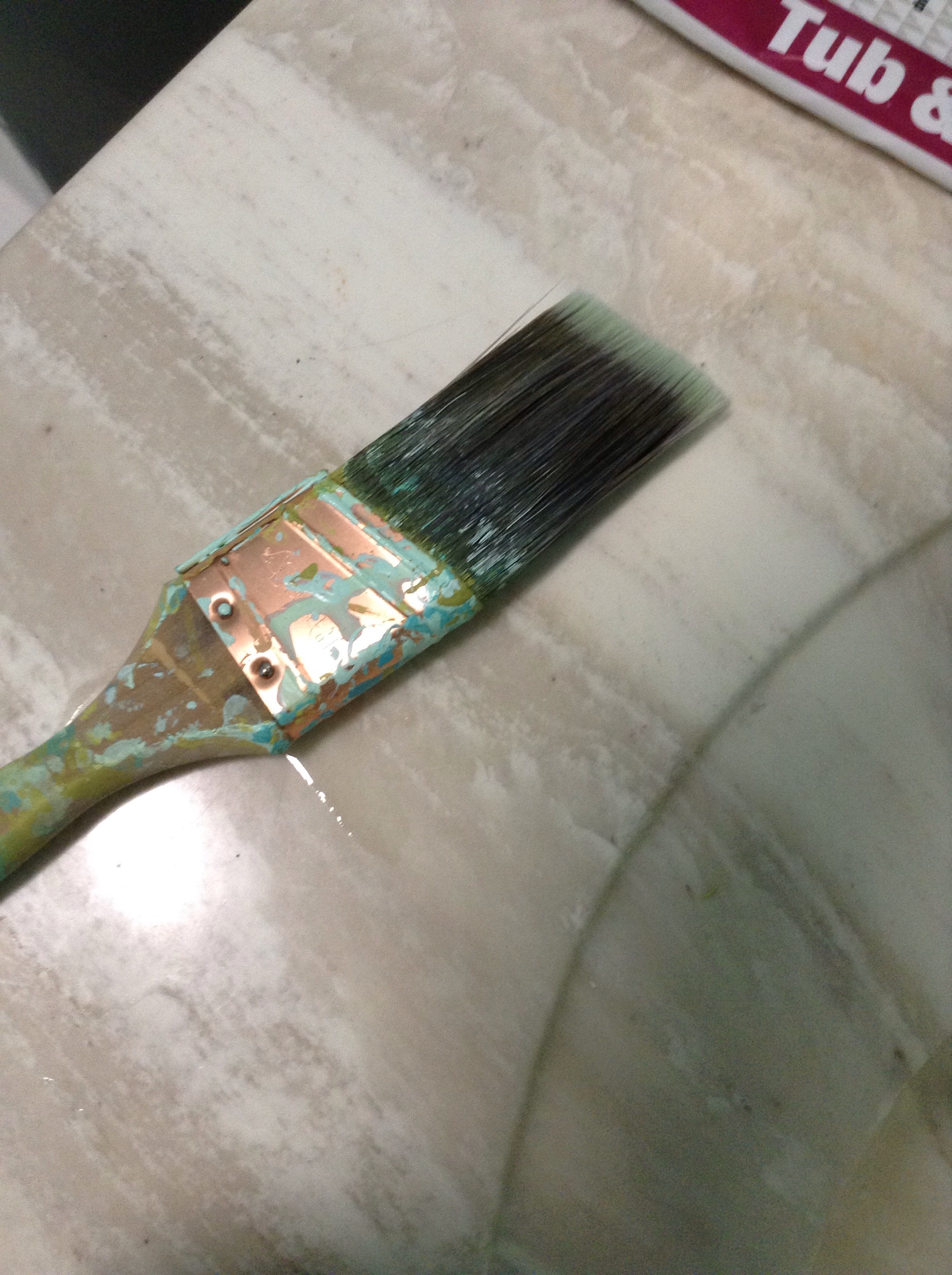
I headed back to the neighborhood hardware store and got some quality paint and the brushes that were under lock and key.  Sure enough, when I used the better tools, I had a noticeable improvement.  

Me being the constant thinker realized that this is the same for farmers.  They want the good stuff.  If they go for the cheap stuff, it won’t have a good result.  Farmers choose the best seeds that have been tested and have the desired traits.  This helps to ensure a desired result.  Even gardeners pick up fresh seeds every season!  Even organic farmers have seed catalogs to select the best seed types available.

While the anti-GMO movement continues to unfold here in Hawaii as a fake “grassroots” campaign, the industry funded right to know continues to put political pressure at the federal level.  The developing world is watching what’s happening here and holds the potential tools from the small farmer.  In a world where the majority derives income from agriculture, we are quick to deny them access to improved seeds.  We don’t even allow them the chance to ensure food security to begin with.  It’s cruel to do this.  

In order for me to have the best result, I need access to the best tools and best inputs.  It saves a lot of time and the result is ensured.  The politics can’t be the deciding factor of access to good tools, the research and evidence must lead the way.  

Don’t let the rest of the world have a shoddy painted home.  Let them decide for themselves how to color their homes and support access to those good tools to do it.  

Ugly Teeth

Little kids have no filter in what they will say about things.  My five year old, Katelyn, always reminds me of that daily.  A few days ago she told me that she wanted to become a dentist and fix people’s teeth.  I asked her why she wanted to do that.

She sat and pondered for a brief moment then stated that she wanted more people to have nice teeth.  She went on to tell me that she wanted to fix her papa’s teeth because they didn’t look very nice.  She sat and thought for a bit, then asked me why was his teeth so ugly.

I told her that her papa, my dad, grew up very poor.  As a kid, going to the dentist meant money being spent.  The only time they went to the dentist was if they absolutely needed it.  She was totally shocked that he didn’t go every so often like she does when he was her age.  Katelyn was very surprised.  My kids have never known poverty.

I went on to tell her how he spent time with his dad combing the dump to find metal scraps and parts to be reused.  She couldn’t believe that he did that as a kid.  I told her that without money, you had to use things that people no longer wanted.  There was no Home Depots around to buy hardware or other building supplies.  She couldn’t believe there were no shopping malls either.

I asked her if she knew how papa got food as a kid.  She stated confidently, “A market!” I said nope, not a market.  My grandparents raised their own food from chickens, pigs, and dairy cows.  Eating chicken meant killing the bird and cleaning it.  She pondered it a bit and asked about the feathers and the blood, to which I confirmed that it was messy.

I asked if she knew how papa got milk.  She didn’t know so I told her that papa’s mom would milk the cows and then boil it before serving it.  They didn’t have a refrigerator back then so milk had to be made daily.

I even told her how my dad didn’t need a toy box either.  Everything he played with was homemade.  He’d even use bits of aluminum foil to make something to play with.  Used tin cans also made a toys too.  Some rope and a bunch of banana stumps could form a raft.  There was no TV or computers back then.

  
Katelyn was simply amazed to learn about my dad’s childhood.  I asked her if she wanted to live like he did and she said no way.  I asked her why.  Her reply was that she liked having a nice dentist, toys, and a refrigerator.  

It’s funny that little kids can grasp the concept of how hard life was back in the old days.  Too many adults can’t even understand that when life back then was tough and yet is romanticized that it was better.  We have life pretty easy thanks to the hard work of those farmers who are so efficient.  Katelyn, a five year old, got that and even said she felt lucky.  

We are lucky and one would think we would be grateful for it.  Maybe that is a lesson that hasn’t been learned by the people behind the anti-agriculture movement.  What happened to showing thankfulness for what we have?

If the adults can’t model gratitude, what example does that set for the next generation?