Dear Progressives

image

Dear “Progressives,”

Normally, I work Monday through Friday from 8 to around 4:30.  It’s nice having a regular scheduled day that’s always pretty consistent.  However, this week was different because I knew that my family needed my help.  Instead of working my usual schedule, I worked on Sunday so I could take off on Tuesday to help them on the farm.  I’m lucky that I have a flexible schedule to be able to do that.

Well, my dad, brother, cousin, and their employee, Jacob, started around 7 am this morning to pick the fields.  Yesterday, my brother’s main help, Dean, collapsed from heat stress and had to be rushed to the emergency room.  He had to remain at the hospital overnight just to be sure that it wasn’t any cardiac issues.  On top of the loss of help, the roadway that led up to their farm had washed away due to a water main break that left a 20 feet long by 12 feet wide and 8 feet deep sinkhole in the main roadway.  They couldn’t pick that field yesterday.  Yet another complication was that the recent tropical storm, Darby, had drenched the fields leaving it super muddy on Monday and limited their ability to pick it quickly.  With one person down, the acres of fields still have to be harvested.

Tuesday was the day that the food safety inspector was also supposed to show up on top of a heavy load of work ahead.  They conduct regular audits to ensure that we are in compliance with the law to grow safe food.  The sinkhole kept the audit from happening because they couldn’t access our fields.  I had planned to be at the farm after attending the fishermen’s rally at the Capitol since children aren’t allowed to be there during the processing of the fruit.  It was just a crazy day for everyone.

I finally made it down to my folk’s farm just before noon.  My mom and nephew were busy processing the 5 bins of papayas picked from the Laie field.  My two daughters and I quickly jumped in to start grading papayas, washing, packing, stickering them, and stacking the 25 lb and 50 lb boxes.  My parents worked straight through to about 6 pm but I had to leave around 4:15 to pick up my baby from the sitter on time.  I decided that it would be best for me to pick up dinner for the crew since I was out and about, just to make it easy for them.  My folks and the kids stopped to eat just for about 15 minutes and then headed right back to work.

We worked straight from noon time to nearly 8:45 to process some 2700 lbs of papayas between the 5 of us.  My brother asked his partner, Frank, to come by after his day job to help pack papayas too.  From 6 to 8:45, 6 of us were working like crazy to get all of the papayas ready for delivery tomorrow.  We didn’t finish because it just became too dark to get everything done.

My hands are achy and I’m drenched in sweat but I feel happy that I could help out at the farm today.  It does mean working six days a week, but if they need the help and I have the ability to help, I’ll do it.  The processing and harvesting is only part of the farm.  Wednesdays are delivery days and getting the papayas shuttled to customers.  Lots of boxes have to be hand trucked around and lifted in and out of the truck.  My 74 year old dad is still at it spending all day driving around town and parking a huge truck in tight spaces to get those fruit out.  My brother does the same too.  Many times, they face angry customers who want their papaya at a certain time and aren’t very forgiving if there’s traffic or a delay despite knowing Honolulu having the worst traffic.

The other days are spent tending to the fields and scouting for pests and diseases if any.  There’s a lot of busy work and there’s never enough time to do it all many times.  There’s even the occasional off the grid hippie walking into our fields asking why the water spigot doesn’t work.  They love to mooch off of our water because they won’t pay for their own and don’t care to walk down to the beach where there’s public water at the bathrooms.  Combined with the other issue of thefts, the heat and bad weather makes the job even more complicated.

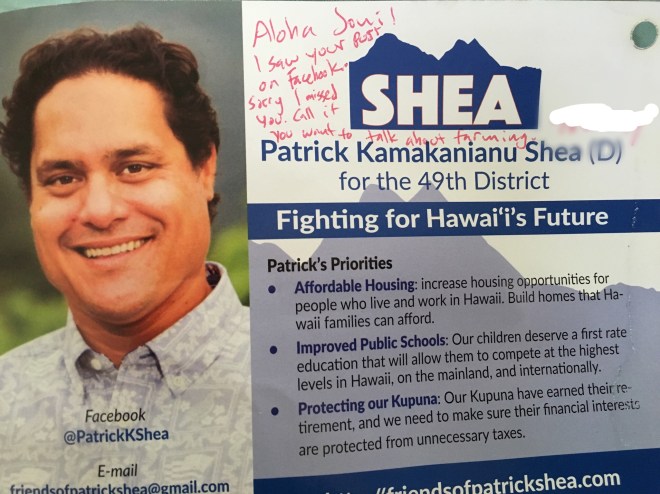
It’s interesting that I received this card stuck on my fence from a “progressive.”  I simply posted on comment on his Facebook campaign page hoping that he’d support all farmers since he was printing his t-shirts on GMO cotton.  Instead of replying back to me, he actually found my address and tried to talk to me, which is weird to me.  It’s like you kind of stalked me down.

Now why would I want to “call you to talk about farming” Patrick?  I don’t see anything in your resume or page that indicates to me that you know anything about farming.  You aren’t spending days in the hot sun and heat tending to fields that give your livelihood.  Nor are you in an occupation where you’re growing food for people to eat year after year, week after week, decade after decade.  I somehow doubt that you know anything about the bugs and disease we face as farmers and have no clue last to what GMOs really are.  Have you ever lost your hours of hard work because of a plant disease that was beyond your control? I doubt it.  But hey, you apparently want to talk farming.

I’ve seen that you replied to me later acknowledging that you “fully support Gary Hooser.”  Do you seriously think that the anti-GMO politician is even more knowledgeable about farming?  He talks the talk about organic farming with Dr. Valenzuela like it is such an easy thing to do.  He’s never grown food for several decades but hey, he knows farming.  I’ve never ever seen a photo of him breaking a sweat, covered in dirt, or scouting for pests, but hey, you progressives know farming so you say.  I really LOVE how you talk about GMOs and pesticides along with Ashley Lukens who has never farmed either and have no indication that you’re willing to learn about it.

So, progressives of Hawaii, the kind of progress you want is to increase our imports to 100% with the stances you take.  By being fully dependent upon imports, that’s a really GREAT thing for sustainability.  Those lofty dreams of yours of taking down the “multinational corporations” leave us small farmers with higher costs for agricultural supplies and other inputs, including affordable ag land.

The rejection of science in agriculture will leave us with extinct ohia trees and other crops, like bananas, which is at risk for total decimation by disease.  We can all get to enjoy Williams bananas that taste nothing like our home grown apple ones.  There won’t be anyone wanting pesticides near their homes too because you’ve decided to fear monger around it instead of educating.  Local residents get to experience invasive species right in their homes because you’re promoting refusal of treatment to kill these creatures. By blocking modern tools like GMO mosquitos, Hawaii folks may get to feel the pain and suffering of dengue and Zika too.

Lots of these same progressives are stating that we have to close of our exclusive economic zones in the oceans too in the name of conservation but then stand with signs criticizing the fishermen, despite telling folks that fishermen wouldn’t be affected.  One local food source with become a thing of the past with the loss of ocean access.

Progress to me is adopting new technologies and ways to do things.  Those who feed people are working so hard and yet progressives want to turn back the hands of time to make their jobs even harder by denying this technology.  I stand for making people’s lives better by using technology and innovation.  We, as modern day citizens, have benefitted so much from technology and yet there’s a faction of people who want to take it away.

So Patrick and other progressives, if you want to talk farming, I have a better idea over talking.  How about you come down to the farm and not take a tour.  No, a tour doesn’t give you any idea of what it takes to grow Hawaii.  You come down at 6 am and start preparing to harvest those papayas.  See if you can drive the tractors and forklifts without knocking over trees and safely keeping your workers on the platform.  See if you can load a 60 lb bin onto the platform and then remove a full one and place it in a high cube truck.  Stack 6 of those bins in that truck too without having them fall onto each other during the ride back to the shed.  Better yet, drive that high cube without scraping the side view mirror in narrow spaces.  Then once you’ve spent hours picking those papayas, please come down and wash and pack it all out.  Make sure you get all the orders right and know where they need to go and how many.  Hand grade every single fruit picked.  After you’ve picked it, pack it all up so that your fruit is ready to go.  Lift some 200 plus cases of 25 lbs and don’t forget to carry the off grade ones too in those 50 lb boxes.  After you’ve done that, the next day you can deliver them all over the island and sit in traffic too to get them to the stores.

You simply can’t “talk farming.”  That just doesn’t cut it.  Until you come down and do this for several months or even years, you don’t know farming.  And to the public who gets their farm information from Google, you don’t know diddly squat from what you read.

My body aches and I’m tired.  I’m reminded about how grateful I am to those that do farm. To those people who think they know farming but have never been on one, get on the farm or shut up before you criticize.  Yeah, I mean it.  I hope that the public who listens to “progressives” view of farming realizes that they listen to people who only talk with no real action showing their willing to learn about it, let alone work on it.  If you ain’t feeding people or on the field, you don’t know nothing about farming.

Live it before you talk about it.  So, when are you planning to work on our farm progressives? We have plenty of work available for you!
image


Politics

Politics

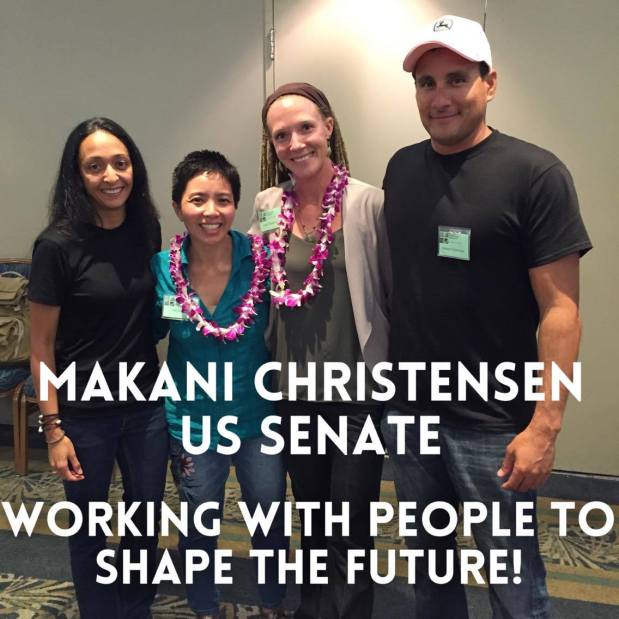
Something that has been lost in politics is the ability to work together. In Hawaii where we were accustomed to working with people who don’t look the same or speak the same language, the locals somehow figured it out. That was the lessons learned on the plantations. Lots of people reminisce about those days as small kid times or hanabatta days.

Just take a look at what’s happening nationally with the presidential race. Everyday you hear Donald Trump insulting someone or Hillary Clinton on the defense on something he said. When Bernie Sanders was in the fray, you’d see his followers get all angry and vile towards Clinton. It really is an ugly mess that I truly am totally disgusted about. The national political arena doesn’t need to come to Hawaii. We have got to start looking for leaders who will work together with others, not just themselves and promote exclusionary policies.

What we forget many times is that leaders are supposed to be the example to the people. If that person can’t think before he or she talks and then acts badly, that sends a strong message to the public that the behavior is acceptable. For me as a mom, if I’m misbehaving around me kids and then see them acting the way I was, I can’t condemn their behavior if I was the example. It’s the same when it comes to politics.

I was so hopeful to see Representative Tulsi Gabbard asking for the House to vote on the Zika appropriations bill to bolster funding to address it. There was a beautiful press release that almost alluded to her supporting it. However, after that info went out, nothing was issued to inform the public what happened on it. It turns out that she voted against this bill despite her asking for a vote on it. The ‘say one thing and do another’ is easy called out with this woman and it scares me on how she is misleading the public. Is that the kind of leadership we deserve in Hawaii? Shouldn’t leaders be transparent to their constituents about where they stand on these issues and even follow up?

When politics start to affect public health and well being, there’s a major problem there. As a public servant, shouldn’t one be looking out for the well being of their constituents? Wouldn’t you want to have people knowing where you stand and what actions you’re taking? Don’t you want people to feel safe and that you’re doing your best to protect them? I do.

This year I’m voting against the grain, and against all odds. The “environmental movement” has become an industry in Hawaii with lots of political power and it’s not based on good evidence. With farms and fisheries facing closures by those who least understand it and using underhanded, undemocratic methods, Hawaii stands to lose tremendously. Those who are trying to bring more local food production are being attacked by outside, mainland groups with lots of litigation. There’s a trend of people who support excluding others in decisions that will affect livelihoods. These community dividers also seek to attack those who are feeding people and tending the land all in the name of “malama the aina.” There’s no ability for collaboration when those who operate on the ‘ends justifies the means’ mentality. Every issue becomes so polarized and divisive. That sends me the message that something is very wrong here.

At a time when our communities need to heal from these outside mediated attacks, a new breed of “aloha aina” or “malama the aina” folks want to continue this divide. How can the people of Hawaii ever rebuild relationships and communities of we’re constantly at battle with each other? These so called “progressives” are very keen on keeping us divided by the stance with which they take. How can societies progress when they are in a war? They simply can’t. While the battle rages on, more and more of what makes Hawaii special goes with it.

Hawaii is in need of some real, grounded leaders. That leader needs to be willing to come to the table and talks story with everyone so that an accord can be formed. People simply have to agree to work together. We all live in this beautiful island state that we all cherish. We love the unique local ways here. We can’t thrive if we keep putting leaders in office who create divides in our communities. Real progress comes from people all working together and collaborating on building their communities and helping people thrive. We all deserve that in Hawaii. Our leaders need to be willing to work with others to build and shape the future for everyone. Isn’t that what our keiki all deserve?

image

The Forgotten People


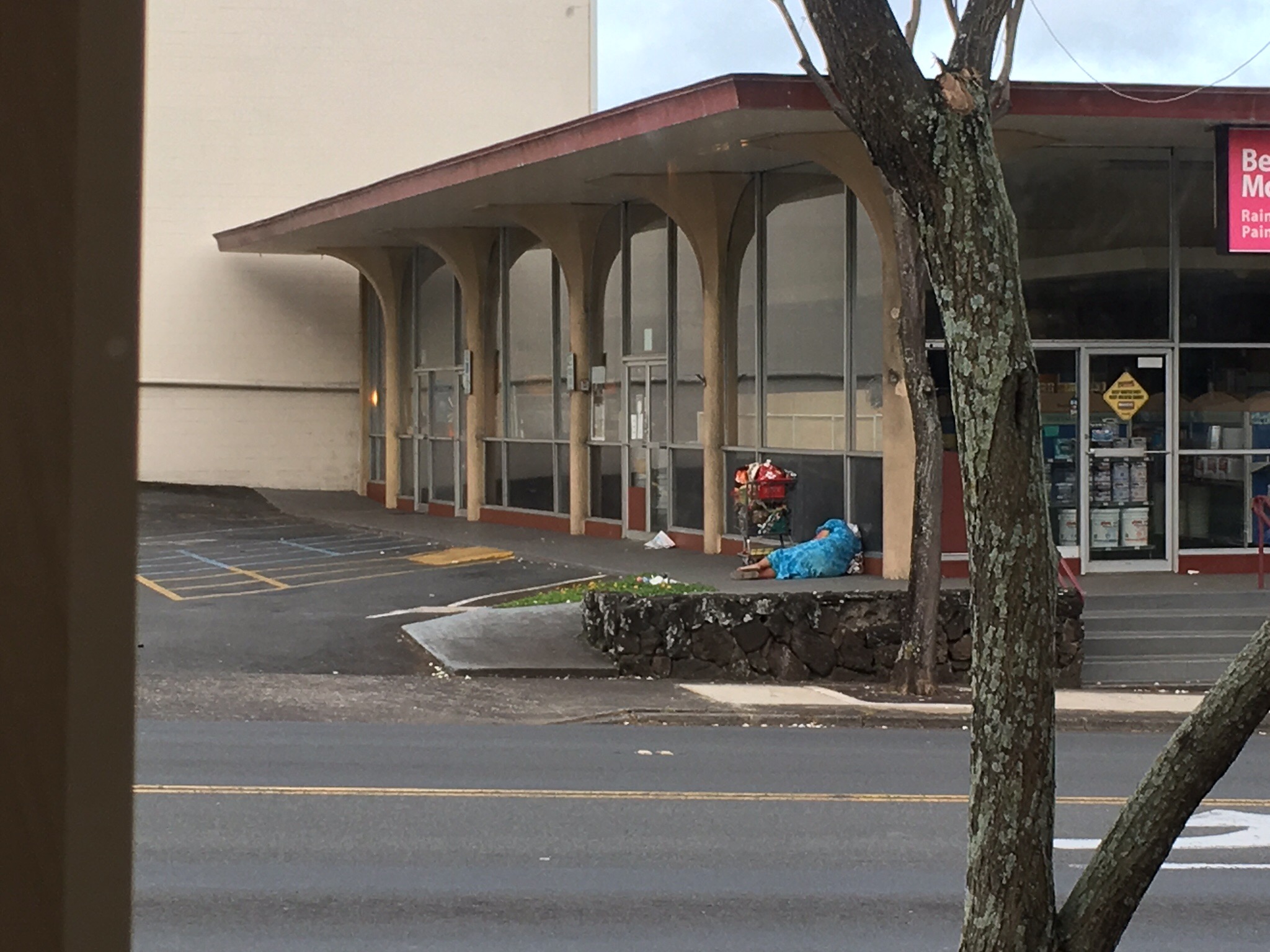
Last week as I took my children to eat dinner, I noticed a very sad sight.  Across the way from where we ate, I noticed a woman dressed in a bright teal muumuu sleeping on the sidewalk.  She had her shopping cart beside her and lay on the hard cement with nothing else.  It used to be a rare sight to see right in the community where I live, but not anymore.

The news today was that Hawaii has the highest per capita homeless rate in the US.  It’s not a proud distinction to have.  The homeless have also returned to Waikiki after the lifeguards leave and have been using the beaches as their toilets or sleeping in lifeguard towers.

With more homeless, we’ve had our share of thefts from those living in the nearby bushes too.  The edge our fields are sometimes trashed up from vagrants too.  The once empty brushes have become home to many people.  Thanks to the ACLU, our communities can’t get people off the street since they overturned vagrancy laws and help enable homelessness.

Not only is homelessness increasing on the suburban areas but it’s spreading into the rural communities.  Without jobs in rural areas, the combination of homelessness is compounded by substance abuse also.  Those two issues lead to crimes and a vicious cycle that you won’t hear much of in the media.  Paradise to some has become a living hell for others.

Having worked on the North Shore areas for over 40 years, my dad has seen many folks deal with the cycle of drugs.  Without any education or support to pursue goals the further oneself, many young people get caught up in crime, drug abuse, and eventually jail.  Some don’t make it to jail but live in a vicious cycle of poverty.  

My dad and brother have taken many folks under their wings to give them an opportunity to learn how to work and stay working.  Despite going to public school, some people can barely read or write or do simple math.  If one does not have the basic skills, how can they hold a job to earn a living? They simply can’t without being taught.

Being outside and using one’s hands to plant something that will produce food is one of the oldest occupations that too few know how to do.  However, for those who aren’t skilled at higher level work, this is a start to obtaining something to live on.  Many other farms help develop these basic skills to give a starting point for a better life.

Life on the farm also teaches work ethic, dedication, and perseverance.  It’s something that many of us take for granted.  When a parent doesn’t teach this to their kids, these children grow up to be poorly prepared to work.  

The latest move with environmentalism is to take away people’s livelihoods without good reason.  Hawaii is not in a place to be losing opportunities for their people.  We can’t afford to be fighting while so many lives are being shattered by drugs and alcohol.  We need opportunities for our keiki and a goal to work collaboratively.  If we want a future, we have to build that future.

Building a path to go back in time isn’t going to create opportunities to advance people.  Living in the past isn’t going to send your children to college to give better careers.  It’s good to remember how things were done before but trying to survive that way isn’t realistic.  You’ve got to make it first then you’ll be able to live in the past.  Just look at the small newbie farmers and how they amassed a fortune to now live simply.  The local folks don’t have that luxury.  

In some ways, homelessness is a return to our past where we started off as nomadic people.  When food becomes secure, that’s when we establish ourselves.  History always repeats itself and it doesn’t mean we stay back in the past.  People need livelihoods in order to have a roof over their head and food in their stomachs.  The homeless are like modern day nomads who are in search of food and shelter on a daily basis.  Drugs and alcohol are the toxic chemicals that’s secretly poisoning families and the future of our keiki.  Pointing fingers at the wrong problems only prevents us from ever doing what’s pono, which is to malama the people.  

The Schatz Shaft

In yesterday’s Star Advertiser, Senator Brian Schatz came out in support of the expansion of the Papahanaumokuakea Marine National Monument.  It’s interesting that he’s claiming to support Native Hawaiian rights.  It’s good and dandy that he is supporting the Hawaiians, however, he is a United States senator, elected by the people of Hawaii.  Should he not be representing the entire state of Hawaii, not just one class of people?

What’s even more disturbing is how many activists have stated that the expansion would not affect the fishermen.  Even Paul Achitoff of Earthjustice had replied to one of my comments on Civil Beat claiming that the monument expansion would not affect the fishermen.  Now the latest announcement is that the Kauai longliners will be able to access the area they use.  Now wait a second, wasn’t the environmentalists claiming that no fishermen were going to be affected and now they’re saying something else? Where does that leave the Oahu longline fishermen? High and dry?

As I look closer at the funders behind this monument, it’s clear that this is yet another well funded, outside organization attempting to influence our ways of living here in Hawaii.  The Pew Trusts are a huge proponent of the closure of these areas.

Just who is the Pew Trust? It’s big money to the tune of $800M and it’s once again corporate made money that has turned to saving the earth.  The money that funds the trust is from oil.  Yes, it’s the environmentalists’ biggest enemy, oil, that is funding these ocean closures worldwide.  The activists conveniently don’t disclose these facts about it.

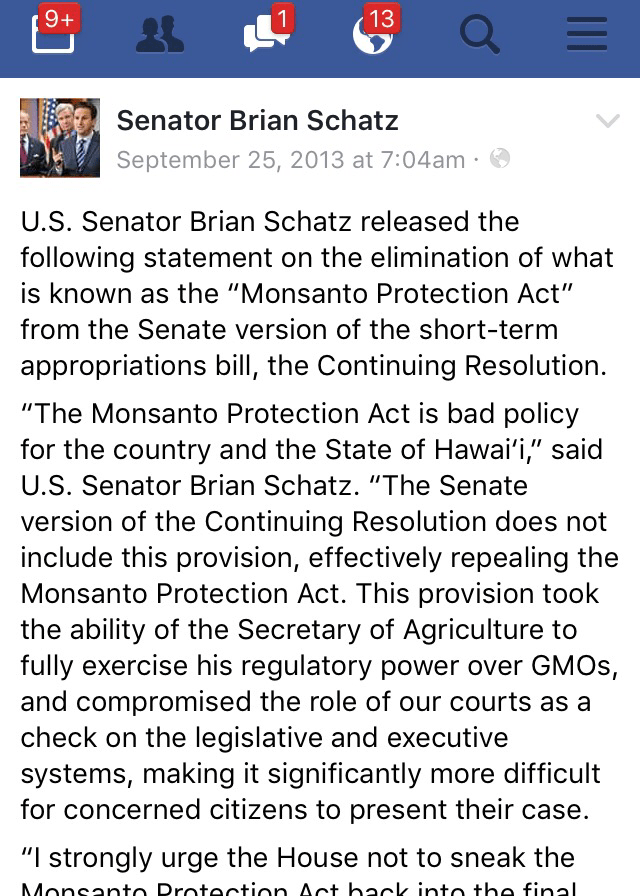
Should we be surprised that a person voted by the people is using big oil money to deny local people the right to fish the oceans? Nope.  Senator Schatz has taken to rejecting evidence based policy before when he had a press release on the bogus Monsanto Protection Act.

Schatz’s Monsanto Protection Act from Facebook.

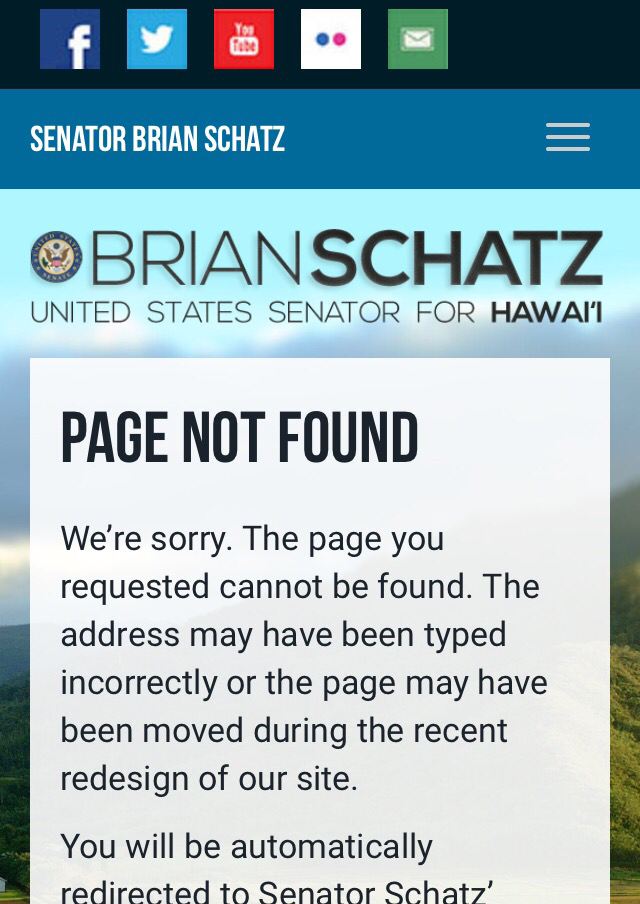
The link touting the conspriracy theory is gone from his page.


My husband and I had a discussion about environmentalism the other day.  He donates to a group and I refuse to.  He said who is going to protect the earth?  He, like so many others, is operating under the false assumption that any industry is guilty of not being environmentally friendly and that one must pay someone to protect it.

Environmentalism sprouted in the late 60’s as a protector of the earth.  The reality is that industry, like farming or fishing, are under very strict regulations that are science based.  I’m surmising that once these regulations became strengthened, these non-governmental organizations risked losing their sustainability.  Their next move was to form legal defense funds to use the courts and loopholes to fund themselves.

After seeing the tactics being used, this industry is unregulated, not transparent, and not accountable for what they do.  When I see the Sierra Club jumping on anti-GMO events, big money is at play here.  Instead of supporting access to technology that can create a cleaner world, they want to take it away.  

There needs to be educated environmentalism here in Hawaii and globally.  Is taking the very technology that can reduce inputs an educated stance? Is taking away ocean access from the very people who know it best a good thing while allowing foreign fleets access the wisest way to manage the area? Why does modern day environmentalism focused on extracting humans out of the lands and water?

When Washington, DC and California elites come to Hawaii, they don’t understand how much we are intertwined into our environment.  The local people love the beaches, the mountains, and forests.  Saving the environment by taking us out of it isn’t reflective of even the ahupuaa system.  The Hawaiian people even understood this but mainland groups don’t.  What we are in dire need of is educated environmentalism that every person understands their place in this system.  

Environmentalism isn’t about creating work for people and helping locals make a living.  Its focus is on shutting down farmers and fishermen and yet they talk about sustainability and self sufficiency. They very people they attack are doing that work but are becoming more and more impeded by the aloha aina attitude.  

As an elected official voted in by the people of Hawaii, Senator Schatz owes everyone in Hawaii fair policies based in evidence.  President Obama also needs to include the people’s voice in his decision.  America was the land of opportunity where we have liberty to live freely.  Oppressing those who feed us and tying their hands without good reason, is the very thing we fought against.  

When saving the environment becomes intent on stripping access to resources and tools from people, we are losing our freedoms as American.  A democracy was formed by many people working together to address issues.  The anti-GMO, anti-TMT, anti-fishing and other anti movements are clearly anti-democratic.  

A vote for anyone who celebrates progress as taking away livelihoods, is launching a greater attack against the local people.  The fishermen and farmers do more than just bring in food or grow Hawaii.  They provide local food for everyone.  They rely on others for supplies to do their work.  That’s more people put to work.  The fish turns to poke and helps chefs and restaurants showcase Hawaii’s unique flair.  Simply closing one industry does not come without affecting others.

The trickle down effect isn’t obvious but it’s there.  Even more people are provided work through a fish or farm with their own employees having incomes to use at other businesses.  Families will be affected without doubt.

Hawaii families are already struggling here with the rising of living.  Nearly 50% of people here live paycheck to paycheck and we are one of the worse states to do business in.  Should we be surprised that we have so many homeless and one of the highest rates of poverty at 1 in 5? Should we be shocked to learn that meth use is rampant and having stuff stolen is common? The lack of funding for education will continue when there’s no taxpayers providing that income.  No income means less tax funding for social service programs to help the elderly and homeless.

Not caring for the people is not indicative of a progressive society. Being dishonest and unfair is not progress.  Outsiders tend to mock “plantation mentality” but it was that mentality that helped get people cared for with medical benefits before it was a thing.  However, that same mentality is keeping the local people from wanting to speak up.

Let our Senator know that taking away jobs and local food is not okay.  Every time you eat that poke bowl, just remember who helped make it for you.  One day, you might only talk about eating it because no one will be fishing anymore and it won’t be because of no fish.

Tell Senator Schatz now that we want fair access to resources and fact based policies.  The local folks deserve it!


Progressive Democracy?

If you haven’t figured it out yet, Hawaii is the hotbed of environmental activism, more aptly called the environmental industry.  Yes, it’s a business that runs with a completely different model but with the kind of money involved, it’s a business and not “advocacy.”

Instead of having a corporation to operate from, environmentalists have created a new model of using a non-profit status.  It’s tax exempt and also their donors get tax write offs for their donations when you have a “good” mission to advocate from.  The other great part about this model is that there is no disclosure required of the non-profit to show who their donors are.  It’s not a taxpayers’ right to know who is funding these business ventures and non-transparent even though they demand transparency of others.

While corporations are being criticized for being the doer of all evils and held to increasing regulation, the non-profits have free range to unleash any tactics available to get their way.  There is no regulation on these non-profits and they aren’t held accountable for facts and do as they please essentially.  There’s no repercussions for their actions and these groups have taken an extremist position.  Like any extremist position, there is no ability to find common ground.

People who take this position can only see one way.  The Hawaii environmentalists are shouting “Aloha Aina” and “Malama Aina,” and see the need to fight to protect the land.  Their belief lies in the assumption that man must be removed from nature to protect it.  Man is a part of the land and we derive our life from the land.  If we are removed from the land, how are we to survive?  We are indeed a part of the ecosystem and can’t be ignored or removed from it.

Like any extreme position, the ends justifies the means and that is what is unfolding here in Hawaii.  That’s why the relevance of facts is useless in these debates, whether it be GMOs, TMT, or the Superferry for that matter.  You can toss out any fact and there’s no accepting of it and it causes these activists to dig deeper into their positions.  As long as you get your way, that is all that is important.

When I learned about the plight of the fishermen, it made me realize that the tactics and messaging used is universal.  The activists need a bad guy and will create that narrative.

GMOs: “It’s poisoning the aina!” “It’s making people sick!” “It’s taking over our food supply!”

TMT: “It’s poisoning the aina!” “It’s desecrating the mountain!” “It’s going to be used a military weapon!”

Fishermen: “They are killing sea turtles and birds.” “They are overfishing!” “They are destroying the oceans.”

If you look closely, the repetitive arguments are pretty similar across the board between the issues and take the common thread that there must be a stop of this evil.  Immediately, you’ll get a pop-up box stating that you should pay them money to help solve the problem.  Give money now and they will save the world. No one ever bothers to crosscheck those facts and just simply believe because that is human nature.  We like to simplify the issue in to soundbites and not look things up.

Like the GMO issue, the environmental industry is attempting to use the aina to put people out of work and harm the families of those who work in the industry.

IMG_0180

When environmentalism is used to put people out of work, there’s a problem there.  The attempt to remove the human factor from the ecology is problematic at multiple levels and unrealistic.  Simply stating that if there is a loss of work to people shows the cold, callousness of these activists and the lack of empathy.

Not only do these activists desire to take incomes away from people, they willingly show how they aren’t able to walk in the shoes of others.  Like extremists, they don’t care about the harm that they create with their stances.  It’s completely ignore regardless of how correct it is.   Where in a democratic society is it okay to deny others the basic right to work?  Denying that right only spells demise.

The huge push for the closure of the Northwest Hawaiian Islands under the guise of the Papahanaumokuakea Monument isn’t any different than the ag issue.  These folks love to play on people’s emotion and unsubstantiated “facts”to garner support.  I caught this post on the Expand PMNM Facebook page touting a lot of “facts” supporting it.

Screen Shot 2016-06-15 at 10.03.14 PM.png

If you look closely at it, you can see there is no source to back up these claims.  On top of that, they also play a video of a nice turtle swimming around in the ocean.

Screen Shot 2016-06-15 at 10.03.42 PM.png

It’s a great play on emotions and gets people wanting to take action.  Who wouldn’t want to after reading the passage and then watching the video?

Like the anti-GMO movement playing videos of “documentaries” and using a  lot of fear imagery, the expansion of the monument sounds really good after being the delivered “facts.”  Let’s stop and think about this more.  Are those numbers touted really true and where’s the actual data set to back it up?  Do you simply watch these videos and just believe or do you question the information presented?

The facts do not support the need for the expansion of the monument.  So then the support is garnered for the native rights issue where the land and oceans have to be protected for only Hawaiians.  I have to think that the Federal expansion is occurring under a democracy.  If that is the case, shouldn’t all the people of Hawaii have a say in this issue as it will affect them?  Isn’t that a democratic thing to do?

After that’s all been said and done, the last argument being made in support of this expansion is in the name of science ironically.

“The expanse of Papahānaumokuākea is the manifestation of Hawaiian cultural values and the wonder of scientific knowledge and discovery. It is a sanctuary for our Ocean Heritage.”

If closing off the oceans is going to help preserve cultural values and advance science, why are some Hawaiians protesting the Thirty Meter Telescope of Mauna Kea? Isn’t the telescope going to help preserve the heritage and culture of studying stars and help to advance knowledge?  If the oceans are being used in that way, shouldn’t the mountains also be used to celebrate the wonder of science and knowledge?

With the Office of Hawaiian Affairs supporting the expansion of the monument under these same arguments, why does it change with Mauna Kea?  The cultural practitioners have access to the summit with the telescopes thanks to the roads and no longer have to walk up there as in the ancient days, which was mentioned by Keahi Warfield in his video supporting the TMT.  They have access to the many parts of the sacred mountain thanks to those roads that also built the telescopes.

Hawaii is dealing with extremists that can’t work to collaborate with others.  It’s their way or no way.  That is creating dysfunctional communities and pitting friends against each other.  We have our own political discord in our islands where the native rights are being fueled by outsiders who have no ties to the Hawaii communities because they don’t live here.  Instead of encouraging community discussions and learning from each other to work on a plan based in common ground, it’s their way or no way.  The native rights would sound more authentic if it wasn’t funded by outside interests.

These are just a few of the outsiders who are using the environment to take away our local ways of living and they will do anything in their power to do it as we are seeing.  They have spread misinformation on everything from GMOs, the Superferry, TMT, and now the ocean monument.  They have lots of money that they don’t need the ferry like the local folks do.  They don’t enjoy the fresh fish we get from our local fishermen.  Neither has any link to Hawaii’s agricultural heritage either.  They call themselves progressive but putting people out of work and romanticizing the ancient days is anything but progress.  They use native Hawaiians as their vehicle to do this while tearing communities apart is anything democratic.

Democracy means including all people in the conversations.  Being rude to a high school student testifying in favor of the TMT isn’t democratic, it’s attempting to silence her stance and isn’t different from threats of crop destruction and burning of tractors.  Attacking a facility up on Mauna Kea and damaging property and harming people in the name of protecting a mountain isn’t something acceptable in a democracy.  Placing rocks on the road heading up to the summit in hopes of someone hitting it and getting into an accident isn’t an acceptable behavior in a law abiding society.  Telling others who aren’t Hawaiian but have a stake in the access to oceans that they have no say not democratic either.  Bernie Sanders, the presidential wanna be, touts communist values and yet his followers acts as dominators of the issue instead of treating their fellow man as an equal.

The saving of the earth can’t be used as way to rob people of a way of living.  That isn’t what makes a democracy.


An Old Lesson

image

Several years ago, my eldest daughter had asked for a globe for Christmas.  Santa loves toys that are educational and timeless, so he brought it for her.  As she’s turning into a tween, her interest in it has waned but my kindergartner has become very intrigued by it since our adventure to Ithaca last year.

As Katelyn, my soon to be 6 year old, was trying to figure out her place in the world, she started asking questions about many of the fellows that she met at Cornell.  Her first question was where was Nassib from.  We started to talk about Uganda.  She was even more curious and wanted to see what Uganda and other African countries were like.  She randomly pointed her finger at the globe and landed in Zambia.  She then said, “Momma, what are the kids like there?”

Well, I decided to search on YouTube Zambia and children.  As expected, videos about feeding children came to the top of the search.

I showed Katelyn the video without even screening it.  I explained to her that there are children who only get to eat one meal a day.  She was simply shocked.  I asked her how she would feel if she only ate once and she said she would not like it.  We had a great discussion about why momma went to Cornell to help kids who weren’t as lucky as she was.  I emphasized to her how can you play when you’re always hungry?  She said she can’t do anything when she is hungry.  Sadly, there are so many in the world who are in this situation.

As the video played, I could not help but think about how many times I was told that the “feed the world” message is “propaganda” by corporations.  That message doesn’t resonate with people who have it all. As I watched the video of the children eating happily, a biblical passage came up.  I’m not an ultra religious person but I can appreciate the moral lessons in the bible.

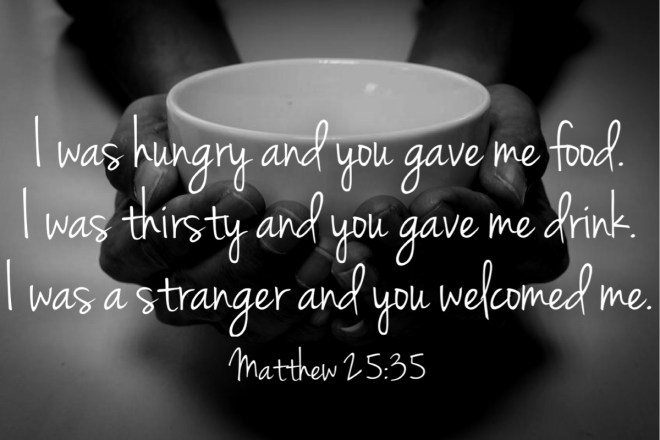
“I was hungry and you fed me.  I was thirsty and you have me drink.  I was a stranger and you welcomed me.”

The concept of feeding others isn’t something new at all.  It’s no different than Jesus’ lesson on teaching a man to fish is better than giving it to him.  The theme of Sharing our food is an ancient lesson that helped to build our societies and communities.

As I showed Katelyn where her ancestors came from on the globe, it’s clear to me that we all came from some place far away.  Hawaii was an area of global convergence thanks to agriculture.  We cannot forget our roots in the global community.  The Hawaiians descended from people that travelled from the Polynesias.  They were travelers of the world themselves.  We are global citizens.

We can live under the fallacy that Hawaii is not key to the world but that’s operating under a false assumption.  What we do in Hawaii affects the world and not helping others, especially the children, is selfish. We can teach our children to be self centered people or we can teach them some of the old lessons, which focused on compassion and thoughtful person to help their fellow friend across the world and in their communities.

My kids will not learn the lesson of “me,” but a life lesson that it’s about “we.”


If

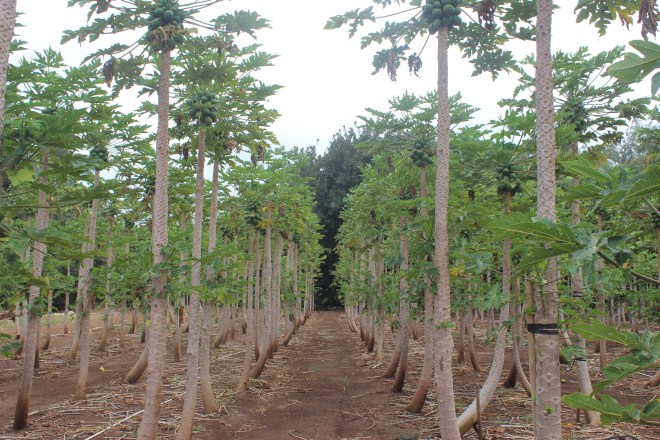
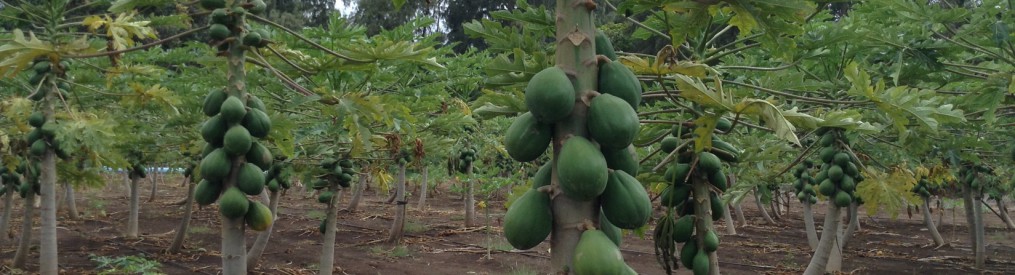
If you took away biotechnology from the Hawaii papaya farmers, we’d have no papayas anymore.

If we stopped vaccinating children, we face the heartbreak our great grandmothers witnessed as their infants died in their arms from diseases we can now prevent.

If we block a telescope that can expand our knowledge of the origins of our universe, we will lose the ability for our local kids to witness in groundbreaking discoveries.

If we take away water and deny fair access to the resources, our beloved  agricultural lands will turn into developments that will take more precious water.

If we allow social science majors to impede science discoveries at the University of Hawaii, the mission of the land grant college will never be fulfilled to its potential.

If we do not embrace education in science to play a role in elementary schools, our children cannot be prepared for future careers that can help innovate and adapt.

If we continue to romanticize the old days, we neglect to learn from history the hardships our ancestors faced to get us where we are now.

If our leaders give up access to the oceans, our youth cannot learn skills on how to feed themselves and learn a sense of appreciation for the food we have.

If we fence off hunting lands from the hunters, a father cannot teach his son how to provide for his family using the resources available and how to conserve the environment.

If we allow ideology of the kalo plant to dictate policy, when disease and pests decimate it, we won’t be ready to have knowledge on how to save it.

If we don’t speak up now and take action, Hawaii’s future will be in jeopardy.img_2869


Feel the Bern?

Nope.  After seeing so many anti-GMO activists with those bumper stickers and knowing what they have done, I definitely do not #feelthebern.

I do not want my children to ever act like this.  They will not be buying people’s domain names and making up fake websites for them.  Nor will they put threats of crop destruction or hate comments about issues they aren’t educated about.  They will be held fully responsible for their actions and know it.

In a world where there is too much bad behavior already, I won’t add to a new generation that accepts it.  We need more upstanding citizens that will work together and be collaborators and think about the future, not at the issue of the moment.  We need critical thinkers and not hobby activists who threaten our future.  We need problem solvers and innovators.  We don’t need insulting, childish, and blockers progress in the name of conspiracies.  These people will lead us no where and when a real problem arises, they will turn to science to solve it.  That is the truth that they refuse to accept.


image

The Ideology War

IMG_3385

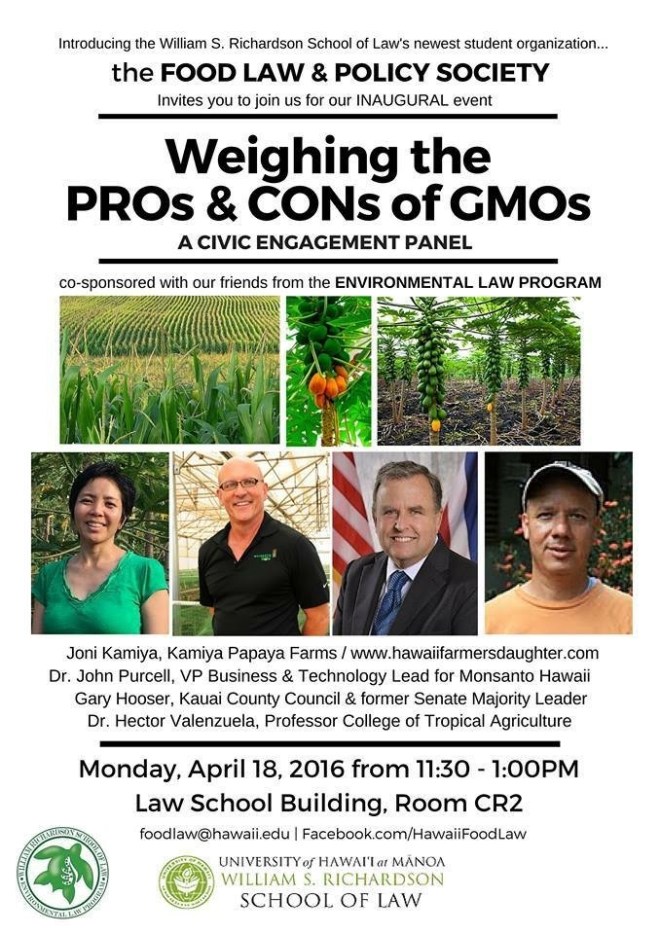
Yesterday I had a chance to participate on a civic and civil discussion about GMOs and Pesticides in Hawaii.  I was on the panel with John Purcell of Monsanto, Dr. Hector Valenzuela, and Kauai County Council member, Gary Hooser.  I took a day off of work to participate and sent my baby to his sitter to do this.  My hope was to get students and the general public a better grasp on this issue affecting Hawaii.

It was not surprising that several anti-GMO activists were in the audience, which I thought was good because they need to hear about this issue.  As I prepared for this discussion, I had stumbled upon some very interesting findings that pointed to me that this is environmental radicalism front and center in Hawaii.  I was told that people had come to our various islands to consult to them about issues in their community that they wanted taken care of.  The group was called the Community Environmental Legal Defense Fund that’s based in Pennsylvania.  I had discovered this group through a radical environmental group known for it’s militant tactics called Deep Resistance Green.  The things I read about these two groups were disturbing.  There was assumptions that all corporations were bad and that government could not be trusted.  The course of action was to create a protest and use sabotage and various methods legal and illegal to help protect nature at any cost.  It was the doom and gloom scenario that man was ruining the planet and it must be saved.  It’s no wonder that Gary and Hector kept repeating the words corporations and chemicals over and over.

As I thought about it more, facts just don’t matter in this debate.  This is a debate in ideology if you think about it closely.  Here, the farmers and scientists, are operating under the assumption that we are feeding the world and looking for ways to do it better and differently.  They rely on concrete data and measures and collected observations to make this happen.  They are optimistic and hopeful and look for ways to sustain themselves.  There is a embracing of technology  and advancement.  On the opposing side, they simply believe that this technology is not natural and will ruin the earth and biodiversity.  They embrace the old ways of doing things and want to reject these technological advances for themselves and for others.  Giving the technology to farmers in developing countries will spell out advancement in these cultures and a move to a more modern life, something that they find dissatisfying.  They consider tampering with nature something utterly horrible to the species.  They are protecting the rights of nature at every cost, which explains the lack of intellectual honesty throughout this movement.

The most concerning issue that I worry about is this attitude that there is no need to consider feeding the world.  If I follow the radical environmental lines of thinking, they think that feeding the world means more people and more harm to earth and that is the war that they are fighting to save.  This shortsighted thinking lacks the realization that we are a global community and that we are ever changing and progressing as humans.  Some of us in modern societies have lost a sense of appreciation and can’t find meaning, they turn to saving the planet as their meaningful activity in life.  I now can see clearly why the feeding of the world message simply doesn’t resonate in the public.

So why do I care so much about this issue?  We are global citizens and my three young children will grow up in the world that I can help create.  I can chose to not speak up and get people to think or I can do it.  I do not subscribe to the belief that nature is greater than humans.  We have to find balance in how we grow our food and use the environment to do so.  We must be able to adapt to the changing climate and be prepared for the future if anything.  To completely shut down any advancement or new technology can only set us back and actually cause harm in protecting it.

The movements of the moment like the anti-vaccination, anti-fishing, anti-dairy, anti-hunting, expansion of the national whale sanctuary, community based fishing management, as well as the anti-ag are suddenly clear to me as I read on some of the backers of it.  This is an industry of itself, the protest industry.  Here’s just one of the groups in it.

The “Deep Ecology Platform,” as the movement’s credo is called, emphasizes the relative worthlessness of human life, rating it as no more important than that of plants or animals. The Platform considers human beings as a mere “interference” with nature, and openly aims for a “decrease of the human population.” It wraps up with a call to action, suggesting that people need to abandon the idea of “adhering to an increasingly higher standard of living,” and instead should pursue “changes in policies” that affect “basic economic [and] technological structures.”

Because it shoves humanity into a role of relative unimportance, Deep Ecology has been a fringe movement since its birth in 1970s Norway and Romania. With the backing of Doug Tompkins’ money, however, Deep Ecology and its logical offshoots have quietly moved to the front of the environmental feeding trough, passing “shallow ecologists” (what used to be called “conservationists”) on their way to a stunning level of influence.

This man, Douglas Tompkins, made his money through corporations like Esprit and North Face as well as Patagonia.  Once he was rich, he decided he needed a cause and started funding these environmental groups, one of which is the Center for Food Safety.  As much as Ashely Lukens of the Hawaii Center for Food Safety likes to portray the image of someone who is out to protect people, let’s be very clear here, that is not the end goal.  This groups operates under the assumption that we don’t need more people on this planet and giving tools to feed people means more harm to the environment.

I’m floored to have come to that realization and remain stunned.  The rich, well fed people have funded a selfish movement that ultimately denies every human the right to food.  I’ve seen a comment stating that just educating people in developing countries will solve the birth rate.  Um, no, it’s not that simple.  If you don’t eat or lack enough nutritious foods, you can’t develop properly and think or problem solve well.  A hungry person can’t be productive at all and become a contributor to their countries.  If your mother isn’t fed well, her baby is already disadvantaged from the start.  It’s a really vicious cycle that isn’t easily escapable.

Some people will think that because we don’t see those people, some 795 million based on UN estimates, it’s out of sight out of mind.  Sure we don’t know who they are but we are a part of the global community and eventually, something will happen that will make it affect us.  As Ethiopia is struggling with a drought, we as a developed country have the responsibility to help others with aid.  If a war breaks out and people flee these countries, they need to go somewhere and much of the time, they land up in developed countries.  One can’t say that it’s not our problem.  Eventually, there will be a need for us to intervene and we will be affected by this.

I’m speaking more about biotech and the need for access to technology because I want a world where my kids will have peacefulness and not hear about instability around the world.  I don’t want to see my son have to be drafted into some war because of turmoil caused by our selfish food fight.  My children deserve a world of peace and so do the other children in the world.  Don’t get in the way of that goal, be a part of a solution.  Food is a social justice worth fighting for.


Brown Hands

image

I have been so dismayed seeing the activists once again playing the “these people are immigrants so their jobs aren’t needed” card.  The cold callousness of these kinds of comments make me unbelievably sad.  We are living in 2016 and not in the 1950’s or 60’s, where discrimination was rampant.  Those people who spoke out against this faced harassment and even lost their lives.

Have people forgotten that this is Hawaii where many people from around the world came together to create our beloved local style? We are people of many colors that figured out a way to work together as a community.  It took many hands to build the Hawaii so many of us love but is slowly being torn apart by fear and misinformation.

Does the color of our skin tell a story? It sure does.  My dad’s hands are brown but they have done some amazing things in his lifetime.  Those rough, calloused hands have fixed tractors and vehicles for decades.  It has built stone walls and put up fences to protect his farm and field.  He’s used them to rework a John Deer tractor into a forklift.  His hands can tie amazing knots to tie down loads of hundreds of pounds.  He’s also picked probably over a million pounds of papaya, sweet potatoes, taro, cucumbers, beans, and other veggies over his lifetime.

His hands have had a huge impact upon Hawaii even though it isn’t obvious.  The biggest feat that his brown hands have done is something that most people can’t measure.  He’s managed to raise a family and taught them how to give back to the community and seek education.  We are just like the others in the community.

The activists try to put down a certain class of people because of their skin color.  Brown is because of the hundreds of hours spent in the hot sun cultivating the land and breaking their backs to grow crops that come back to us as food.  (Note: it’s not the artificially induced brown from lying on the beach to absorb carcinogenic UV rays.). Some may speak in accents that sound funny to you and eat foods that smell weird, but they are the true pillars of our society.  What they do allows us to be free to do other things.

As I look at my dad’s brown hands, I’m proud to be a daughter of such a person.  When it comes down to it, the farmers, whether it be papaya farmers or seed farmers, they are the ones closest to the earth and have their hands in the dirt.

Many folks with brown hands have learned the the value of hard work and opportunity.  They teach those lesson to their children who become future CIOs, therapists, nurses, farmers, and other professionals who give back to the community.  Having brown hands should be a symbol of respect for what they learn and pass on to the next generation.  Think about the story about those brown hands because they have a story that you’re missing.