The Right to Know Should be Pay Attention Instead!

Scarlet, my 15 year old GMO eating dog who is still alive!

Scarlet, my 15 year old GMO eating dog who is still alive!

Let’s face it that the GMO war in Hawaii is still raging on with Maui on the hit list right now by the anti-GMO activists.  The mainland funded SHAKA Movement is going full force over there trying to do the same thing that happened on Kauai.  The pictures and the videos are still posted on the social media documenting the so called “outrage” of the people.  It is really amazing to me that people really don’t pay attention to the things in their daily lives that is created by this GMO technology that they feel is poisoning them so much.

I decided to pay attention and take a look at my own life and see where I actually use GMO products.  I bet that many of these protesters live quite similarly to me.  I get my household stuff from Ross, Macys, Sears, and the local Longs CVS.  I went room to room and around my home to see where I could find those pesky GMO things!

I started off in my bedroom.  I went through my drawers and picked out my clothes for tonight.  I found a nice cotton pajama top and bottom along with cotton underwear.  I can’t afford organic nor would want to buy it.  My GMO cotton night clothes came straight from Macy’s where it was surrounded by tons more of it.

The nice sateen cotton sheets that I sleep on is made from GMO cotton too.  The bed sheets as well as the comforter that tops my bed is all GMO derived and made in India or Pakistan.  Even the cotton mattress pad is GMO!

I’ve learned from Farmer Ravi, and Indian cotton farmer, that he appreciates the Bt cotton seeds since he no longer has to buy highly toxic pesticides to grow it.  He also told me how the pesticide companies there were fighting the agribusiness companies trying to bring in this technology there.  The pesticide companies are different than the agribusiness companies and aren’t the same entities.  I’m happy knowing that some farmer in India didn’t have to expose themselves to old highly toxic chemicals to grow the very textiles I use in my daily lives.

When I peeked into my husband’s dresser drawers, I found that even his clothes are all mostly cotton.  We’ve never bought anything organic as we can’t find it here and it’s likely out of our price range.  From his underwear to his undershirts, it’s all GMO cotton!

Next I went into my kids’ dressers and found the same thing.  Nearly all of their clothing is cotton and all GMO too!  Some are made in the US and some across the world from us.  The farmers that grew it didn’t have to use excessive amounts of pesticides to grow it, which is a wonderful earth friendly though really.

I walked to my bathroom and once again find GMO cotton everywhere!  From my fluffy white towels from Costco, to my shaggy floor rugs from Ross, to my facial cotton pads and my mommy diapers as my kids call it, everything is cotton!

As I look closer to my Herbal Essence shampoo, it too has some form of GMO in it.  There is corn silk extract listed as one of its ingredients.  Wow, GMO shampoo that smells great and washes my hair clean.

My deodorant also has cornstarch as one of its ingredients to keep me fresh and dry.  I am putting GMO right in my pits!  This is amazing!  I’ve been using this for years and really had no clue until I took some time to read the label today.

My dogs get a little night time treat so I took a minute to look at the ingredients of their treat boxes and sure enough, there’s some corn meal listed in it.  I’ve fed it to them for years and they are fine and happy to receive it.  My rescued dog, who has been fed GMO her whole life, has reached the ripe old age of 15 human years this year with no problems at all.  She still runs around the yard like a puppy and is as happy as can be.  I’m lucky that this GMO has kept her healthy and my vet bills low.

I stopped by my kid’s mouse cage to feed their beloved pet, Pip.  Pip’s been alive nearly a year eating GMO corn and healthy as ever.  He looks nothing like Seralini’s frankenrats at all.  I still feed him his GMO feed everyday and toss in a few GMO treats that he takes happily.  He is free of any lumps!

My two cheeky lovebirds, Papaya and Charlie, are snuggled together in their GMO cotton sling bed that I made them and are perky and cheery as can be.  They love it when I put in some GMO sweet corn as a treat.  Papaya is 15 human years old and Charlie is 3 human years and are peppy and sassy, even with all of the GMO treats.

I then stopped by my kitchen and took a closer look at what I have in the cupboards.  Sure enough I have plenty GMO food in there from Spam for my musubis to my favorite Hawaiian Hula GMO papaya seed salad dressing mixes.  I also have GMO corn tortilla chips for nachos this week along with GMO chymosin cheeses of all sorts from Costco.  I have GMO canola oil for making salad dressing under my sink.  I keep a nice stock of GMO condensed sweetened milk to make my heavenly seven layer bars with some chocolate chips that likely have some GMO sugars in it.  I even have non-GMO flaked coconut that’s dusted in some GMO sugar that tastes great toasted.  My cupboard and refrigerator is chock full of GMO food items.

I tidied up the kitchen and saw what I can use to do the job and found Mrs. Miwako’s GMO kitchen towels and Williams Sonoma dishcloths that are all GMO cotton.  My Japanese cotton steaming cloth is GMO cotton and great for making my favorite sticky rice dish, sekihan.  I still can’t see how GMO is so bad and evil as everyone makes it out to be!

I took a look at the containers of fish food and found that it too contains GMO corn meal and some soy in it.  My fish that I got from the farm fair last year is still alive despite consuming it for the majority of its  life.  My goldfishes are also thriving on the GMO fish food and seem to be surviving attacks by our crayfish all along.

I checked on my grandma this evening and discovered that she has vials of GMO right in the refrigerator.  She uses GMO derived insulin to help treat her inherited form of diabetes and has been injecting it for years.  She probably would have had her toe amputated or blinded by the disease if it weren’t for this GMO insulin.

I thought I’d load up my car for tomorrow and realized that there’s GMOs being burned in my daily commute to drop kids off and pick up my grandma from day care.  I washed my car too and used the GMO cotton rags to polish it to a nice sheen with synthetic chemicals that do the job.  I used a lot of chemicals from headline polish, tired shine spray, Rain X, window cleaner spray, resin car wax, back to black spray, WD40, silicone spray, and Armour All spray.  I know that there’s a lot of drift from these chemicals and I breathed it in once a month to keep my car clean, since I do like a clean car inside and out.

I found some cans of paint in my garage too and lo and behold, there’s GMO soy in some of them.  The left over newspaper kept from my guinea pig’s cage also has GMO soy ink on it.  Mr. Pig’s cage has been lined with GMO soy ink paper for years and he’s doing just fine with this exposure.  Heck, I’ve been touching this GMO stuff for years every morning when I read the paper.  The paper itself might even be GMO!

I’m not jumping up and down or making a protest about GMOs anytime soon.  It is everywhere and it really has made those farmers across the world have an easier job growing it for us to use.  The farmers here in the US also have benefitted from GMOs and we are the beneficiaries of their ingenuity and hard work, like it or not.  We’re pretty darn lucky if you ask me.  I can’t understand how people can say this GMO is okay but this one isn’t.  How does one pick and choose which type is better than the other?

Stop and look at the world you live in.  Is it as bad as you really perceive it to be?  I don’t think so when you can have plenty of time to march because a farmer clothed and fed you.  The seeds that grew those products had its roots planted here in Hawaii and I really think it’s a neat thing to realize.  What I am protesting is this right to know should really be my right to ask you to pay attention to what’s around you!


End the GMO Paranoia: Knowledge is the Key to Fighting Fear

Having worked in mental health for several years, it is really disturbing to me to see so many Hawaii folks wrapped up on the fear brigade against biotechnology.  I’ve seen so many people tormented by paranoia that their perceived.  Based on the kind of signs and posts people are putting the social media, it is pretty clear that: 1) They feel that they are being poisoned, 2) They don’t know what is legitimate sources of information or how to research it, and 3) Being told the same message over and over again makes them believe things without question. One of the biggest problems that I see in the whole issues around GMOs here in Hawaii is that the issue has been made very complex.  Joan Conrow chronicles this tale of a campaign of manipulation and misinformation by her post, “Feasting on Fear.”

The entire GMO issue has really become a huge tangled mess of information that an average person can’t figure out where to start to research some of the frequently repeated claims being made by the activists. To help those not well versed in the Hawaii GMO issue, I’ll list out some of the frequently stated claims that the anti-GMO activists keep making and refute it with some sources that don’t invoke fear but impart knowledge.


“I have a right to know what I’m eating”

This battle cry that people had a right to know was started back in 2012 with Representative Jessica Wooley’s push for a label of genetically modified foods.  She even brought some very well known organic lobbyers to Hawaii like Andrew Kimbrell of the seemingly innocuous Center for Food Safety.  Hawaii SEED also brought in Vandana Shiva to spread their propaganda about his so called right to know.  Many involved in the  push for this “right” really were saying something else of what their true intent was.  It really is a means of a ban. The truth of the matter is that the FDA did not pursue labeling because if the product was not shown to be different than conventional, there was no need for such a label.  This is also stated in the AMA guidelines for GE foods.  There is voluntary labeling guidelines available.

No Labeling Needed When Consumers Know the Whole Truth


“If it is so good for you, why don’t they just label it?”

This is a frequent comment made by many anti-GMO activists.  The basis of why many farmers are hesitant to label their for, even though there is no compositional differences than conventional, is the fear that has been created by the opposing industry.

Here’s some great sources on why people are fighting the labeling.  The heavy laden fear tactics being carried out the anti-GMO groups like the Organic Consumers’ Association and the EarthJustice have created a huge stigma against something that has no compositional difference.  Simple curiosity of wanting to know something also does not necessitate the need for a label under the FDA.

Jimmy Botella’s “Waiter, There’s a Gene in My Soup!” Video

Why Labeling GMOs is Bad for People and the Environment

California’s Anti-GMO Hysteria

The GMO Labeling Debate

GMO Opponents Use Fear and Deception to Advance their Cause

“GMOs means pesticides”

When the anti-GMO club starts stating this, it only shows me that leaders like Gary Hooser and others really have no clue as to what they are talking about.  The very term, genetically modified organism does not automatically mean a pesticide.  It really is a technology.  The genetic engineering of insulin to treat diabetes is completely different to that of the GE of papaya as is also applies to the corn.  To group the entire technology under a big black dark umbrella of evil is completely misguided and a part of the disinformation campaigns of the fear mongers.  Just because Gary said it 100x doesn’t make it true.

How GMOs are Created

Use and Impact of Bt Maize

How Bt Works

The Promise of GMOs

GMOs Would Feed the World With Fewer Pesticides

Why I’m Going to Hawaii to Defend Maize Winter Nurseries

“GMOs Have to be 100% safe!”

This frequently thrown out phrase is invoking the precautionary principle that translates into, “Do do anything until it is 100% proven safe.”  It is also know as the paralyzing principle.  Nothing is ever 100% safe, ever.  Learn more about why this principle doesn’t make any sense to apply it in nearly any sense.

Impact of the Precautionary Principle on Feeding Current and Future Generations

By Removing A Risk, Are we Limiting Finding Solutions to the Problem?

“We Don’t Need any Chemicals on Our Food!”

When people start resorting to this commentary, it really shows how far the understanding of food production we really are as well as a basic understanding of science.  We are all made up of chemicals!  Everything we eat are chemicals!  Not all chemicals is bad either.  Chemicals join together to form substances.

People have been told that chemicals are being applied to our food.  Yes it is.  On both organic food and conventional.  The growing of food includes reducing pests like weeds and bugs, hence the need for its applications.  The pests stress the plants and can cause or make the plant prone to a host of diseases or increase naturally produced toxins that are harmful, like mycotoxins.  The less stress on a plant also helps to increase the yields and quality of the produce.  These inputs are necessary to get the end product, which is what we eat.

We Need Good Science, Not Chemophobia

The Dose that Makes the Poison

Naturally Occurring Toxins in Foods

Mythbusing 101: Organic Farming > Conventional Farming

“There are real dangers caused by GMOs!

Many of the believers of the anti-GMO movement likely got their sources of information from movies like Seeds of Deception, Genetic Roulette, OMG GMO, and so on.  These are movies folks, not a documentary and they don’t provide any resources to back their claims up.  Movies are also created to stir emotions and don’t necessarily reflect any facts because that is what it’s intent is.  If you are scared after watching it, you’ve taken it hook, line, and sinker.  The claims made in these movies are outrageous but some people, actually the Millions Against Monsanto haven’t figured out how to take a skeptical look at it.

Can your Rose Catch Your Cold? The Threat of a Killer Viral Plant Gene is the Latest Anti-GMO Rant

Press Digs into the Anti-GMO Study

GMOs Causes Leukemia! Think Again

FSANZ Response to Study Linking Cry1Ab Protein in Blood to GM Foods

Condemning Monsanto with Bad Science is Dumb

Was the Seralini GMO Study Designed to Generate Negative Press?

More Junk Science is the Carman Pig Study: Seralini 2.0

Fake Anti-GMO Study Stokes Alarm

Letter to the Editor Re: Seralini Study

GMO Opponents are Skewing the Science to Scare People

RoundUp in the Air: What the Report Really Says


“Monsanto Has Bought the Government!”

As soon as someone utters, “Monsanto.” You know these folks have not done their due diligence in researching out the truth of the matter.  These are the same people that believe in the big pharma conspiracy and chemtrails.  Monsanto has become the straw man of sorts for them and the big bogey man of evil.  It’s really quite sad that they keep dropping the M bomb not realizing they’ve automatically invalidated their whole stance against GMOs.  Even Senator Brian Schatz and Representative Tulsi Gabbard joined in on this.

Exposing the Anti-GMO Legal Machine: The Real Story behind the So Called Monsanto Protection Act

Argumentum ad Monsantium

I Love Monsanto *note on language*

“Anyone Who Supports GMOs are paid!”

When the anti-GMO club has no other arguments left, they will cry this out.  (By the way, I received NO money in any form or fashion to blog any of this, even though it would be nice.  I am just losing patience for the crazy things being said by lots of people and it’s time to lead them to real information.)  When anyone does the cry’er o shill bit, it simply means they have no facts, evidence, or anything else to support their stance.

Shill Gambit-RationalWiki

Why Calling Someone A Shill Betrays the Weakness of Your Position and Your Inability to Defend it

Logical Fallacies-The Shill Gambit

“Stop messing with nature!”

Let’s face it, farming is not natural.  Nature isn’t feeding us and humans have been tinkering with nature for since 10,000 B.C.  It shouldn’t be surprising, but it is, that we have advanced so far with the growing of food.  Wikipedia has a great source of the history of agriculture that you can read through.

We’ve also had great advances in agriculture also in the last century that has revolutionized the world.  One key person that few people know of is Norman Borlaug.  He is the father of the Green Revolution that changed how we grow things more efficiently.  No longer do the majority of people have to grow food, but it has made farmers look towards more efficient ways of farming to minimize their environmental impact.  This is why farmers keep stating the phrase, “Feed the world!”  The 1 to 2% of the population is feeding the majority because of technological innovations.

When technology advances far faster than the average person can follow, we have a huge population who have little to no clue as to what has been happening.  In an attempt to bring those who want to learn up to speed, here are some of my favorite resources about understanding evidence based science and genetics.

The Scientific Method by Science Made Simple

Are GMOs Safe? Independent Science Organizations Weigh In

Massive Review Reveals Consensus on GMO Safety

What is DNA?

What is a Gene?

Norman Borlaug: A Lifetime of Fighting Hunger

Greatest Man to Ever Live: Norman Borlaug *note on language*

As you can see, the issues surrounding GMOs has really become a mangled mess of misinformation by people like the Babes Against Biotech and now the SHAKA Movement in Maui.  There’s a lot to learn about what’s being said and confusion as to know what the truth is.  If you notice carefully, I do not put sites like Sustainable Pulse, a Babes Against Biotech favorite propaganda site with cherry picked information, or Natural News.  Nor do I use Real Farmacy, Dr. Mercola, Green Med Info, Natural Cures Not Medicine, and so on, as they all use cherry picked info to get you to believe in the fear around this technology.  Even science sounding sites like Earth Open Source and the Union of Concerned Scientists are another bunch of fear mongers out to scare you.

If you got your information from a meme on Facebook, don’t just believe it.  Research it but do it right.  Google works wonders if you know how to use it.  If you’re wondering about something being posted, add the word “debunk” to it and you will see a different picture.  The first clue to know you’re being taken for a ride is to ask yourself if what you read scares you.  If so, do your homework and research it out more and avoid the sites listed above.  End the fear and paranoia with real knowledge by doing your homework!

If you still are afraid of GMOs after reading this, ask yourself if you’re afraid to eat a banana.  That indeed is a modified organism and have you turned into a banana today?
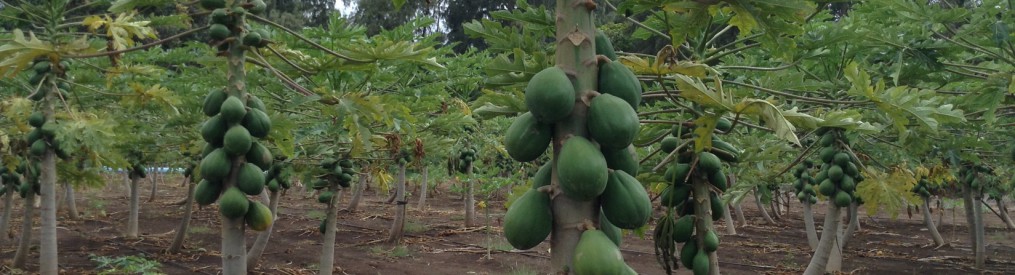
The Real Tragedy of the GMO Free Marches

From Maui Now with Dustin Barca

Last week Sunday was yet another march against biotechnology on Maui.  There were quite a bit of pictures and videos posted throughout the internet showing several hundred people.

That makes me really sad to see that.  They were there to protest perceived evil corporations, alleged poisoning of the aina, and for saving humanity against chemicals.  These marchers were joined by this common cause that they felt compelled to have anger and hate towards.  They have been told over and over again that they are being poisoned and float in a state of persecution and paranoia.

These people joined together through the modern technology provided by corporations.  Many found out via Facebook and Twitter that there was to be this march.  Some even used corporate made planes and cars to get to that meet up.  They used ethanol fuel derived from the very thing that they were protesting.  There had to be a few that drove in GMO derived electric car batteries too.

As I looked closer at the marchers, I started to see that these people are not aware of the extent of how biotechnology is woven in our world.  I saw one of the leaders of the march, Dustin Barca, wearing leather shoes and cotton fatigues that likely came from GMO cow hide and GMO cotton grown in India or Pakistan.  Lots of people wore jeans and clothing that weren’t likely from organic cotton sources either.

It is pretty clear from the photos that were taken on corporate made devices and the marches were recorded on high tech cameras like GoPro ones.  Many used WiFi with it’s radio waves surrounding them with no idea of what they are being exposed to.  They downloaded videos onto corporate supported sites like YouTube and others to share their adventures to followers.  These marchers refuse to accept technology for farming but easily accept it in any other form or fashion if it supports their cause.

People also carried water bottles that came from GMO corn derivatives and had no thought in the world of how it was made.  Some even left the march and went out to eat at a GMO restaurant.  They screamed at how GMOs were being shoved down their throats and want it labeled, but go out to eat without any consideration of what they just said.

They walked in the hot sun under a lot of solar radiation with no fear in the world of what it was doing to the DNA in their skin.  They willingly exposed themselves to something that has proven harmful and modifies our genetics but all natural.  There was no screaming or yelling that they were having their DNA altered without their consent.

The marchers had signs that they didn’t like the chemicals being used on the seed farms.  There were hundreds of signs that were used in these marches.  What happened to them afterwards?  Did they save them to use for another march or was it thrown into the landfill where it can’t be recycled?  What impact did these hundreds and signs have on our aina?  Did it beautify our beautiful landscape or add to the trash pile of useless things and add blight to our islands?

Chemicals are very scary to these people even though they likely used them to protect their skin from the naturally occurring DNA altering radiation.  The marches willingly subject themselves with chemicals in sunscreens to stop the mutations caused by the natural radiation of the sun and have no fear of being exposed for hours at a time.

Signs were carried and painted on with some GMO derived soy paint or some artificial mixtures of chemicals used for acrylic paints.  They rinsed the brushes that contained these paints and added chemicals to the water sources that entered the sewer systems.  Not a blink of the eye occurred while doing such a thing with chemicals.  Some signs, like the surfboard, was sprayed with spray paint, which that user likely had some chemical drift from that they inhaled.  That person survived to protest that day despite the exposure.

Quite a few marchers wore tattoos and displayed them at their march.  These tattoos likely came from synthetic sources that they intentionally injected into their skin with no qualms about it.  The needles used to apply the tattoos were also disinfected with lab derived chemicals to prevent some spread of deadly diseases.  None of this crossed their minds.  The inks likely didn’t have any long term safety tests either but the marchers love to use it and aren’t afraid of it.  They then decry the precautionary principle but are willing take these unknown risks.

I did notice that some people had nicely highlighted or dyed hair also.  They directly applied chemicals to their hair and allowed it to be near skin so that their hair had nice colors and tints.  As I looked at some of the leaders of this movement, I find it hard to believe that they do not dye their hair.  I’ve never seen an older woman with jet black hair and such even curls.  There was not a thought in a world ever considered that this was a chemical and its impact on our aina and reefs.  It had to be rinsed down the drain and entered our waters with no thought of the real harm this could cause our earth.

The even sadder fact was that these people brought their children with them to protest something.  Kids got to be around adults screaming and cursing at Monsanto.  These kids even read the signs painted that GMO means death and they don’t even know what it means.  Kids should be opening their minds to what is going on the world but have slammed the door shut because of the fear and misinformation being fed to their parents. It only makes the next generation hide in a darker corner, so afraid of the science and technology dominating our world and the future.  They also will have a hate and distrust before they even had a chance to truly learn about the whole issue.

The protesters had lots of time to organize and plan these marches too and didn’t have to worry about where their next meal came from.  Some ate GMO snacks on the plane rides over that were offered on the flight.  Were they afraid of what it would do?  No, they ate it without question.  Did these same people have to worry leaving their farms to attend such a march?  No, they don’t farm and it’s pretty obvious with the time they have on their hands.  They directly benefit from the efficiency and productivity created by the ingenuity of the very farmers that they are protesting and don’t even know it.

So much human energy and resources have been put towards being against something.  They all walked together to protest but did they really do all of humans a favor that day?  Or was it a group of people that shared the same beliefs and ideology with no facts to base it upon?  Couldn’t this energy have been devoted to doing something good instead of sharing their common bond of fear and misinformation?  I think so.

The whole idea of people marching for this cause really shows how unaware of the impacts of biotech, and technology in general, has had in their lives.  These people will quickly make accusations against technology, but can’t even see how it has impacted their own lives for the better.  The tragedy in these social marches is that these people protest something they really have little to no awareness of and it obviously shows.


PBS Insights Contributes to the Farming Attacks

It’s amazing to me how PBS Insights has been supposedly leading the discussions about agriculture here in Hawaii.  When I’ve seen the past several episodes is extremely disappointing and actually infuriating to me.  From having an episode with Hector Valenzuela (aka Babes Against Biotech F*ck Monsanto sign holder) with social sciences candidate Andrea Brower and a magazine with Vandana Shiva on it, I am befuddled with where this station is leaning.  To add more insult is putting on Gary Hooser and his “18 tons” propaganda is totally disappointing.

These people are not farmers or the voice of farmers in Hawaii and why are they leading the charge to grow ag?  I somehow feel that it’s a ratings issue that they are trying to seek out.  Not only is that but there is also an unintended, or possibly intentional action, to continue to fuel the attacks against farmers.

The latest broadcast of PBS Insights included Mana Ai’s Daniel Anthony, Kanu Hawaii’s Kaleo Ten, DOH Peter Oshiro, and Center for Food Safety’s Kasha Ho.  (I can’t forget that Daniel Anthony posted a comment on a public forum telling Farmers for Choice to drink Roundup and that he’d bring the cup.)  Kanu Hawaii is a group that touts itself as “empowering people to build more environmentally sustainable, compassionate, and resilient communities rooted in personal commitments to change.”  Then finally the fact that Center for Food Safety is added on here, that already tells me that this is going to be full of misinformation from that activist group.

Watch the video here…

As I watched this, I had to shake my head.

  • Kasha Ho: “There is not enough land for people to farm on because of the agribusiness companies growing GMOs for export.” Of course she put NO facts out there which is typical of this group.  The reality is that there is 7% of agriculture land used by the seed companies and not all of it is GMOs.  Some of those lands are subleased to smaller farmers in ag parks to grow food.


  • Kasha Ho: “It’s about the right to know!”  No, it’s not about the right to know as stated by your boss.  Andrew Kimbrell, Center for Food Safety Executive Director stated, “We are going to force them to label this food, then we can organize people to not buy it.” http://bit.ly/1mIEOXN


  • Kaleo Ten: “Growing your own food is as easy as squeezing tomato seeds on some dirt.”  Um no, that isn’t always the case.  If it were true, more people would be growing their own and we’re not.


  • Kaleo Ten: “Eat local and then go organic.”  Organic isn’t any healthier than conventional and that is where the evidence leads.  That’s why the organic industry has to hit it hard with the fear mongering.


  • Host Mahealani Richardson: “Is wax safe to eat?” Um, yes, several fruits actually produce its own wax.  Food grade wax has been approved and helps with keeping the food fresh in shipping here.  Learn more about it from Best Food Facts.

It’s amazing to me that a publicly funded TV station is putting on activists groups like the Center for Food Safety.  They show science shows like NOVA and others that show what’s happening with technology and then feature the biggest anti-science folks on there.

Kasha Ho kept harping on get to know your farmer and so on.  How much do we really have to know?  Her comments made me think of this video.

Many of these guests kept harping on eat local grown and that’s going to help grow the local food supply here.  You’ve missed a huge part.  Where’s the farmer in this picture here?  How are we supporting our farmers keep doing what they do to grow local food?

It’s a crying shame to have this and saddening to me.


Sharing the Farm Stories With the Next Generation

A few weeks ago, my daughter’s 3rd grade teacher asked me to come to her class to speak about what it was like to grow up on a farm.  They were in the midst of doing a history project to learn about something of valuable in their family.  She felt that the kids would learn a thing or two hearing my stories as many kids have no idea about what it’s like to be farm kid.

In my talks to kids, I really love engaging them and asking them questions to get them to participate in the talk.  I really want them to think about how their childhood compares mine as it is starkly different.

The first question I asked them was, “Who grew up on a farm?”  Surprisingly, one girl raised her hand and said that she grew up for a short time in Waimanalo, which is also very rural.  For the majority of the kids, none knew what it was like to grow up on the farm.  I decided to expand on the stories of what I did as a kid on the farm.

I decided to ask them what kinds of toys they had and where it came from.  Most said they played video games or had something bought in a store that they loved to play with.  I told them that the outdoors was my playground.  We didn’t have a lot of money so we weren’t loaded with toys like the kids of today are.  I did have a doll and a few items but not hoards of toys.  The farm was my playground.  I’d toss up stones, scour trees for bugs, pick fruits and jojo beans, catch butterflies, scoop fish, ride tractors and bulldozers, and play with mud.  Some kids had done some of these things, but not many.  

I asked them if they ever made a toy.  Most kids didn’t even think that they could make something to play with, other than Lego that is.  I told them about how my dad was the expert recycler of what most people thought of as junk.  He’d use an old tire and some rope and turn it into a swing for us.  He would also use an inner tube from a tractor tire with a piece of plywood and turn it into a raft.  Pieces of bamboo were used to make a bow and arrow that I’d shoot out in the field.  Hand tools were also my toys as I could use them to make my own slingshots or other homemade gadgets from the “junks” or other stuff found outside.  The wonderment in these kids’ eyes were amazing as they had never thought to do such things.

Many kids also said that they loved to watch TV.  I told them how TV was not a ritual for me and my siblings growing up.  Saturdays were spent waking up way early and having your lovely sleep disrupted by a busy father.  He’d turn on all the lights and pull off the covers to get us out of bed to get ready for the farm.  We’d spend the day working on the farm with processing the papayas, planting, or cleaning the trees.  

There was no time to fool around, time was precious and valuable to keep the operations going.  There were break times where my siblings and I would sneak down to the stream and catch guppies or make dams to catch tilapia.  Other times we’d walk the field and dig up old relics like bumboocha marbles or other trinkets in the dirt.  (I didn’t tell them about the naughties we did like learning how to light up banana leaves and turn them into fake cigarettes.  That’s a sure way to stop anyone from wanting to smoke!)

I asked the kids if any had rode on a tractor before and a handful had through visits to the pumpkin patch.  I shared the story about how my dad used the backhoe and graded the land and created a huge mountain of dirt.  I asked if they knew what could be done with that dirt hill.  One student figured it out and said, “Slide down it!”  This magnificent dirt hill was a kids dream filled with soft dirt and small pebbles.  My brother and I called it dog food mound and it was a daily ritual of climbing it and sliding down.  Definitely a kid’s dream come true that these third graders were bubbling with excitement to hear of.

I closed my talk by reminding them to talk story with their grandmas and grandpas.  I told them that they probably have some terrific stories similar to mine that they should hear.  Many of these kids haven’t sat down to learn about the stories of their family.  They were inspired to now go and ask them about what kind of toys their grandparents played with and what was their playground.  These kids were really excited during my sharing and even more excited to go out and hear of neat stories in their own family.

By talking and sharing my stories, I’ve come to realize that the more we talk about what we do, the better other’s can appreciate it.  The more we teach others and open minds to the wonders of the world and keep them curious, the more we have seekers of knowledge.  We have to keep sharing our stories with the younger generations to know how and why we are so lucky to be able to do the things we can.  

I had to add in one last bit of hurrah to end it.  I reminded them that they can do all the things in life because someone did a great thing by learning how to feed lots of people really well.  That person was a farmer and I am lucky enough to have grown up a farmer’s daughter.

Fulfilling my Duties as a Farmer’s Daughter

mandambamike2

For the past two years now, it seems that the barrage of anti-GMO sentiment would never end.  In 2012, the farmers were hit with the GMO labeling bills and the Babes Against Biotech.  Then again last year, the same sentiment continued yet again.  Two whole years of fighting and speaking out for your family farm and biotechnology can get exhausting.  There is always something to fight against and after awhile, it gets really tiring having to defend yourself.

I was just lamenting to a fellow farming agvocate the other day about getting weary from all of this.  I thought I’d take a break from blogging to give my mind some rest.  I felt as if I had run out of ideas and thoughts already.  Taking a hiatus was what I thought I’d do last night that is.

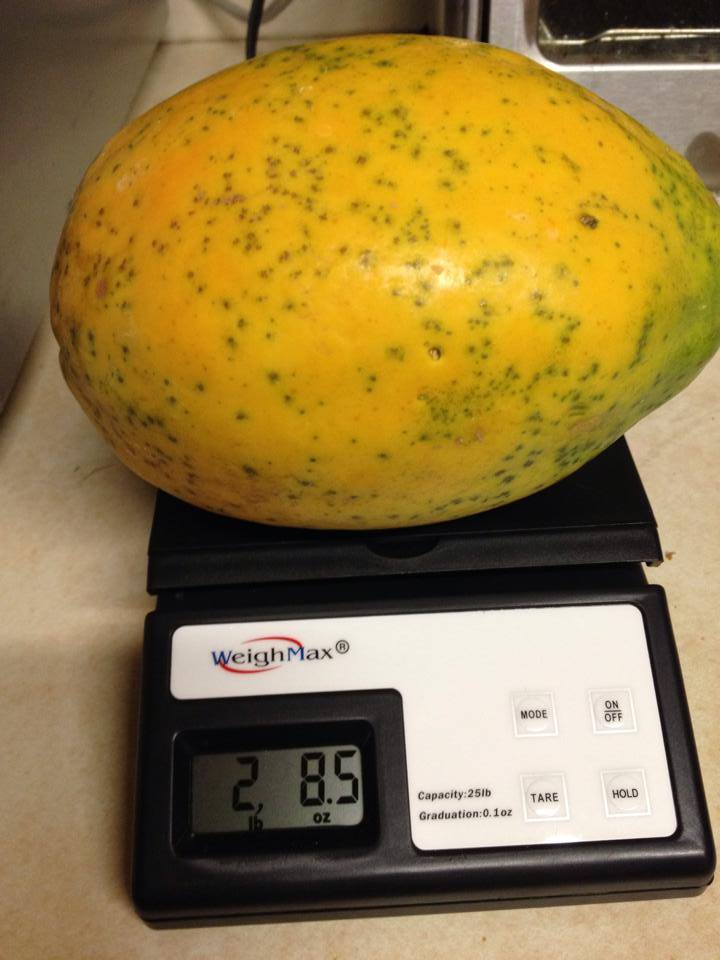
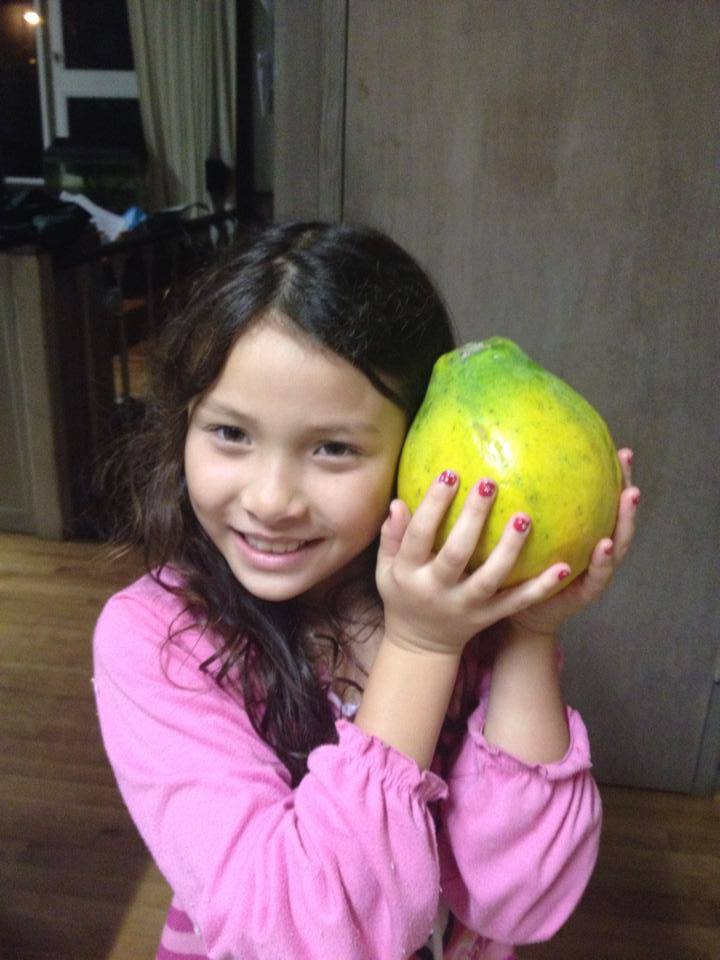
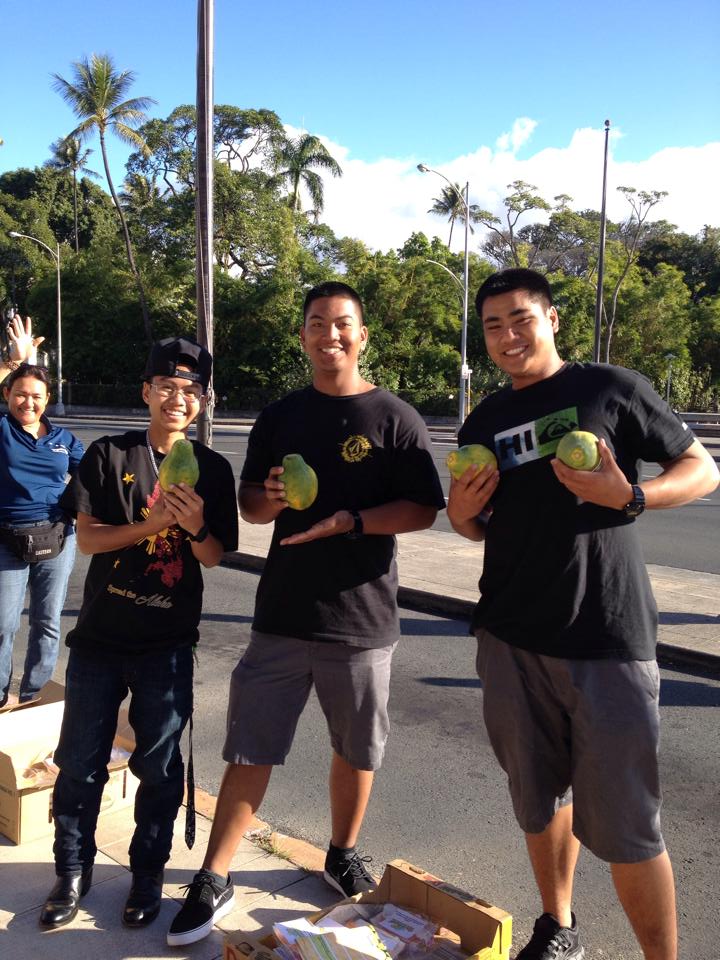
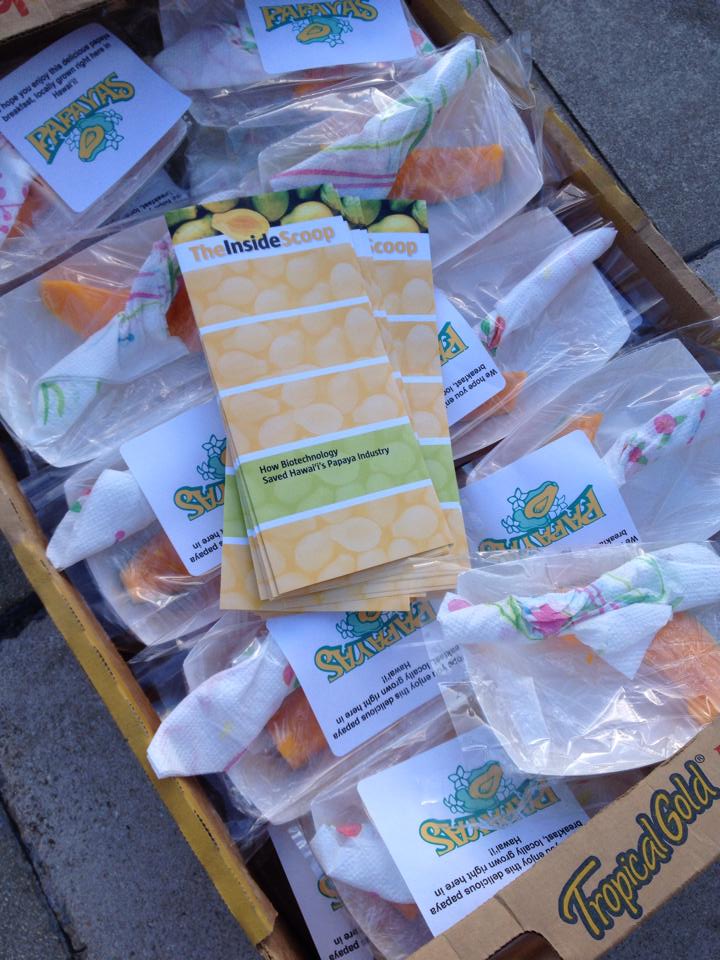
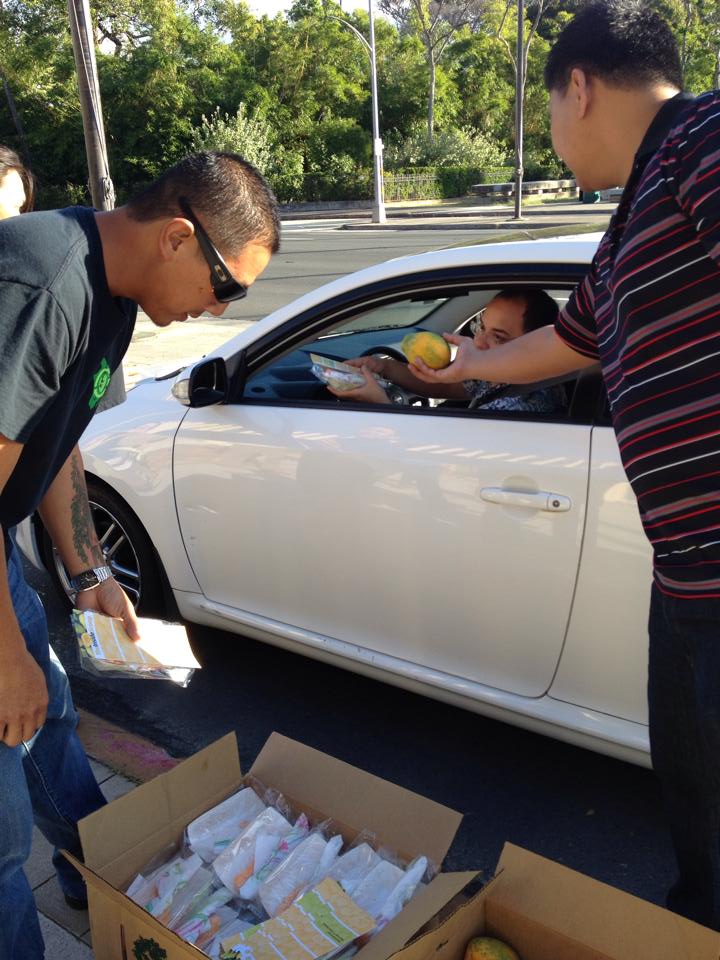
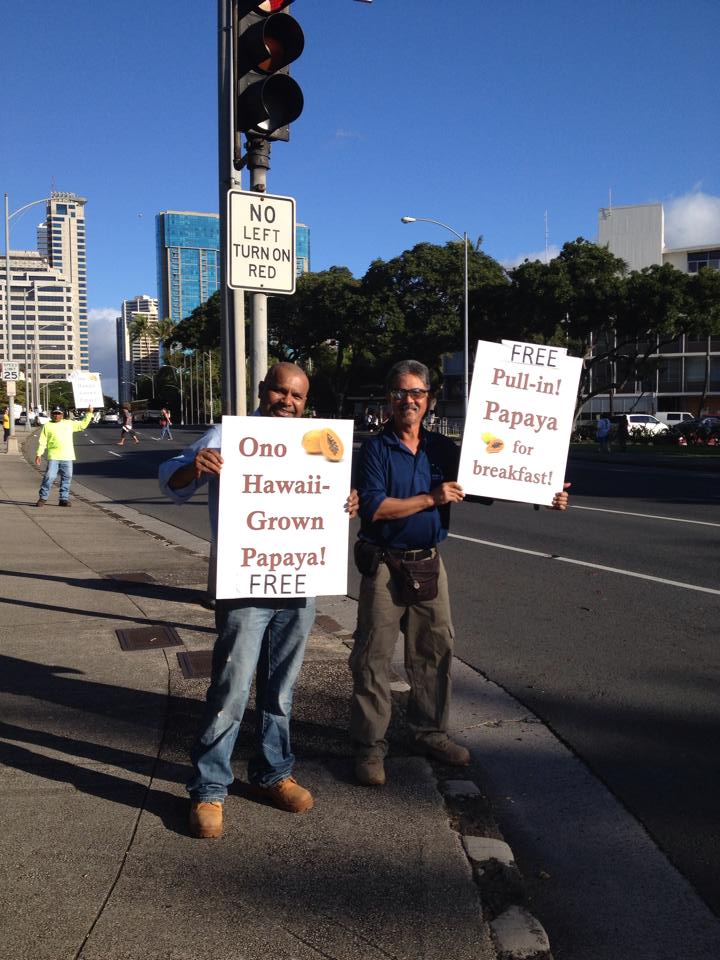
Early this morning, before the sun was even up, my brother Mike and I went down to the State Capitol for the Eat a Papaya Day.  We packed up freshly ripened fruit and other supplies to help advocate for the papaya farmers across our island.

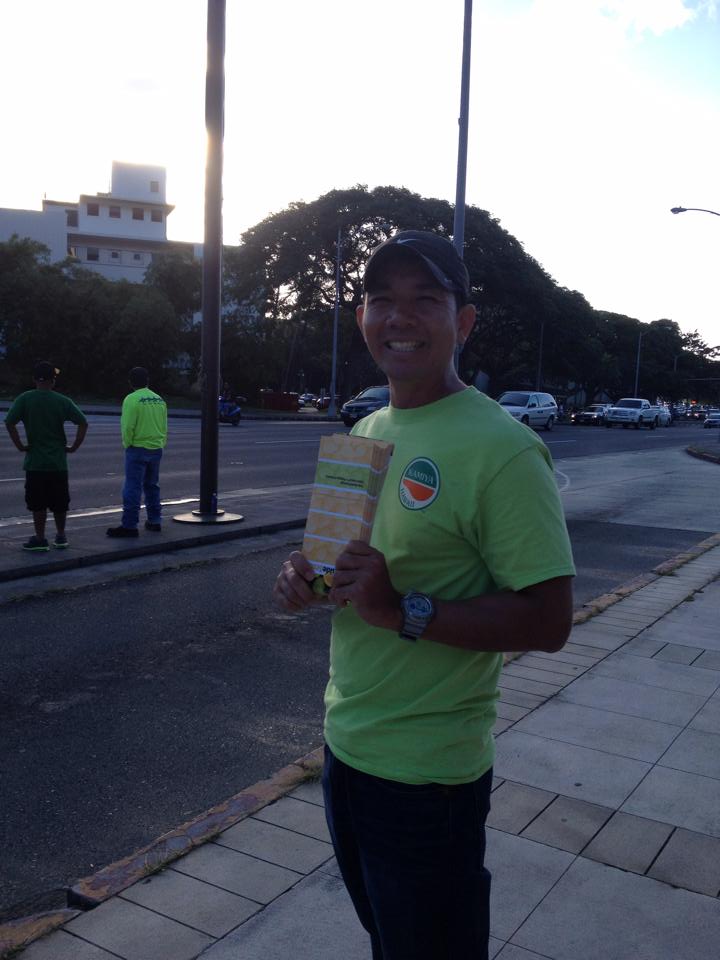
We had our signs made that showed the drivers what our event was about and had lots of samples to hand out to pedestrians and drivers.  We had papaya farmers from the Big Island join us as well as other biotech farmers alongside.

samples2 papayasday2 papayaday4 signs

We handed out some 400 samples this morning along with whole papayas that were donated by the farmers.  We were really well received by the majority of people who were really thankful and excited to “Try a Papaya.”  How many times can get some a free papaya handed to you?!

There was a single homeless, half naked man who initially took two papayas but returned them after being told that it was GMO.  (Amazing that a homeless person can be so choosy!)

Shortly after our campaigning with the public on Beretania Street ended, we were treated to even more help.  More biotech farmers joined along with the papaya farmers and we walked the floors of the Capitol and visited legislators.  Seeing all of the people around us that shared the bond of biotechnology and talking to many of them, it reinvigorated me even more to continue to speak out.  It was just what I needed today to continue to speak out for this technology that helped save our farm and others.

capitol

So many people, including legislators, got to hear the story about how biotechnology saved our farm.  I also met many people that I only know online today that have read my thoughts here.  It’s amazing to know that people are hearing the farmers out like ours.

I’ve really come to realize that so many people are also linked to the papayas through our common bond of biotechnology.   The common bond is that we are all people and that we are using a technology to help people from farmers to the consumers who appreciate our products.

papayaday4

Confessions of an Anti-GMO Politician

This is something that several of our Hawaii legislators will never confess to but willingly do it.  These politicians are quick to criticize GMOs and state that we must use the precautionary principle to protect the public from dangers.  They will give their “expertise” on GMOs even though they have no clue as to the changes of technology and the testing of it.  They will tell the public over and over that you have to buy GMO free if you want better health.  They will fight the seed companies and state that the counties need to have home rule for governing over the creators of these GMOs that eventually become food products.

They even play traditional Hawaiian games with Walter Ritte and photograph themselves doing so with smartphones and use the high tech social media to spread it.  They will then claim that it’s the public’s right to know what they are eating when really, it only helps a certain industry and increases profits in their side businesses.

The bottom line is that these politicians want the public to know is that they are in danger of these GMOs that we are consuming.  The public must believe them and fight the evil cause.

All the meanwhile, these same politicians go out to other’s fundraisers and happily consume these GMOs without and question of what they are eating and drinking.  The liquor they drank and the dim sum they ate were far from being organic, but they still ate.  They are alive without a single issue after years of fundraisers and free food and drink even though they will tell constituents otherwise.

Those two anti-GMO politicians tonight were Senator Russell Ruderman and Representative Kaniela Ing at the Freshman Fundraiser at the GMO serving restaurant, The Mandalay.  These two were consuming foods derived from the products of biotechnology that they are fiercely criticizing yet willingly consume without a label.

I sure hope that deep inside, Senator Ruderman and Representative Ing thank those conventional and biotech farmers who grew the food they consumed tonight!  It really looked like you enjoyed consuming it without any worry or care.

Don’t Block My Sun

sunrise

Thoughts to ponder…

Imagine the streets bustling with excited protesters. Imagine their placards: anti-GMO, anti-wifi, anti-vaccine, anti-western-medicine. A collection of sentiments that is tied together by a common ethic: a sense that modernity poses a looming threat, that science and progress has run amok, and that humanity is on the verge of great calamity, disaster even, if we do not stop progress dead in its tracks, reexamine the foundational assumptions that underly our understanding of the world, and apply an extreme caution to any further exploration or development.

Amongst that diverse assembly of humanity, earnestly waving their placards in defence of Mother Nature against the callous onslaught of modernization, how many of them would not exist today if not for the very same technologically driven advancement which they bemoan?

How many would have never been born if their parents or grandparents had succumb to any of the many deadly childhood diseases which have now been eradicated by vaccines? One in six?

How many would not exist today without their grandparents who emigrated from the developing world, having been among the one billion humans who survived famine due to the agricultural advancements of the 50s and 60s? One in seven?

How many are alive today because of insulin, produced by genetically engineered bacteria? Or how many survived infections, historically fatal, with a simple dose of antibiotics? One in every five?

How many of them rely on wireless communication technologies to get their anti-technology news? To share that information? To organize their rallies? How many would have missed the event without smart phones, cell towers, and free wifi at Starbucks?

I find it ironic to think how sparse the crowds would be. How few placards would be seen. How few anti-modernity protesters would exist, we’re it not for the very products of modernization which they despise.

We stand at the edge of the warm sunrise of the springtime of our civilization. Stand aside please. Don’t block my sun.

-D. Nelson Caswell

What’s Missing is the Farmer

Joan Conrow made a great point in her most recent blog post the other day when she asked the question of why we are not growing more food.

What’s missing are farmers. Though many love the rhetoric associated with farming, fewer are willing to embrace it as a livelihood.

She goes on to point out that farming seems very idyllic but that there is harsher reality with actually living it.  Some people who farm are able to do it because of other streams of income, while for others it is their sole source of income.

When most people think of farming, they get the impression that it is getting your hands in the land and growing something.  Farming is much more than that indeed.

A farmer is not only a steward of the land, but also a business person.  In order to make it a livelihood, he needs labor which means hiring people and taking care of them.  The farmer has to take care of labor law compliance, benefits, workmans’ compensation, safety laws, payroll management, and knowing the tax laws also.

The farmer also has to be a mechanic and heavy machine operator.  Some one has to teach the hired help how to drive and fix the tractors and how to get them around the field safely to harvest fruit.

Not only does the farmer have to take care of business and run the equipment, he also has to have a good knowledge of pests and diseases, so that his crop won’t be lost.  He teaches his workers how to recognize and care for the crops and when to take care of pests.

Another duty that a farmer has to do is take care of his customers and follow up to be sure that his product is up to par.  He spends his time talking with customers to make sure that they are happy with his produce.  It’s about building and maintaining relationships and partnerships to support each other.

Joan really hit the nail on the head with her blog post.  As much as Hawaii wants to have a sustainable food supply, we can’t if no one wants to actually do it.  It’s easy to sit back and want to have more local products and local foods but if no one is going to actually do it, it won’t happen.

We’ve got to support the farmers now so that the future is brighter for the next generation to pursue it.  If our leaders truly want to walk the talk, they’d be looking out for what’s in the best interest to preserved farming and the farmers.  Stop with adding a “home rule” burden and take a look at what really needs to happen.

The Irony of the Anti-GMO Class of Legislators

There is a certain class of lawmakers in our state who have decided to take our state back into the good old days.  I’ve seen some pretty interesting laws that are floating around the chambers lately.  There’s a law regarding legalizing herd sharing of raw milk, legalizing the cottage food industry, and regulating midwives.  Our own Ag chair won’t even hear a farm bill because she perceives it as solely supporting biotechnology.  There’s also some movement towards growing your own food also.  Wow, we’ve moved so far forward that we are now wanting the wheels to spin backwards.

Why are we suddenly clamoring for the past?  Was the past really that great that we have to turn back the hands of time to return there?  I find that very hard to believe that the past was that great.  

The irony of these lawmakers is that it is clear that they enjoy the use of technology all over the place.  They are on Twitter quite often tweeting their accomplishments and news.  They use digital photography to share their adventures and create blogs and websites to connect with their followers.  They also take advantage of email and other social media venues to communicate with their constituents.  They use global corporate made devices freely with no thought of supporting and evil entity.  These lawmakers clearly enjoy and incorporate this technology made by a corporation in their daily lives and so do their followers.

What I have a hard time understanding is that despite their acceptance and reliance on technology, they want to restrict technology to farmers who grow food and ag products.  They will claim that they do not want a global monopoly on food but support that global monopoly on technology for communication.  They don’t want a newer technology that puts pesticides in the the plants and has been shown to reduce the amount of pesticides being sprayed in the air.  They are worried about the safety of GE foods but then want to encourage others to drink raw milk that has been proven dangerous.  These people will buy the latest and greatest tech product developed through research, with no human test done on the effects of it, but reject something that may have taken 10 years of testing to be approved.  There are even lawmakers wanting to redefine ag as the growing of food but then listen to activists who want to grow non-food crops like marijuana and hemp instead.

Are the lawmakers really listening to their constituents with the direction that they are heading?  Are we as a state using our resources wisely to make it better for all?  Or is it just easier to make the activists happy so that you avoid being the target for considering the silent majority’s take on the issues?