Fear Mongering: The SHAKA Movement Insults Our Intelligence and Admits to a BAN!

mauiban

This is the latest “scare the crap out of you” meme going around the social media once again to try to convince people to vote for the Maui County Moratorium in November.  Seriously, there are people that actually believe these memes unfortunately and they do vote.  This meme clearly spells out the intent of the moratorium as it the finally admit that it indeed is a ban to stop any biotech farming there on Maui and Molokai.  Eventually, the anti-GMO crowd will admit the truth and publish it outright too.

Well, I can’t just sit back and let this kind of fairy tale idea about biotech flood the social media.  I decided to make my own correction to it to bring us back to reality and away from the Galactic Connection aliens that have abducted the minds of those in the Shaka Movement.  Here’s my take on this meme…

mauiban2

Even better yet, here’s one with a bit more information too!

mauiban1

If you ever stop and notice the Shaka Movement site, not once will you ever see the word “akamai” on there.  I’ve figured out that these people don’t want anyone to be akamai, or smart apparently.

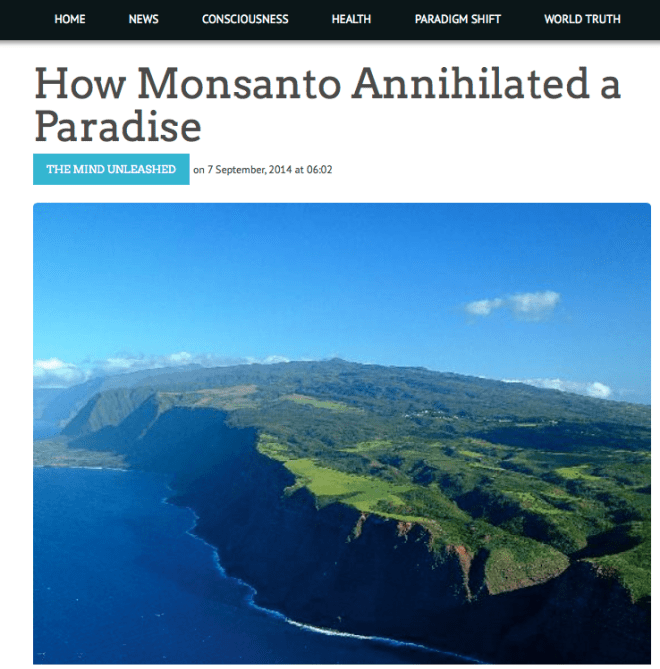
The Machine Continues: How Minds Unleashed Annihilated Rational Thought

Screenshot 2014-09-07 20.10.05

This is the latest piece of anti-biotech articles being passed around the internet again.  It should not be of any surprise that the internet is once again being filled with these kind of sites.  Why? The vote on the Maui County Moratorium is only a few months away and the pushers of the “you’re dying and the earth is being killed” folks want to make sure they keep their momentum up.  Data or evidence just doesn’t matter to them, only the mantras are of what is important.

It’s the typical tactic of these groups to gain more unsuspecting folks to believe in this ideological movement.  The evidence will say otherwise but none will ever be considered by people moved by fear, misinformation, and and constant barraging of the same message over and over.  Little do most people realize that the source of the site, Mind Unleashed is yet another site full of half truths and disinformation and it shouldn’t be surprising that the sources used (Organic Prepper, Nation of Change, and Natural Revolution) are also questionable.

Screenshot 2014-09-07 20.10.51

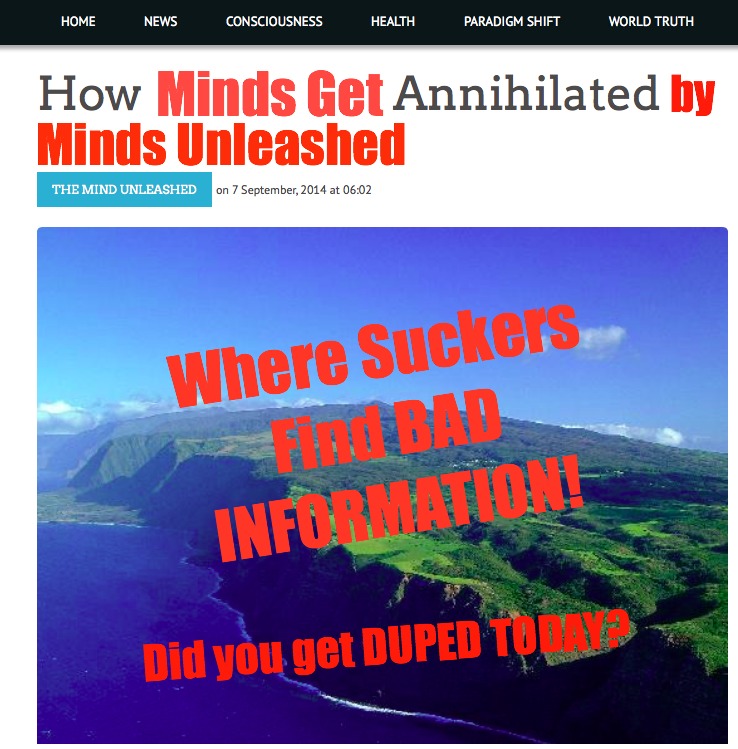
Like a friend of my mentioned a few days ago, if it really was big news, then why isn’t it being reported on CNN, ABC, KHON2, Hawaii News Now and others? It’s always found on obscure websites that lean towards conspiracy theories and the naturalistic fallacy once again.  The anti-GMO crowd will never research their links or sources and just believe without needing any proof.  It’s complete confirmation bias for people who just don’t know where to start to question this stuff to begin with.  The correction for this piece should look like this…

mindsunleashed

SHAKA Movement Demands Transparency of Others But Fails Miserably Themselves

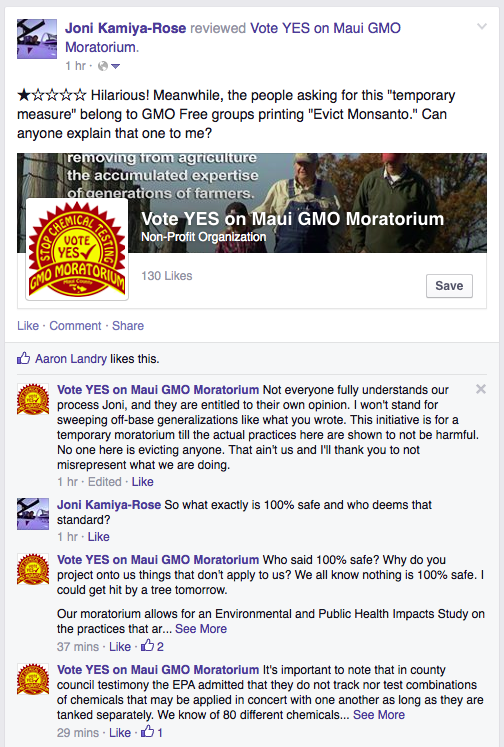
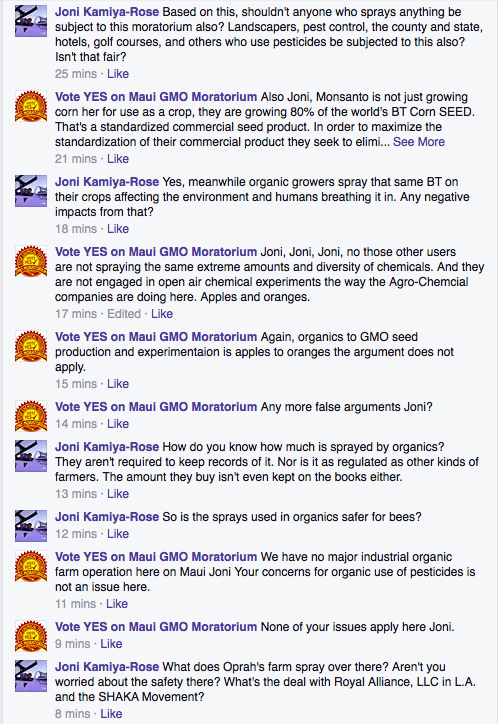
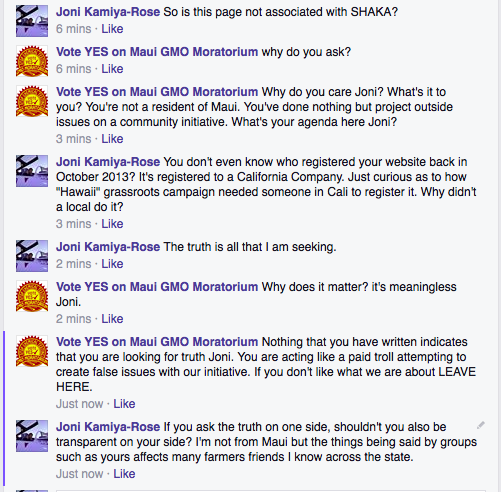
I happened to get a sponsored ad on my Facebook newsfeed today from this newly formed page, “Vote Yes, on the Maui GMO Moratorium.” After reading a post from fellow blogger, Iowa Meets Maui, on the irony of this group’s messaging who says such a law is temporary and then prints out messages of eviction, I had to put a comment on that page.  Here’s a copy of the conversation that follows.

Screenshot 2014-08-23 21.58.24 Screenshot 2014-08-23 21.58.41 Screenshot 2014-08-23 21.59.01 Screenshot 2014-08-23 22.06.57

These groups are demanding transparency but can’t even practice what they preach themselves.  Apparently to the SHAKA Movement, they can be very honest at times when they state that the truth is “meaningless.”

So will you vote for a group that seeks for transparency and can’t do as they ask and find the truth to be meaningless?  I sure hope not.

Earthjustice’s Paul Achitoff: Try to be Civil and Respectful!

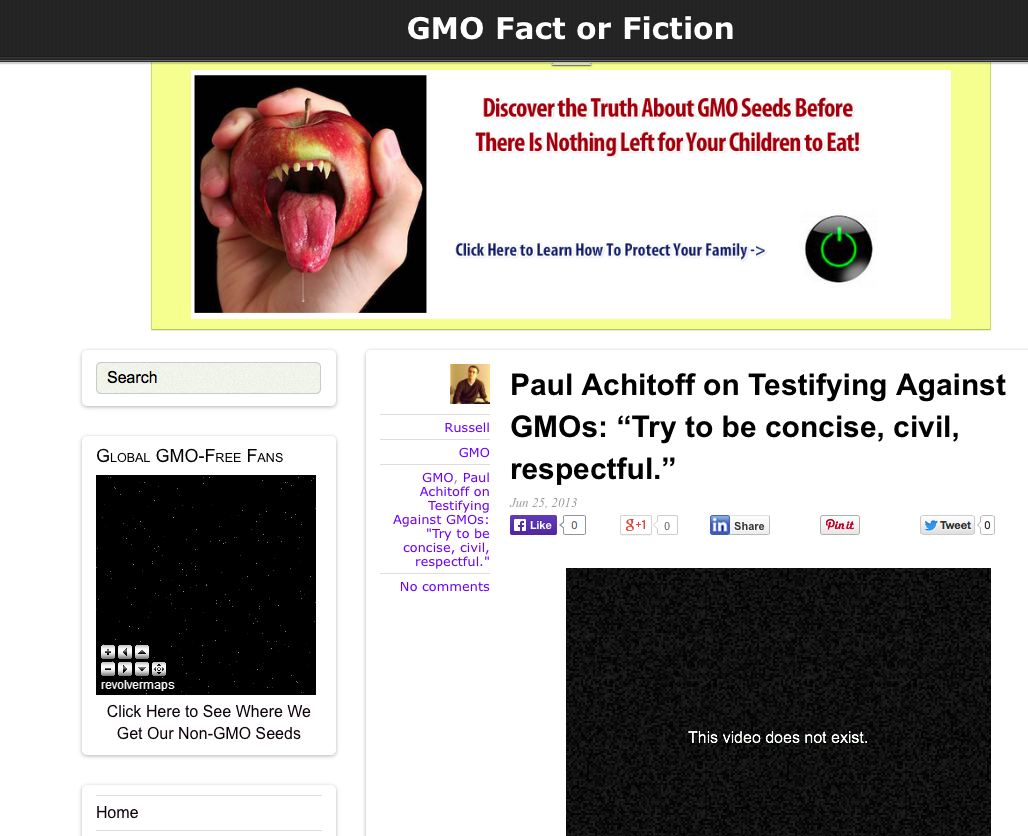
Last year I remember coming across a video that was posted on YouTube of the lead attorney of Earthjustice, Paul Achitoff, counseling activists on how to give testimony.  (Earthjustice along with the Center for Food Safety has recently been added to the anti-GMO law on the Big Island because they are going to “fight the evil corporations,” but are really going after small papaya farmers at best.)  The video was instructing the general public to “To be concise, civil, and respectful.”  That video has now been removed but the remnants of what was said is still alive on the internet.

Screenshot 2014-08-13 21.24.58

Notice the lovely photo of an apple with teeth and tongue. Unfortunately, despite there not being a GMO apple available yet, people believe this stuff here in Hawaii.


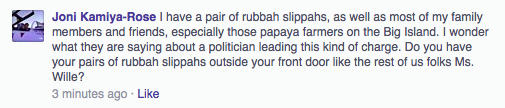
It’s really odd that these activists somehow missed his message on this because they haven’t quite figured out what it means to try to be civil or respectful.  Just take a look at a recent post from Hawaii News Now Facebook post on the damage caused by Hurricane Iselle to the papaya farmers.  It’s clear that they are nasty and not doing what Achitoff counseled them on.  They are of the same cloth as the Shaka Movement who claim to want a moratorium but really, when has a law ever been temporary???

Screenshot 2014-08-13 22.18.03

Screenshot 2014-08-13 22.16.25
Screenshot 2014-08-13 20.57.01 Screenshot 2014-08-13 20.58.41 Screenshot 2014-08-13 20.59.41 Screenshot 2014-08-13 21.00.30


When our politicians start siding with these kind of people, they aren’t sincere about increasing food sustainability and food security.  Let’s face it, the ugly truth is that they want to continue to harm a local industry made up of hundreds of small family farms in the name of misinformation and fear mongering.  When we need to come together to look at solving problems, these are not the people who should be heeded for they only have a single agenda and that is to take tools and give nothing back in return.

I will always say farmers voices first and foremost.  I don’t mean the farmers who have a tiny 2 acre farm and is exempted from food safety laws but the real multigenerational farmers that have been in our islands for decades!  The radical, rude, and disrespectful activists can take their protests outside and away from the discussion table.  Many of them portray themselves and “save the earth” environmental greenies but under that facade is an awful truth of who they really are.  This is not local style and the farmers should no longer be subjected to any of this.  Any leader who is happy to associate with these kind of folks shouldn’t be elected to office either!

Fear: The Deconstruction of Local Culture

Fear: The Deconstruction of Local Culture

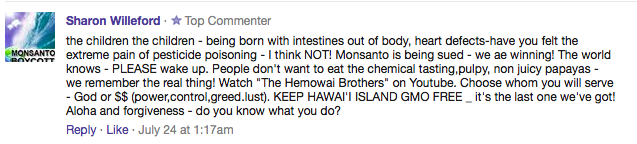
The Maui County Moratorium is now the forefront of the anti-GMO movement once again and I’m seeing the typical pattern of comments from the anti-GMO activists being spewed all over the internet again.  Here’s some of the latest ones being posted from a recent Civil Beat article.

Screenshot 2014-07-27 09.39.21


Screenshot 2014-07-27 09.38.27


Why is fear filled statements so prevalent in the conversations lately?  Why are so many people feeling as if they are being sprayed or poisoned but continue to stay within the area despite the so called danger?  They know the truth but are willing to bend the truth to their advantage in the name of hobby activism and it’s bad news.

I’ve decided to look further about why fear is so prevalent in the conversations in Hawaii to get a better understanding of why it has taken root here.

The Anatomy of Fear

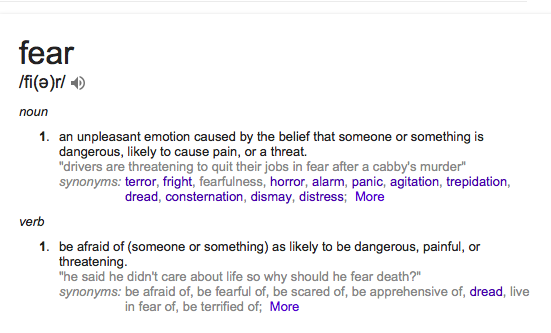
Screenshot 2014-07-27 09.44.52

This is the definition of fear from Wikipedia.  Note the keyword here is “belief.”  Fear is the the belief that someone or something is dangerous or bad for you.  It doesn’t necessarily mean that it indeed is bad but one is believing that it is.

A good example of this is my grandmother’s fear of worms.  As a young girl, she was always afraid of it and it remained a part of her belief system well into her old age.  She had neither been harmed by them and nor could they really harm her but it was an entrenched belief that she had.  Even if the worm was made of Play Doh and fake, it still sent shivers down her spine and sent her screaming.  So why do people persistently maintain fears like this even if it is completely unfounded?

From the website HowStuffWorks, fear is really our brain’s chain reaction of events also known as the fight or flight response.  The article goes into full detail on how fear is created in our minds.  It is really an unconscious series of events that occur in our brains.  One is the low road which is the “quick and messy” response and the other is the high road where more time is taken with a more calculated precise response of the interpretation.

Translating this into the current issue at hand, we can see that fear is clearly being used by the activists here.  Lots of internet posts are being touted and the immediate response is to be afraid of the this technology after reading an article or seeing a scary memes on Facebook.

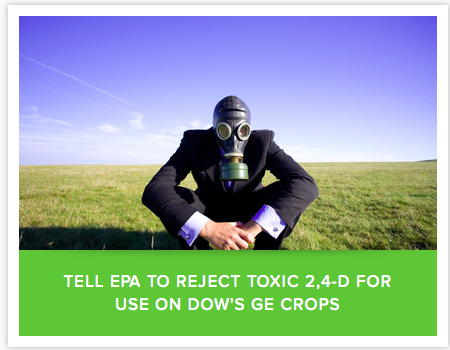
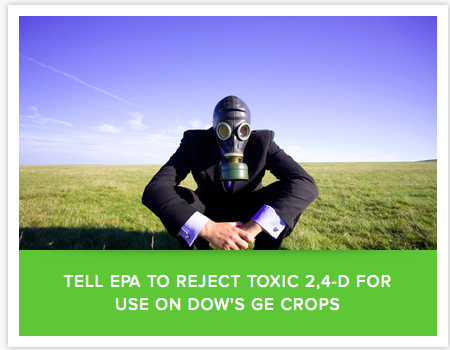
From the Center for Food Safety website.  Clearly fear peddlers and not supporters of farmers at all.

From the Center for Food Safety website of a well suited lawyer in a gas mask.  Scary imagery indeed.

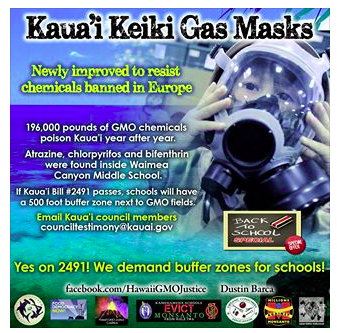
More gas mask imagery from the Kauai Bill 2491 fiasco.

More gas mask imagery from the Kauai Bill 2491 fiasco.

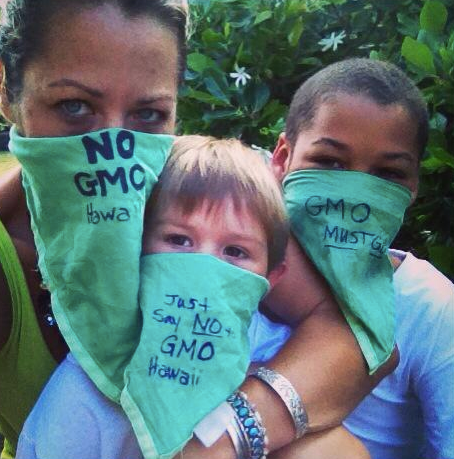
Homemade gas masks from the Babes Against Biotech page.

Homemade gas masks from the Babes Against Biotech page.

People are being made afraid at every single encounter they are hit with, whether it be the media or at a march, fear is the predominant theme of the anti-GMO movement.  Their immediate reaction is the maintain the low road of avoid it at all costs because it is believed to be dangerous and harmful.  Note that they “believe” that it is a danger and when reinforced over and over by politicians like Gary Hooser and his tirades, it becomes a reality to many of them.  When the majority of people lack a good understanding of the history of agriculture and have a little to know science knowledge, this makes for a large population to be susceptible to this kind of tactic.

Two years ago, the target issue was that GMOs were dangerous.  When study after study got debunked, the activists had a hard time using that argument and it shifted to GMOs are pesticides are dangerous.  Ashley Lukens of the Hawaii Center for Food Safety was quoted in a recent Civil Beat article stating, “In Hawaii, the issue of genetic engineering is an issue about pesticides.”  So does Ms. Lukens think that it means something else is other parts of the world when they are also engineering plants to fight bugs for the same reason?  Of course, she’s a PhD in political science trying to tell the agricultural community how to farm and what to use.  (It’s no different than the carpenter telling a nurse what to do in a bigger sense.)

When fear has become deeply entrenched the into the brains of many of the activists, it’s no longer about reason and logic.  It’s about protecting themselves from this perceived harm.  Presenting any type of evidence such as water tests, residue tests, and other data will not change the primitive neurological paths of fear developed in their minds.  The Department of Health can do a million of tests and still not find any data to support their beliefs, but they will continue to believe in this danger.  It’s ingrained into their minds already and no logic or reasonable discussion can change that, ever.  Fear has been an effective emotion that binds so many people together in this “movement.”

Their high road response this created fear is to now become activists and fight it within their GMO free groups and rallies.  This is the calculated, supposedly well thought of response to combatting this belief that they are being harmed.  These activists will easily use conspiracy theories, chemtrail beliefs, a misunderstanding of medical conditions and illnesses, and bumble up correlation and causation to justify their actions.  When put to the test in the court of law however, there must be proof beyond a reasonable doubt presented in order to support the reasoning, which the activists’ facts will falter when scrutinized.  Fear also turns people into ugly emotional people, who are unable to see the consequences of their actions as there are made to feel as if there is not other choice in the matter.  You can’t reason or bring these people out of the swimming pool of fear that they are stuck in.


Decontructioning Fear To Save Our Communities

I’ve been in a many discussions online with others and have seen a clear pattern among the anti-GMO activists.  When presenting factual information and questioning their links, if they are not able to refute it, one will get blocked and banned by them.  I’ve been banned from the Babes Against Biotech page for pointing out that organic pesticides can be dangerous to bees, and from the Hawaii GMO Justice Coalition page for asking the death threats to stop.  I was even blocked and banned by a politician wannabe, Kent Fonoimoana, for pointing out how environmentalist groups are trying to block farmers from farming.  Challenging an anti-GMO activist to look further about the issue gets most people instant, “I don’t want to talk to you anymore.”  It shows how unreasonable they are about discussions and dialogue which is not what we need in Hawaii.  I’ve never posted anything heinous or threatened anything, and just simply questioned their logic and reasoning for their stances and bam, I get blocked or called a bully.  Forget the fact that I get nasty emails or comments on this blog which I refuse to allow.  It’s clear that people who align with this “movement” are not about discussions or are ready to be questioned on some of their stances.  They want one thing alone and that is all their seeking.

These outside activists have even gone as far as trying to infiltrate our agricultural communities by bringing in their fellow Filipinos to try and split them apart.  Here’s a flier that was posted around the internet to demonstrate this.

CFSfilipinoflyer

Note the funding on the flyer indicates that it’s all mainland funded groups like the Ceres Trust, PANNA, PANAP, and the Hawaii Center for Food Safety, who provide more outside non-profit money to the local sounding, Hawaii SEED.  Their goal? Tear communities apart and take apart agriculture in Hawaii!

The same motives apply to the SHAKA movement, who disingenuously claims they want safety studies before the agribusinesses can farm.  Why do so many of these members also belong to GMO free groups?!  Their true intent is clear when you research it further and it is unacceptable to me to use fear, false intentions, and misinformation to tear apart our Hawaii communities.  None of these groups are about living together as they don’t care and nor do the funders of these people care because they are living off in Washington, D.C. and the San Francisco having a ball seeing our communities being torn apart. That may be the mainland way, but it sure isn’t the Hawaii way.

What’s even more disturbing about the SHAKA movement is how many of these people said that they will replace the lost jobs with “organic, sustainable farm jobs.” When it’s pointed out that organic farming only provides 1% of Hawaii’s food, the response changes so quickly.  The activists cover themselves up with, well, these people can go on welfare, which is an acceptable solution for our communities to them.  People with real jobs and families do not want to live on welfare and why is an outside person dictating that to our local folks?!

Maui County Council member, Stacey Crivello, pointed out a sad fact in a recent news article on Maui News of what happens when activism succeeds in our islands.  When Walter Ritte’s antics managed to get Molokai Ranch closed, hundreds of people lost their jobs and their homes to foreclosure.  Others came in and bought up these homes at foreclosure prices and the original owners became tenants in their own homes.  That definitely is the breaking of the human spirit that Stacy Crivello mentioned in her commentary.  People dream of one day owning a home that comes through handwork and dedication and it will all be lost when a bad law is passed.

The anti-GMO movement in Hawaii has become one of manipulation of people’s fear and repetitive misinformation campaigns to tear apart “the companies.”  However, upon deeper inspection, it’s not tearing their intended target apart, the reality is that it’s tearing our families and communities apart.  It’s not about facts, logic, or reasoning either.  We are slowly eroding at the very essence of Hawaii that brought us together to begin with, bit by bit, piece by piece.

I see it the issue like a haku lei that has so many distinct component in it that put all together make it beautiful.  If we keep picking it apart and try to put only one item in it, is it going to be as beautiful and diverse as when it was first put together?  No.  We need all parts of the lei, from the big dendrobium, to the ti leaves, ferns, baby breaths, lokelani blossoms, and the very core of raffia that it sits on to be that beautiful lei.  If we remove the core that supports the pieces, we will have nothing left to work with and our lei will just sit in pieces.

That’s exactly what is happening to our Hawaii communities with outside activism attempting to rip out the very base of agriculture in our state.  If we as the public allow this to happen, we will not be able to have a working and functioning system to build upon.  Like the haku lei with no raffia or ti leaf as its binder, the whole lei will be nothing but bit and pieces of flowers and greenery that is now wearable or as beautiful.  That is not a reflection of the diversity of our Hawaii agricultural communities.  Mainland based activism isn’t able to see the very foundation of our heritage of this “local style” and are ready and willing to destroy it in any form and fashion.  I will not standby and let this happen and nor should anyone else.

Who Can You Trust in the GMO Issue?

I have to thank Dr. Kevin Folta for commenting on my blog the other day.  What he said really got me thinking more about the anti-GMO club and why we have such a problem.  It’s not just that they don’t understand the rationale of science and the process, but they also have problems with trust.  Who are you to trust in all of this mass information on the internet?  There’s so much conflicting information all over the place and how are you to navigate through all of this?

I decided to put together a simple guide for how to figure out who is trustworthy and who isn’t.  Read on!

Red Flag Number 1: Celebrity Status

 A huge red flag for me is that if someone is a celebrity and are touting being anti-GMO, I wouldn’t trust them for anything.  For one, most of them have no training or education at all to make the claims they do and tend to jump into these hot topics for attention and fans.  Here’s a great example of celebrities and their anti-GMO activities.

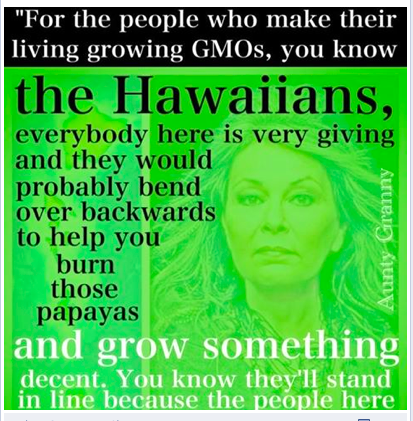
Who can’t forget Roseanne Barr?!  We haven’t heard from her much on the issue since she has refused to pay up her donation to the Babes Against Biotech.

Screen Shot 2014-07-17 at 10.53.26 PM

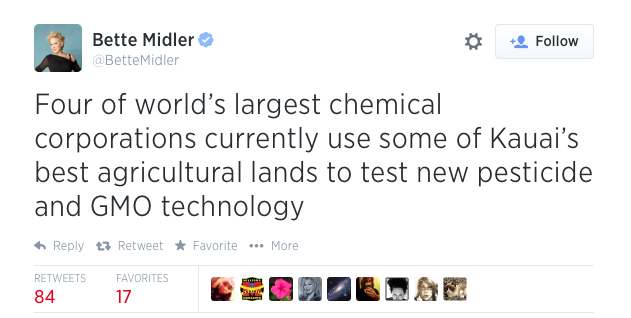
Bette Midler, a part time Kauai resident who jumped on the anti-GMO bandwagon.

Vani Hari aka “The Food Babe”

Rachel Parent, a then 14 year old activist with the Right to Know Kids

Darryl Hannah with the Babes Against Biotech leader Naomi Carmona at the Mana March.

Screen Shot 2014-07-20 at 8.39.02 PM

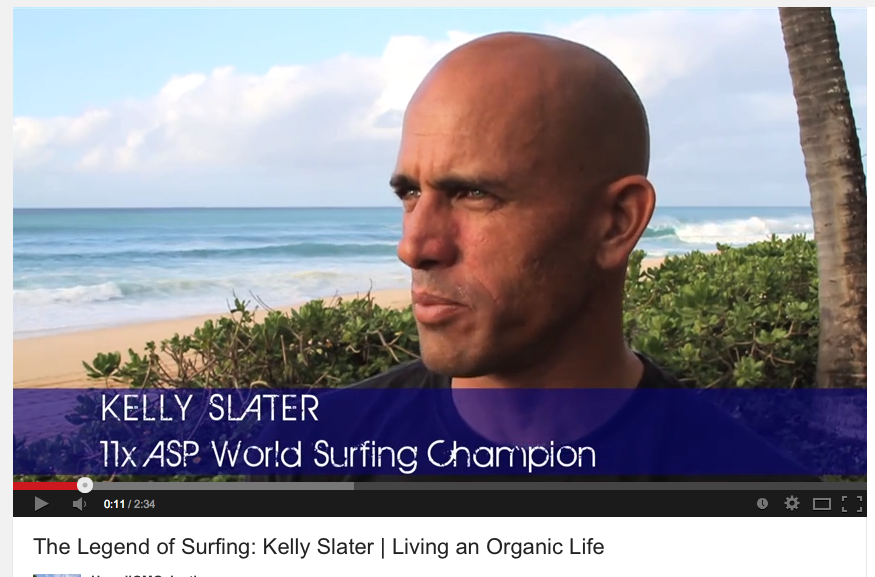
Kelly Slater, a professional surfer touts organic food.

What do all of these celebrities have in common?  First of all, none have any higher level education in any kind of science at all.  I highly doubt they know much about DNA let alone farming and what it takes.  Secondly, they all repeat the same Monsanto mantra word for word.  Thirdly, they all use fear in their messaging from you’ll get cancer and autism if you consume GMOs. None are independent thinkers and repeat the same messaging over and over again.  And really, do you trust a surfer to tell you what to eat???

And think about it for a minute.  Would you trust a plumber to build your house?  Would you listen to a teenager for your nutritional advice?  Would you use a electrician to treat your illnesses?  If you answer no to those questions, then why are you using a celebrity for what you eat?  Do they actually have the right education and training to make the claims they do?  Uh, no.  They are there to sell things, act the part, but they aren’t for teaching anyone anything.  TV is a lot of made up stuff so why go to the tube for “good” advice???

In this sense, common sense should rule.  Common sense tells you that these are not the people you should trust for your information on agriculture, nutrition, and last but not least, biotech issues.  It’s just as bad and making stuff up.  That’s exactly what Hollywood and TV are good for though!

Red Flag Number 2: “Scientists” that Have Single Studies

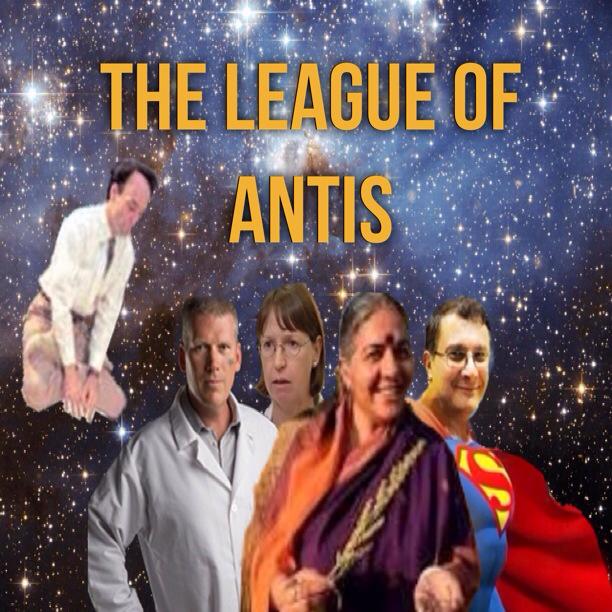
leagueofantis

Meme by Jeff Cotter posted in the Facebook group, Skepic

Hopefully, you got to read the page I published on “The Most Misunderstood Concepts of Science and Thinking by the Anti-GMO Club,” to give you some basic tenets of this process.  Key point is that science is not pick and choose what kind you like.  It’s an evidence based meaning that you continually build data to bolster or reject your claims.  We’ve had the pleasure of meeting quite a few “scientists” here in Hawaii courtesy of the tax exempt Hawaii SEED and other richly funded anti-GMO clubs.

From a post in the GMO Skepti-Forum by Richard Green, this summarizes these “scientists.”

This meme was a means to gather the rogues, now lets take a closer look at this motley crew:

Gilles-Éric Séralini: He is active in research and is the author of the infamous rat study that was retracted and recently republished without critical review. His work is often shown to have poor methodology and analysis.
http://www.forbes.com/sites/jonentine/2014/06/24/profile-of-gilles-eric-seralini-author-of-republished-retracted-gmo-corn-rat-study/

Charles Benbrook: Benbrook is an agricultural economist at Washington State University and science advisor for The Organic Center. He is the author of a widely panned study on pesticide use in GM crops.
http://blogs.discovermagazine.com/collideascape/2012/10/03/when-bad-news-stories-help-bad-science-go-viral/#.U8gxcajSCux

Judy Carman: Another active researcher and the author of a study on pigs which were fed GM corn. The study was found to be lacking in many areas.
http://www.forbes.com/sites/henrymiller/2013/07/17/you-can-put-lipstick-on-a-pig-study-but-it-still-stinks/

Stephanie Seneff and Anthony Samsel: These two are computer specialists that do not conduct research per se, but use algorithms to look for correlations. They typically engage in what I call reverse snake oil. Instead of a magic elixir curing unrelated conditions, they lay the blame for unrelated conditions on a single cause, usually glyphosate. They have the distinction of having a paper being used as a model for detecting a bogus scientific journal.
http://www.sci-phy.com/detecting-bogus-scientific-journals/

Vandana Shiva: Shiva is a philosopher who would like you to believe she is a physicist. A frequent claim is her rallying cry against “terminator genes/seeds”. These seeds are more of an idea than reality, as they never made it out of preliminary development. She is also fond of making outrageous claims with no supporting evidence.
http://www.geneticliteracyproject.org/2014/01/28/who-is-vandana-shiva-and-why-is-she-saying-such-awful-things-about-gmos/

David Suzuki: Suzuki was a zoologist/geneticist and retired in 2001. Now he is an environmentalist who accepts the global consensus on global warming but falls short on accepting the global consensus on GMOs. His vague cautions against unknown risks apply equally to creating new crops from any form of plant breeding. The few times he has been confronted with hard questions have left him flummoxed.
http://fullcomment.nationalpost.com/2014/02/04/rob-breakenridge-we-need-a-better-david-suzuki/

Don Huber: Huber is a retired agricultural researcher from Purdue University who was well respected in his day. These days he claims the existence of mysterious pathogen somehow associated with Roundup that only he can see…
http://www.biofortified.org/2014/01/deconstructing-don-huber-a-tale-of-two-talks/

Thierry Vrain: Vrain was a soil biologist and genetic scientist for the Agriculture department in Canada. As with others in the gallery, he makes poorly sourced claims to elicit fear. Unlike some of the others, he really doesn’t specialize, his is more of an all-purpose type of misinformation.
http://www.comoxvalleyecho.com/real-science-vs-pseudo-science-on-gmo-s-1.971682

Jeffery Smith: Such a gallery would not be complete without Mr. Smith. He has no academic credentials. Not that credentials are needed to understand the science behind GMOs, but Mr. Smith has not made that effort. Like a lot of the rogues, he tours the paid lecture circuit making unfounded claims about the dangers of GMOs. His seminal work is the novel Genetic Roulette, which has been thoroughly debunked.
http://www.biofortified.org/2010/03/academics-reviews-meets-genetic-roulette/

To sum up:
The active scientists in this group all seem to start with the end point they want to reach and then try to manipulate enough variables to achieve their goals. That is the exact opposite of how to conduct a good experiment.
The non-scientists and retired scientists seem to be pushing an ideology instead of examining the current research.

“View anything these folks have to say on agricultural topics with extreme caution.”

 Believing without Questioning=Religious Ideology

If you’re still “believing” in these folks, here’s some additional reading that you might add to see why the your links using them aren’t viewed as evidence.

Press Digs into Anti-GMO Study–Journalists were the first group of people to wonder about Seralini’s lumpy rats when he asked them to sign a non-disclosure agreement with a hefty fine of a million euros if it was violated.

Don Huber and the Mystery Pathogen–Video by Dr. Kevin Folta questioning this mysterious claims of Don Huber.

A Generous Offer Turned to Dr. Huber Turned Down–Dr. Folta offers to study this so called pathogen for Dr. Huber with not a response.

Wealthy Activist Vandana Shiva is a Poor Advocate Poor Advocate for the Poor–Shiva has made her rounds here in Hawaii and is said to make some $40K per lecture as well as asks for $10K for travel expenses.  She also has an organic farm where you pay to work for free!

Study of Organic Crops Finds Very Little–The recent headlines of organic food having more anti-oxidants questions the methodology used and the person quoted in it, Dr. Charles Benbrook, a well known organic proponent.

Suzuki is Clueless–Video documenting Suzuki’s anti-science flip flopping on Sun News.

Genetic Roulette & the GMOs-The League of Nerds–Myles Powers takes down Jeffrey Smith’s beloved anti-GMO movie, Genetic Roulette.  (This video is pretty long as a FYI but a great take down of each of his claims.)

Once More Bad Science in the Service of Anti-GMO Activism–Another take down of Dr. Judy Carman’s bad pig study.

What do the Creationists and Anti-GMO have in Common?–Blog post by Fourat Janabi on why we should keep calm and carry on.

GMO Skepti-Forum Thread on Dr. Thierry Vrain –A compilation of discussions on his claims and sources.

Condemning Monsanto with Bad Science is Dumb–A breakdown as to Seneff and Samsel’s claims and why it doesn’t help their cause.

Tumor Incidence in Normal Sprague Dawley Rats–Scientist have known since 1956 that the rats used by Seralini has a high incidence of tumors.  Is it a surprise that he got such results in his study?


 The Index of BAD Links

The cardinal sin that so many anti-GMO believers make is posting the same links as their evidence.  When they post these links, it just shows that these people’s ability to cross check their information is very limited.  The typical links that they post  are Natural News, Institute for Responsible Technology, GMO Education, AltNet, Natural Cures not Medicine, Green Med Info, World Truth, Truth Deniers, GMO Seralini, Nation of Change, Dr. Oz, Dr. Mercola, Collective Evolution, Raw for Beauty, and anything GMO Free. What do all of these links have in common? They all sell fear and use partial bits of information to convey their side of “studies” and health claims. There is never any link to the actual study that they are talking about and it’s hard to figure out the actual source of information, but the antis will still use it as “proof” because they don’t know how to research and vet their information.

Before you get scared of what you’re reading, stop and ask questions first.  “Is that for real or what?”  By simply starting there instead of adding that link to your “GMOs are dangerous” link file, you just might just save yourself lots of anxiety and emotional stress.  If you choose to believe, you just might find yourself in a utterly hysterical state and might leave a nasty message for a state senator.  Save yourself an apology and ASK questions first before you get yourself into a tizzy fit!  It just might save your reputation if you care about it.

Remember, if you read it on the internet and it tells you connect the dots, science isn’t about putting together a dot to dot puzzle.  It doesn’t work like that.


If You Want to be Governor Mr. Ige, Please Do Your Homework!

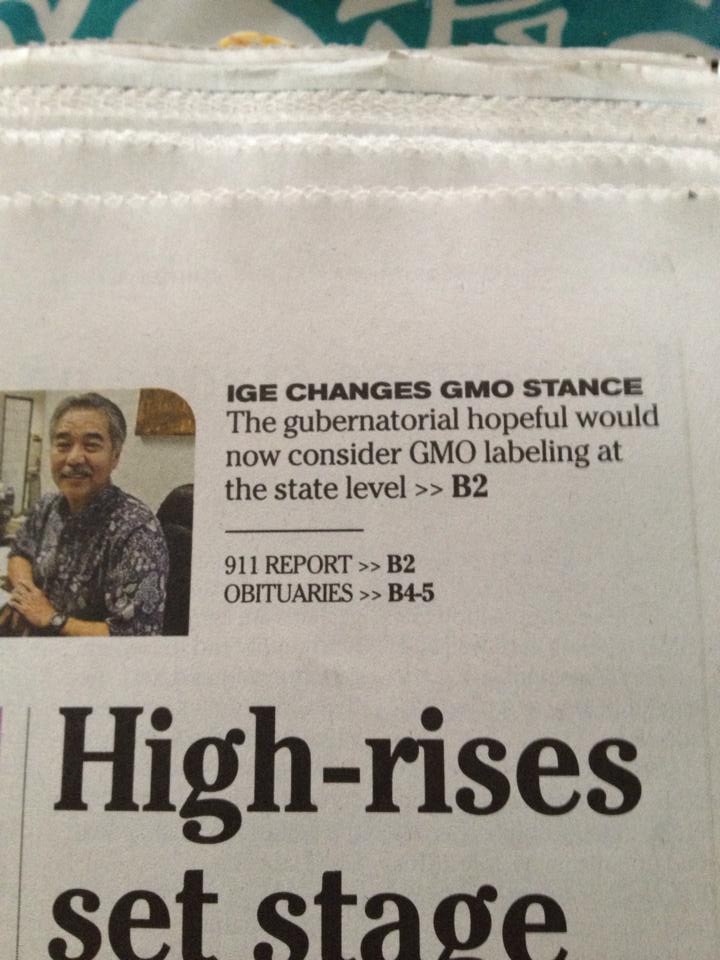
igeflipflop

When I opened up the local section of the paper this past Sunday, a small headline in the local section caught my eye.  The gubernatorial candidate, David Ige, decided to consider GMO labeling at the state level.  For a candidate who is saying he wants to make Hawaii a better place, this is really a kick in the face.  Once again, this is just proof that politicians do not do their homework when it comes down to the unintended consequences of stances such as these.

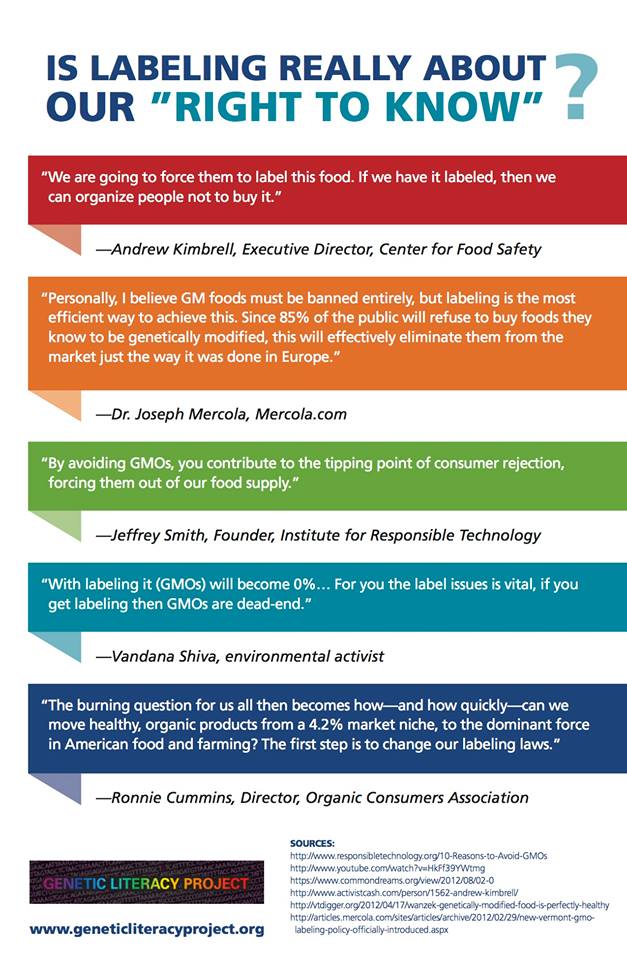
Is it really the “right to know” or something else?

The article proceeds to explain that he now believes in the disingenuous “right to know” campaign.  He apparently has not looked in the sources behind the scenes of who is saying what.  These organic industry people make this claim but then behind the scenes say this about biotechnology.

genetic literacy


An industry is the backers behind the so called “right to know”


I suspect that Mr. Ige and other candidates don’t have much knowledge into this industry either when they simply fall for this line.  The National Organic Program was founded by an Act of Congress in 2000 to help sell products at a premium.  This program is not about nutrition or food safety or food affordability.  It also falls under the USDA Agricultural Marketing Service and not under any health or environmental programs.  This is really an industry asking for a label and not a right to know.  Basically, if you follow the rules stated, you can obtain certification to help sell your products at higher prices.  It is not about being pesticide free either as there is a list of chemicals approved for usage in production that is synthetic in many cases.  The industry tries to market it as being pesticide free and more healthful for you but the reality is that there is little evidence to support it.

This is about the organic industry demanding that farmers label their product and not about a right to know.  Who’s funding the whole movement?  It’s organic activists from the Center for Food Safety to quacks like Jeffrey M. Smith and his movies that scare people from this technology.  It’s a big industry going after the small farmers that grow biotech here from Belmes Farms to my dad’s farms in an attempt to get the big ag companies.


Hawaii can be the center for research on biotechnology…  If we let it…

Most people that I talk to don’t read much for the science and agriculture world.  Many are completely unaware of the issues that are affecting the growing of crops in our state and beyond.  From a devastating banana fungus decimating crops in Central America and drought hitting parts of Africa where they can’t grow things, or a deadly disease leaving cassava crops inedible and toxic, the world’s food security is at risk with climate change.  We are so well fed and nourished that this tough never crosses our minds.  It’s a real threat to others as billions of people go to bed hungry every night.  If Hawaii has the capability to alleviate some of the world’s suffering, why block it with fear and misinformation of a very powerful tool?

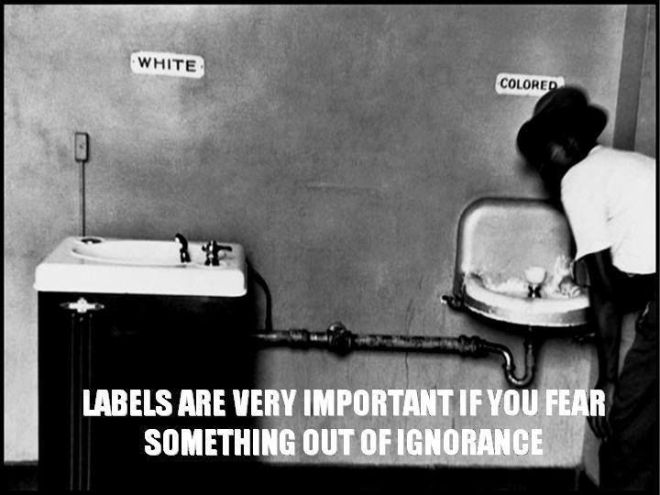
The fights going on in the labeling arena tells the rest of the world that there is something wrong with this product that it needs to be segregated.  Think about what a label can do.

GMOLOLlabels

Follow the stories of groundbreaking research with the glowing pigs and glowing rabbits here at the University of Hawaii.  The commentary under much of these stories on the news is disheartening at best.  People are afraid of this technology that can have a huge impact on people’s quality of lives.  To jump on the labeling issue on fuels more of the ignorance of this technology that should be embraced and not feared the way it is now.  Do we want leaders to lead us into darkness or to knowledge?


Supporting the farmers we have now!

I heard an interesting statistic the other day that really opened my eyes.  Back in the 1850’s, there were 23 million people living in the US with 74% of the population involved in agriculture.  Fast forward ahead to 2012 and we have 313 million people with only 1.5% involved in farming now.  That 1.5% has got to be ultra efficient in delivering food to the masses which is indeed happened.  No longer are the majority of us having to grow our own food.  We have become freer to do other things with our lives which is a great thing!  The technology has changed tremendously and farmers can choose the tools they want to achieve this goal.  It makes me mad when a politician, another disconnected person from agriculture, can sit up on his pulpit and point fingers as to what a farmer needs to do.  Does the politician ever ask a farmer how his decision will affect him?  It seems like never and that is the wrong path to take.

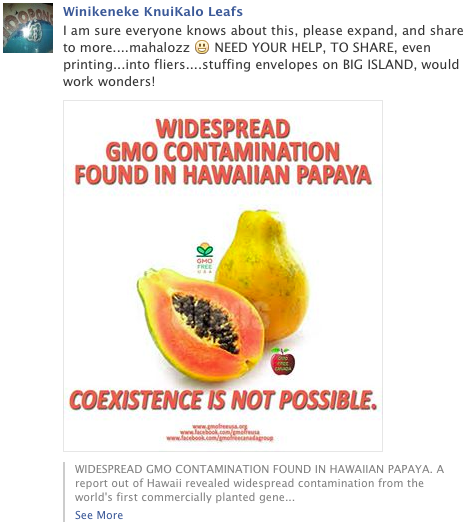
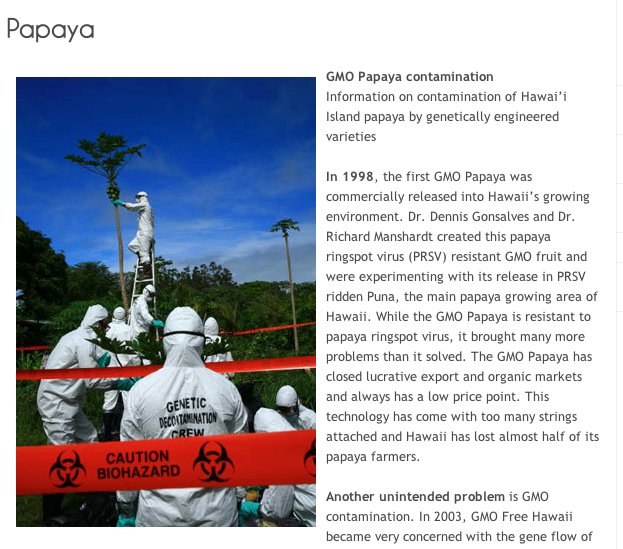
Does anti-biotech, pro-labeling politicians ever faced the misinformation campaigns that this 1.5%?  Never.  Meanwhile, this is what papaya farmers get to face.

babs crop destruction

papaya

Screenshot 2014-01-28 19.02.02


If you truly want local food grown by local farmers, I think it best that you stay away from people who are attempting to attempting to smear them with fear and misinformation.  The evidence clearly shows that biotech foods are safe and many world science organizations have also taken that same stance.  Spending time satisfying the desires of the activists isn’t going to be helping Hawaii reach our goals for food security and sustainability.  They will only keep going after more issues with agriculture to make it even harder to farm.

Most of all, a real leader will never stand to support the people who do and say this about my dad and others in agriculture.

Screenshot 2014-02-04 13.27.17

Screenshot 2014-02-04 19.45.00

chuncraank

Screen shot 2013-12-16 at 12.04.50 AM

mercola papaya2

mercola papaya4

KB crop destructor


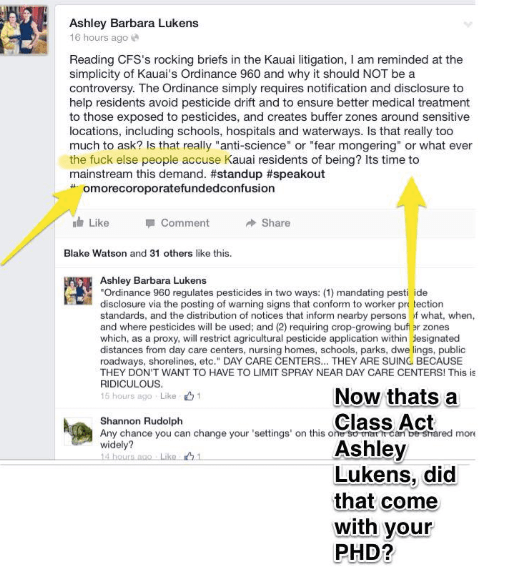
There is also a lot of mainland money coming in to fuel this fight.  One at the top of the list is the Center for Food Safety.  Here’s what the new director is saying about where she stands on the issues.  (Warning for bad language from this Pacific Business News recent 40 Under 40 recipient.)

Screenshot 2014-06-10 13.17.05

So those same people who are demanding that right to know are saying this publicly about our farmers and this doesn’t sit well with me.  If it really is the right to know, why are they all apart of these GMO Free groups across of our islands?  GMO free and wanting a label and disclosure is so insincere and they know it.


Fighting for the rubbah slippah folks!

Not sure if you saw the recent Forbes post that Hawaii is the worst place to make a living.  I am starting to feel that it is true.  Everything from milk to gasoline is going up but our paychecks aren’t matching these increases.  Trying to burden people with GMO labeling to support activists’ demands isn’t going to make things any better for affordability.  This labeling indeed comes with a cost that will definitely make food less affordable for us that you can’t even imagine, which is why trying to do this at the Federal level if indicated, is a better option.  Either way, there will be an increase in costs that will hurt everyone, especially those on limited incomes.

The price of gas in Molokai.  Let's just say, unaffordable!

The price of gas in Molokai. Let’s just say, unaffordable!

A real leader of the people will do things to help all in society, not just a few to burden the majority. What does the data say?  Is this something really necessary?  Who will be impacted the most by this?  Instead of talking about your stances, ask questions first.  Too many times politicians are talking heads with poor insight on the unintended consequences of their decisions.

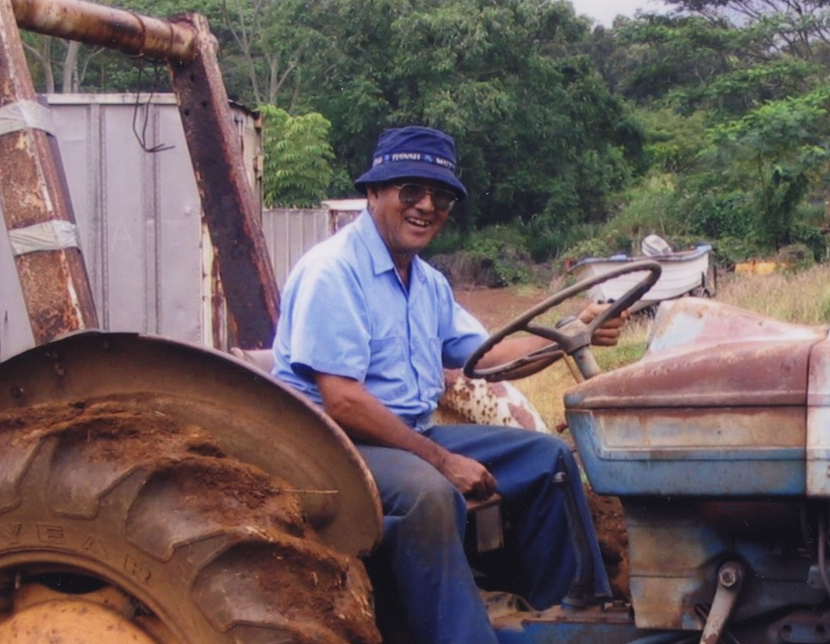
Well, I’ve got to be somewhat forgiving as people like Mr. Ige and bandwagon jumpers like Representative Kaniela Ing aren’t farmers or even bother to know them.  They work in clean air conditioned offices and are completely disconnected from the work of people like my dad and brother.  They don’t understand at all what it really takes to get food to a table and the work involved.  I’ll just leave a reminder here of who they are attacking when they align with activists demands…  It’s my family and other families that do the same work as us!

Kenneth Kamiya, my dad

Kenneth Kamiya, my dad

mandamba papayasday2

DSC_1293 laiefarm7

IMG_4473-XL

IMG_2562-M


Fact Check: SHAKA Movement Claims vs. the Evidence

Let’s do some fact finding here with what the mainland based SHAKA Movement claims as the basics of the backing for a moratorium.  This is a response by Dr. Harold Keyser who took apart their claims and put some facts behind it.

A Response to the Findings in

A Bill Placing a Moratorium on the Cultivation of Genetically Engineered Organisms


Harold H. Keyser, Ph.D.

Soil Microbiologist and Maui County Administrator, Retired

College of Tropical Agriculture and Human Resources, University of Hawaii Manoa


On February 21st, 2014, the above named bill was filed with the Office of the Maui County Clerk. The justification for the bill is in the Findings section. A review of this section reveals a lack of understanding of agriculture in general, a lack of supporting evidence for claims made, and a disregard for the voluminous findings in mainstream science over the past two decades on the benefits and risks of genetically engineered crops. The Findings section of the bill is copied below along with my inserted responses, links to publications, and additional resources and documents are listed at the end.


SECTION 2: Findings


Cultural Heritage & Environmental Protection

  1. The rapid and unregulated growth of commercial agricultural entities engaged in the cultivation and development of GE Organisms threatens the stability and growth of Maui County’s agricultural economy, the health of its citizens, and its environment. Moreover, the lands of Maui County and the water surrounding it have cultural and spiritual significance to the indigenous people of Hawaii. This cultural and spiritual heritage will suffer irreparable harm if the natural environment of Maui County is contaminated by GE Operations and Practices.


Response:  Cultivation and development of GE crops is highly regulated, by USDA APHIS, FDA and EPA. For specifics in Hawaii, see USDA Regulation of Biotechnology Field Tests in Hawaii, USDA APHIS, BRS Factsheet, February 2006. Also see EPA’s web sites on registration, regulation and use of pesticides. The National Academy of Sciences, American Medical Association, World Health Organization, and the American Association for the Advancement of Science have repeatedly reviewed and affirmed the safety of GE crops and food.


  1. Maui County residents have a right to decide if the risks associated with the GE Operations and Pactices are unacceptable and to take action to suspend such Operations and Practices.


Response: Maui County residents have the right to continue to grow GE crops in their gardens, such as papaya, and commercial agricultural operations have the right to continue to farm GE crops in accordance with federal and state regulations.


  1. GE Organisms are not part of the natural environment of Maui County and instead exist in the County as a possible invasive species. Protection from the possible threat of damage and/or potentially irreversible alteration of the environment and cultural heritage from the threat of invasive GE Organisms is supported by the Hawaiian Public Turst Doctrine, the Hawaii State Constitution, and other State and County envrionmental laws.


Response: The only plants in Maui County that are part of the natural environment are those remaining from before human contact. Certainly, highly bred commercial onions, cabbage, lettuce, papaya, banana, mangoes, and just about all crops we grow, are not. GE crops are then no different in this respect.


  1. The genetic engineering of plants and animals often causes unintended consequences. Manipulating genes via genetic engineering and inserting them into organisms is an imprecise process. The resultus are not always predictable or controllable. Mixing plant, animal, bacterial, and viral genes through genetic engineering in combinations that are not selected for in nature may produce results that lead to adverse health or environmental consequences and threaten Maui County’s cultural heritage, Environment and Public Trust Resources.


Response: Unintended effects from plant breeding are described in the scientific literature. To date, the documented unintended consequences specifically from genetic engineering include substantial reduction in mycotoxin content in Bt corn, increased lignin in Bt corn, and GE petunias with diminishing color over generations. Any method of breeding can have unintended results, and products from GE breeding are the only ones thoroughly assessed prior to marketing. GE is the most precise plant breeding technique available.


Pesticide Concerns

  1. GE Operations and Practices can have serious effects on the environment. For example, in 2013, 93 percent of all soy grown in the U.S. was engineered to be herbicide resistant. In fact, the vast majority of GE crops are designed to withstand herbicides, and therefore promote indiscriminate herbicide use. As a result, GE herbicie-resistant crops have caused 527 million pounds of additional herbicies to be applied to the nation’s farmland. These toxic herbicides damage the vitality and quality of our soil, harm wildlife, contaminate our drinking water, and pose health risks to consumers and farm workers.


Response: The USDA Economic Research Service’s comprehensive study on Pesticide Use in U.S. Agriculture: 21 Selected Crops, 1960-2008 provides the actual data; since peak applications in the mid-1980s, the amount of herbicide applied to all US soybeans is down almost 25% along with a 33% reduction in pounds of active ingredient applied per acre, even with increased acreage. Similarly, they show that herbicide application to all 21 crops is less than the mid-1980’s peak, and they compare the same trend reported by EPA for all pesticides. The associated herbicides (glyphosate and glufinosate) for GE crops are much less toxic than the herbicides they replaced, are used at lower concentrations, have a shorter half-life in soil, and are found in much lower concentrations in water than previous herbicides. See: The Impact of GE Crops on Farm Sustainability in the US, National Research Council, National Academies Press, 2010.


  1. Increased use of herbicides in GE Operations and Practices has resulted in the rapid development and proliferation of previously unknown herbicide-tolerant superweeds. The proliferation of these superweeds threatens to overtake the habitat of native flora and fauna in uncltivated lands and forces farmers to use increasingly toxic and expensive herbicides to remove them from cultivated lands.


Response: There is nothing new or ‘super’ about herbicide tolerant weeds; they are controlled with either an herbicide with a different mode of action or by tillage. Glyphosate is in sixth place among herbicide groups in terms of the number of resistant biotypes, behind chlorsulfouron, atrizne, dicolfop, 2, 4-D and paraquat. Herbicide resistant weeds are not unique to farming with GE crops, having arisen in the late 1950s, some 40 years before GE crops. Minimizing their occurrence and economic impact is important and a part of good agricultural management. See International Survey of Herbicide Resistant Weeds


  1. GE Operations and Practices and associated pesticide use pose a high risk of fostering rapid evolution of pests known as superbugs that become resistant to organic pesticides, to the detriment of conventional and organic farmers who are forced to use increasingly larger volumes and/or stronger pesticides to manage these new pests.


Response: The major organic pesticide in common use by GE and organic operations is Bt. To date, the incidence of Bt resistance remains low with emphasis on abundant refuges and multiple-trait Bt crops.


  1. In some GE Operations and Practices, multiple Pesticides are applied at the same time or applied in close time proximity to each other (“pesticide cocktails”). This practice is often being used on test crops in a trial and error manner to test and develop new Pesticide resistant Crops. In this process it is possible that new and unknown chemicals are created. Although individual Pesticides have been tested and regulated for their use in isolation, there has not been adequate testing and/or regulations concerning the various chemical combinations that occur during GE Operations and Practices, and few if any of which have been tested in either short term or long term animal or human studies.


Response: All modes of agriculture (GE, conventional, organic) across the country use a mixture of pesticides, depending upon a myriad of changing conditions. EPA regulates pesticides including combinations, and routinely makes recommendations on mixing of products. Risks of possible unknown chemicals (theoretical as it is) would not be unique to use of GE compared to non GE crops.


Regulatory Issues

  1. Inadequate regulatory oversight at the county, state, and federal levels leave the citizens of Maui County with significnat concerns regarding the immediate safety and long term effects of GE Operations and Practices threatening the integrity of Maui County’s cultural heritage, agricultural economy, tourism economy, and the health of its visitors, citizens, and the environment.


Response: This appears to be a superfluous repetition – see response to Finding 1 above.


  1. The rapid development and introduction of GE Organisms, combined with inadequate regulatory oversight at the stae and federal levels, have left the citizens of Maui County with significant concerns regarding the long-term safety of GE Operations and Practices. The Hawaii Department of Agriculture does not have an adequate regulatory structure in place to monitor GE Operations and Practices or to aid in the understanding of the impacts of these Operations and Practices on Maui’s economy, environment, cultural heritage, or public health. The direct, indirect, and cumulative impacts on Maui County regarding the long-term intensive GE Operations and Practices and associated pesticide uses have not been properly or independently evaluated.


Response: This appears to be a superfluous repetition – see response to Finding 1 above.


Economic Considerations

  1. Agriculture is a [sic] important component of Maui’s agricultural economy. Organic agriculture is a rapidly expanding sector of Maui’s agricultural economy.


Response: Yes, according to USDA’s latest National Ag Statistics Service’s annual survey and their latest Certified Organic Production Survey (Oct 2012), the sales of organic farm products in Hawaii of $7.475 million accounts for 1.2% of all agricultural sales, produced on 2,701 organic certified acres (1,049 in pasture/range), or 0.24% of the state’s agricultural acreage. Data by county in Hawaii could not be found.


  1. Maui County’s local economy is also dependent on the success of its tourism industry, which makes up the County’s largest employment sector. The protection of Maui’s land and waters is crucial to the continuing success of Maui’s tourism industry.


  1. Maui’s agricultural economy relies on maintaining its reputation for high quality organic and conventional crops. Preserving the identity, quality, and reliability of Maui’s agricultural products and exports is critical to its economic well-being.


Transgenic Contamination

  1. The contamination of agricultural products with GE Organisms can have a myriad of significant impacts. Organic and many foreign markets prohibit GE products and even a single event of Transgenic Contamination can and has resulted in significant economic harm when the contaminated crops are rejected by buyers.


Response: The predominant GE crops in Hawaii are seed corn and papaya. The papaya growers have established foreign markets which includes testing of non-GE papayas prior to shipping. According to the USDA NASS, in Hawaii there are two farms producing certified organic sweet corn and one farm producing certified organic corn silage/green chop; to date, no reports of economic loss from cross-pollination of non-organic corn are in the public domain.


  1. Transgenic contamination can and does occur as a result of cross-pollination, co-mingling of conventional and GE seeds, accidental transfer by animals or weather events, and other mechanisms. Transgenic contamination results in GE crops growing where they are not intended. For example, since the introduction of GE papaya in Hawaii County (Big Island), more than 50% of the non-GE papaya crops on the Big Island have been cross-contaminated by GE papaya.


Response: The 2006 report from GMO-Free Hawaii claimed that papaya seed collected from backyard gardens or wild trees from the Big Island had a 50% incidence of detectable GE seeds according to the results from a commercial lab. No further confirmation or follow up study has been conducted other than UH CTAHR’s survey of papayas from across Kauai which found zero incidence for presence of GE papaya trees or their fruit.


  1. Transgenic contamination prevents farmers and the public from having the fundamental right to choose whether or not to grow crops that are free from GE. Farmers and other parties who lose non-GE standing and markets through no fault of their own as a result of transgenic contamination have no adequate legal recourse.


Response: There are no publically available reports in Hawaii documenting loss of non-GE standing and markets due to cross-pollination from GE corn or papaya.


  1. Currently, no mechanisms exist to ensure that transgenic cotamination will not occur.


Response: Cross-pollination in corn and papaya is well understood. In papaya, using hermaphrodite plants (combined with roughing out females) is the commercial standard, with self-pollination occurring at a very high rate before the flower opens, which greatly minimizes cross-pollination. In corn, it is well established from foundation and certified seed production that timing and distance are effective mechanisms for minimizing cross-pollination.


  1. There are no known or proven scientific methodologies or procedures to recall GE Organisms or remediate/decontaminate the Environment from any damages once GE Organisms are released into the Environment and contamination has occurred.


Response: Not so; a simple procedure is to cease planting of a given variety. Detection of unapproved StarLink corn in the food supply in 2000 led to an immediate halt in further planting combined with continuous monitoring for its presence in US corn supply. Six years of testing showed US corn to be 99.99% StarLink free, and EPA then submitted this data in their proposal to cease the monitoring. It was successfully recalled and caused no allergies. See: US EPA Office of Pesticide Programs, Concerning Dietary Exposure to Cry9c Protein Produced by StarLink Corn and the Potential risks Associated with Such Exposure, October 16, 2007.


Risk of Harm to Soil Resources

  1. GE Operations and Practices in Maui County primarily involve seed crops and test crops that include aggressive and repeated use of pesticides before planting and during the growing cycle of these crops. Such Operations and Practices present risks and significant harm to soil resources. Some of Maui County’s soil microbes are harmed by the application of pesticides used in GE Operations and Practices.


Response:  Pesticides are used by conventional, organic and GE crop producers. Best management practices should be followed by all. There is a lack of evidence to show that soil resources are differentially affected by pesticide regimes associated with the different modes of production.


Risk of Harm to Water Resources

  1. Areas of Maui’s groundwater are already significantly contaminated with Pesticides, including DBCP and TCP, from former conventional pineapple growing operations. GE Operations and Practices in Maui County involve unprecedented use of Pesticides which greatly exacerbate an already existing problem.


Response: Data from the Maui County Department of Water Supply on the wells at Hamakuapoko shows that the levels of these organic residues are very low, and after treatment with the installed granular activated carbon filters, the three target organic residues (DBCP, EDB and TCP) all were below the EPA limits and in almost all cases non-detectable. Also, the 2013-2014 State Wide Pesticide Sampling Pilot Project Water Quality Finding by HDOH, HDOA and USGS does not support this alleged finding; urban areas on Oahu showed the highest number of different pesticides, and Oahu’s streams had the highest number of different pesticides detected.


  1. Many field sites are left fallow for significant periods of time while repeated Pesticide applications are applied. Pesticide laden water runoff from is [sic] exacerbated by repeated Pesticide treatments to fallow sites, presenting short and long term risks of significant harm to ground and surface water, beaches, and reefs.


Response: What data there is (see the previous response) does not support this alleged finding.


Risk of Harm to Air Resources

  1. Pesticide drift and fugitive dust from GE Operations and Practices present short and long term risks of significant harm especially to air resources, farm workers, and to persons living downwind from GE Operations and Practices.


Response: The alleged finding is not supported by existing data. The Final Project Report for Kauai Air Sampling Study (Li et al., 2013) was conducted to address community concerns about possible pesticide residues and odorous chemicals in and around Waimea, Kauai. Results of indoor and outdoor air samples showed that those pesticides that could be detected were well below the health concern exposure limits or applicable screening levels. While this data was collected in Kauai, it is instructive for Maui County which has a similar mix of agricultural operations.


Additional Resources and Documents:


CTAHR Biotech in Focus


USDA APHIS Biotechnology: Compliance with Regulations


USDA APHIS BRS Update FY2012and USDA APHIS BRS Update FY2011


An overview of the last 10 years of genetically engineered crop safety; no significant hazard detected in 1,783 scientific records


Kauai cancer inquiries report from Hawaii State Department of Health and Hawaii Tumor Registry reply regarding Kauai cancer inquiries


Genetically Engineered Plants and Foods: A scientist’s analysis of the issues, Part 1 and Part 2 by Peggy Lemaux, UC Berkeley


Academics Review: Scientific analysis of unsubstantiated claims by Jeffery Smith about agricultural biotechnology

 

Why Hawaii People Should be Wary of the Center for Food Safety

I was browsing through some environmental groups here in Hawaii and noticed how there is an irony about them.  There’s one group that claims to want  to “empowers people to build more environmentally sustainable, compassionate, and resilient communities rooted in personal commitments to change.”  They support alternative energy, reducing waste, locally grown food, composting, and so on.

Their stance on energy is interesting because it focuses on a using high tech advances to harness the energy.  They have people committing on wanting to use LED bulbs, solar, wind, and electric cars.  All of these things require advanced technology to convert these renewable sources of energy.  Much of the research done to create this was done by corporations too!  The future for energy looks to high technology to minimize our impact on the earth which is definitely a good thing.

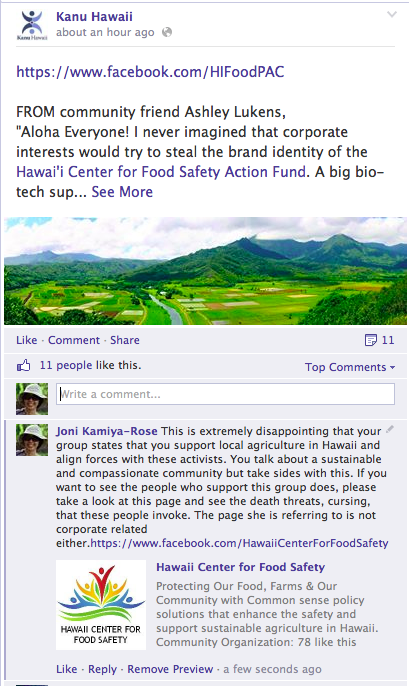
Then a few days ago, I saw their Facebook page with this posted that made my jaw drop…

KanuCFSHI

Original post on Kanu Hawaii’s Facebook page a few days ago.

So when I saw Kanu posting this message with the activist group, The Center for Food Safety Action Fund, I was extremely disappointed and upset.  This is a Washington, D.C. based group that is run by organic food activists and not about food sustainability or security.  They operate by bringing lawsuits to court to block agricultural technology and keep it from getting to farmers to use.  They aren’t here to HELP Hawaii agriculture or the environment as they claim.  No one ever researches these groups out either to learn who and what they really do.

The Center for Food Safety wants no technological advances allowed to agriculture.  They use a lot a fear and misinformation about the technology to promote their message also which is all emotion based.  This group also fights aquaculture and nanotechnology as listed on their website.  They also have a long history of lawsuits against companies and the government also.  Their MO is to sue and then win or lose, collect back court costs and fees from the Equal Access to Justice Act, through loopholes that they have found.  None of this money goes towards helping the farmers or the environment for that matter.  Hence, the likely reason why they went to Federal court to be added as defendants on the Ordinance 960 lawsuit.

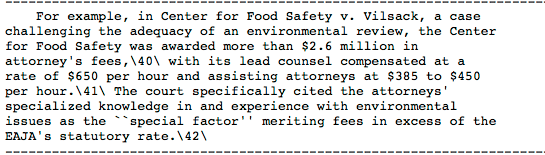
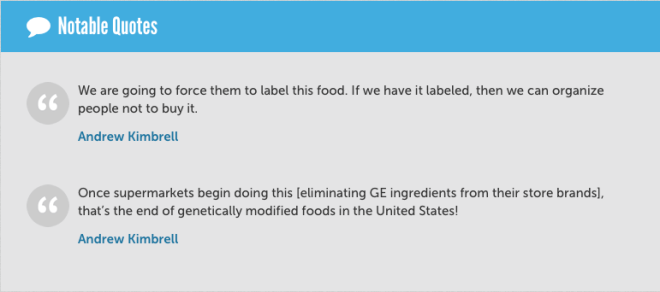
The way this group operates is very much like the Sierra Club’s legal arm, Earthjustice, where they claim to help the environment through lawsuits.  Here’s a case where they were paid $2.6 million from the EAJA from a lawsuit that they won.  These groups have figured out how to funnel monies out of the Federal government and get paid exorbitant amounts.  Note that the lead attorney, Andrew Kimbrell, was paid $650 per hour for his work on this case and other attorneys got paid $250 to $450 an hour too!

Screenshot 2014-05-11 21.29.29

Just an example of how CFS operates and the take advantage of the EAJA.

The ringleader of CFS is Andrew Kimbrell, the person that former Representative Jessica Wooley brought in via Hawaii SEED as a expert for her labeling issue.  They both claim in public that it is about the so called “right to know.”  The truth of it is far from it.

Screenshot 2014-05-12 09.21.35


Andrew Kimbrell, who Jessica Wooley fondly refers to as Andy, is also very much against technology, but calls herself a progressive.  Here’s his rambling thoughts on this “cold evil,” as he calls it.  He also is against anything corporate as he considers it evil.  Here’s some telling quotes made in that lecture.

I have been in many corporate law firms and boardrooms and have yet to see any “high fives” or hear shouts of satisfaction at the deaths, injuries, or crimes against nature these organizations often perpetrate.


Whether it’s a hammer or a nuclear bomb or a piano or genetic engineering, technology always represents power, an extension of human power. And the question always arises, Is that power appropriate. Simply put, when power is inappropriate, evil results.


The tragic result of this failure is that cold evil flourishes, causing ever greater ecocide and genocide even as it remains unnamed and unaddressed.


There is absolutely no doubt that we cannot be a democratic nation, we cannot be a democratic people, and we cannot free ourselves from the cold evil of technological control that now has spread even to our genetic core until we stop allowing technology to control human choices and instead see to it that our human choices control technology.


To face cold evil we must become creators, not consumers. We must break out of our techno-cocoons and recognize that the actions we take in deciding which products to buy or which services to use or render will create a better future for ourselves and the earth. We must take responsibility for the consequences of how we fulfill our basic human needs. Further, we must become true citizens, asserting our sovereignty over corporations and not allowing ourselves to be mere consumers of what they provide us.


He even wants to charge Galileo for a crime for creating this “cult of objectivity.”  This really is a key indicator that this movement really is the anti-science.

One of the epochal moments in the history of Western science occurred on June 22, 1633, when Galileo, under extreme pressure from Church inquisitors, “abjured” his heresy that the earth revolves around the sun. Since that time Galileo has remained an ultimate symbol of modern enlightenment martyred by the forces of superstition and prejudice. Yet if we consider the nature of the cold evil so prevalent today, we can bring charges against Galileo anew. For his real crime was not his understanding of the nature of the heavens but rather his seminal role in creating what could be called “the cult of objectivity”—resulting in a science and science community that have largely been purged of subjectivity and qualitative human thought.


Kimbrell doesn’t stop there with his corporate hate but continues his tirade against any technology including computers in schools.

I’ll use the question to say that computers in the early grades are extremely dangerous. I cannot tell you how strongly I feel about this. It is the most destructive trend I can imagine. Television is already omnipresent for these children. Now computers in school lure their young minds away from wonder and into calculation, and in so doing eliminate arts, sports, and social interaction. Computer programs in school are a frightening incarnation in the early grades of the cold-evil ideologies. To be sure, the ideologies of efficiency, competition, and reductionist science have existed since the days of Horace Mann and John Dewey, but to actually take these young minds and enclose them in the technological milieu, shutting out wonder and substituting computer programs, is tragic.


I find it great that Kanu Hawaii and its funder, Ulupono Initiatives are about a cleaner world while promoting technology to achieve that.  There are lots of high technology advances being used to improve the environment from solar technology to wind technology.  The founder of Ulupono, Pierre Omidyar, also profited from his own corporation, Ebay to help fund these investments in Hawaii.  To have some of Kanu’s former members like Kasha Ho join the Center for Food Safety is quite an odd match in that they perpetuate the complete opposite message.

Ulupono is also interesting in that they tout high tech for energy sources but then support and fund old ways of farming like Mao Organic.  I find this message pretty contradictory at many levels.  Many of the same activists all love their organic farms and are the same ones fueling animosity and controversy towards Ulupono’s other project, the Kauai Dairy.  Many activists think that because Mao Organics is a successful organic farm that anyone can do it, which is farm from the truth.  How many farmers get to have the backing of a billionaire to run their business?  Hmm…

What bothers me even more is that on Kanu’s FB page they also tout things like the Seed Exchange event.  The world of agriculture has evolved and changed with technology just the same as the energy sector and yet they still cling to the old ways.  Where’s any discovery and innovation presented on how biotechnology is making crops more sustainable and environmentally friendly?  We no longer have to use old, more dangerous pesticides to grow food which is a great thing to have.  None of these aspects on how agriculture is being more “green” is ever presented and it’s sad because that is what’s where ag has advanced in leaps and bounds, and yet it is never acknowledged and an opposite message is presented.

I would like to see Kanu and Ulupono stay as far away as possible from anti-progress groups like the Center for Food Safety at all costs.  This group will only block the progress needed to achieve their goals of a cleaner, more sustainable Hawaii.  They don’t give anything to making Hawaii better, but take away tools that could.  A better Hawaii can only come from education and research, not pure activism based in fear and misinformation.  And who’s to say if this group will start to block renewable energy options in the future that could help everyone with their anti-technology bent?

Screenshot 2014-05-11 21.25.15

Visit the Center for Food Safety webpage and you’ll be treated to fear mongering! It works and they know it.

Why should an activist group have a say in who gets access to technology?  They provide no evidence or options for the people of Hawaii and are out to block progress and line their own pockets.  They are not about working together with different sectors or collaborating with anyone who disagrees with their stance.  That’s now how we move forward in Hawaii!  We all have to work together to reach goals or remain stuck in the ideological muck.  The evidence must move us forward for the future.

The more I read about the Center for Food Safety, the more I feel like being despise this movement.  This is such a hypocrisy of the environmental movement that makes me lose faith in it.  They hate greed but are greedy themselves.  They hate corporations but support corporations that agree with them.  These groups take away taxpayer funds that really should be used for making our planet better and not for lining their own pockets.  They block a technology that could help farmers in developing countries have less reliance on highly toxic pesticides and provide no alternative.

Technology for all sectors are good and why are we getting picky about who gets access to it?  It’s a tool that we have to use and let it do its work.  Isn’t the goal to make our world better and cleaner?!

Based on the stance of this group, they have a lot to go after here in Hawaii.  They can help block or make aquaculture projects more difficult like the Kona deep sea fish farm, the abalone farm, or even the shrimp farm on Kauai.  They must want more depletion of wild fish populations and less research on how to protect it.  They might even try to ban people from fishing like their linked group Earthjustice has succeeded doing in California.  They might even block other companies from coming to our islands for high tech research in nanotechnology.  Who knows what these groups will take on next but I’m not waiting to not speak up.

No where on their website is there any humanitarian efforts made other than to “protect people and environment,” with no real evidence that they are actually doing such thing.  They want to block any corporation who may be heading such efforts also but offer nothing in return.  These groups are takers, plain and simple.

Everyone should be worried when an anti-progress, regressive activist group takes stake here.  From the scientists and researchers at UH working on solving plant diseases, the UH cancer center who might be researching nanotechnology, to the shrimp farms on Kauai, this should worry all of us.  This group might even block genetic engineering that could solve so many human illnesses because they are against this technology completely.  The new dairy should be worried too because they might block a genetically altered grass or feed that can be fed to their cows.  Ranchers should be worried that this might affect their ability to feed their herds with GE feed or other technology available to them.  Every consumer and Department of Ag inspector should be worried because they are out to block irradiation and other technology from bringing in pests to our islands that could decimate our food security.  They are also seeking out to label GMO foods and don’t care if the exorbitant costs will be spread to our people already struggling with high costs of food, all over their deceitful “right to know.”  These activists are a real threat to everyone with what they propose for our islands.

It is even more disturbing to see legislators participating in talks with the Center for Food Safety.  Some of those include Jessica Wooley, Lauren Matsumoto Cheape, Chris Lee, Russell Ruderman, Gary Hooser, Elle Cochran, and others who align with them.  They want extremist groups to run the roost here in Hawaii?!  It’s like letting Greenpeace have decisions over what our farmers can farm and I abhor that completely.  I can’t understand why these leaders have chosen such a route for Hawaii despite calling themselves progressives!

I want to save our land like others but there are better ways of doing it other than activism.  I applaud groups like the Nature Conservancy in Hawaii ,who are actually out there cleaning our waters of invasive species, or ridding the forests of miconia or controlling the feral pigs out from our precious rain forests to protect the native plants from extinction.  They aren’t paying for protests or websites that make people feel like their being poisoned or use fear mongering to get their message across.  You will never see a fear mongering picture out there either because that’s not their goal.  They work with the different sectors of private and public agencies to take care of Hawaii, which is a great thing.  They actually DO something for Hawaii and those are the kind of environmentalists that GIVE to our a’ina and exactly what we need!

When I did point out that I had a problem with Kanu posting the Center for Food Safety on their page, I’m glad that the director edited the post that they do not support or endorse them.  I really do hope that it stays that way for the future.  That’s another step in the right direction for that sustainable and compassionate Hawaii that we are all seeking.


For the Activist Who Wants to Learn

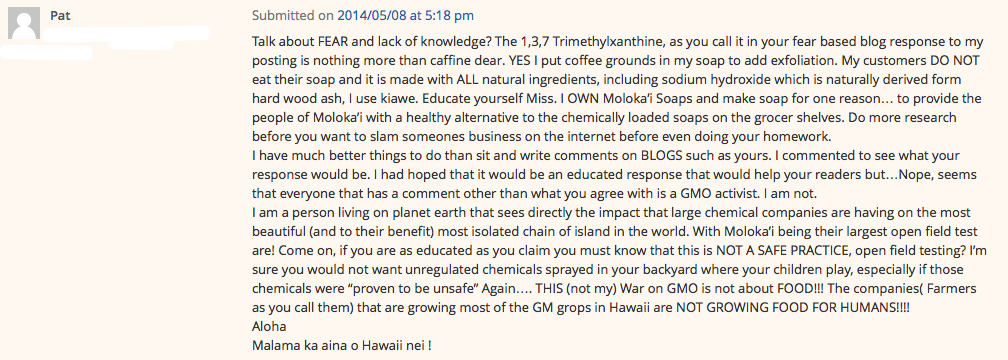
I really love when activists like Pat the soap maker shows some signs of wanting to learn something.  She came back again to put another comment on the blog:

Screenshot 2014-05-08 18.56.09

Don’t Be Afraid of Chemicals

When I mention technical names of common substances, it apparently incited fear in her.  I’m glad she looked it up and found that it is just caffeine.  Like many anti-GMO activists, she is afraid of chemicals, well, at least the chemical names of things that we use in our everyday lives.  Everything around us is made up of chemicals including her “naturally derived” soaps.  It’s all chemicals.  One can use the technical names for things like caffeine and lye which make it sound innocuous.  Nature is also compromised of chemicals and in fact is loaded with chemicals itself.  It doesn’t matter if it is derived naturally, some are indeed more toxic than others.

Even if you might derived your lye from ash that is natural, that in itself may not be very much different from synthetically derived sodium hydroxide.  If it works the same way, then it probably is the same chemical regardless of how it was made.

A good example of this is vinegar.  When we think of vinegar, most people see it as what we use to cook, clean or preserve food in.  It sounds very harmless.  But when you use the chemical name of it, acetic acid, it can make people get very scared despite being the same substance.  Chemicals can go by multiple names, whether it be naturally derived or not.  So don’t be afraid of it, learn some basic chemistry and realize how chemicals surround us in our lives and it isn’t always bad.

Appealing To Nature Fallacy

Many people like Pat fall into the appeal to nature fallacy.  They tend to think that just because it is natural that it is much better for you.  That isn’t always the case.  Polio, botulinum toxin, mycotoxins, and so on are all derived in nature but they sure aren’t good for you.  In fact, they are harmful and deadly in some cases.

Nature isn’t always kind too with the disease like whooping cough, tetanus, and diphtheria.  Cancer itself is nature going haywire to overproduce abnormal cells.  It doesn’t always occur because of some kind of exposure.  Man has figured out how to counter these natural creations to live longer and it isn’t always derived by “natural” means.

Just the use of the term “natural” brings on the connotation that something is better for you or superior.  Is nature always better when there are diseases, disasters, and famines?  Nope.  If we had let nature take the course in our human lives, we’d still be living to the ripe old age of 35.  Disease likely would have killed us if nature was that kind.

Open Air Test Fields With Chemicals that Aren’t Regulated

These comments are pretty interesting because it makes me wonder why people are afraid of modified plants growing around us.  Much of the greenery around us in our lives are not derived in nature and genetically modified by man.  From the gardenias to the variety of gingers and hibiscus plants, they are all modified.  No one is afraid of that.  What about all the genetically modified orchids that grow great in Hawaii?  They aren’t tested and have random genetic sequences that we haven’t tested.

Other examples of genetically modified plants in our world include sweet corn and pluots.  Corn alone, whether it be organic or conventional, is a modified organism with untested genes.  So are the bananas that we consume man made, but no one ever demanded testing of it.  The latest and greatest superfood from across the world have unknown genetic sequences but people devour it without hesitation at all.  Bottom line is that we consume a lot of genes but have we turned into that banana or a fish?  Our bodies just don’t work that way obviously.

Then the claim that chemicals aren’t being regulated is interesting because the ones used on many conventional farms and biotech farms require extensive documentation and licensing to use in many cases.  They also have had lots of testing conducted on them prior to being released for use, despite what you’ve been told by certain politicians.  You can go to the EPA website to actually see what the regulatory process is like.

Note that there is no regulated use of pesticide sprays on organic foods either as required by law.  Not all pesticides or substances used in organic production are derived naturally either.  There isn’t a lot of testing of such pesticides prior to being approved for use either that’s required of biotech companies.  That organic coffee you’re drinking there might have been sprayed more often than you like to consider.

Agent Orange and DDT Argument

The Agent Orange and DDT statement is always the fall back go to reason as to why activists like Pat give as why they can’t support biotechnology.  It’s time to share some facts about the argument that keeps repeating itself here.

Agent Orange is made up of two chemicals, 2,4-D and 2,4,5 T.  You still can find this hardware stores today as it is an effective herbicide.  The problem with AO was not those two chemicals but the contaminant dioxin.  I asked my dad why it was used and he said that it was, “Either you get shot before you even drop to the ground or clear the forest and have a chance.”  Note that it was the chemical companies spraying it either, but the government.  You can read more on AO here and here.

The DDT claim as to why activists don’t like biotech crops is yet another weak one.  It is once again approved for use by the WHO to help eradicate malaria causing mosquitos.  You can read more on it here why your argument using DDT doesn’t work against biotechnology.

Learning by Movies, If You Pick the Right Ones

Many commenters like Pat are very afraid of genetics as is shown in their commentary over and over again.  It’s most likely that they watched Food, Inc, OMG GMO, Seeds of Death, and Genetic Roulette and other moves on YouTube.  The intent of those movies are to scare you.  Did you ever think to try and debunk some of the movies or did you just believe without question?  Easy way to see a different picture on biotechnology is Google the movie title along with the word “debunk” and you’ll see a different kind of site come up.

Here’s some of my favorite simple videos on GMOs that don’t scare and actually can educate, if you actually take the time to watch and understand it.

Basic Genetics

There’s a Gene in My Soup!

Food for Thought on Biotechnology
While people can argue about why we shouldn’t have biotechnology as a tool, consider this thought about it.  It’s a tool that can help others and why not nurture it so others can benefit?