Those Who Carry the Torch Must Remember Who Came Before

mikemagazine

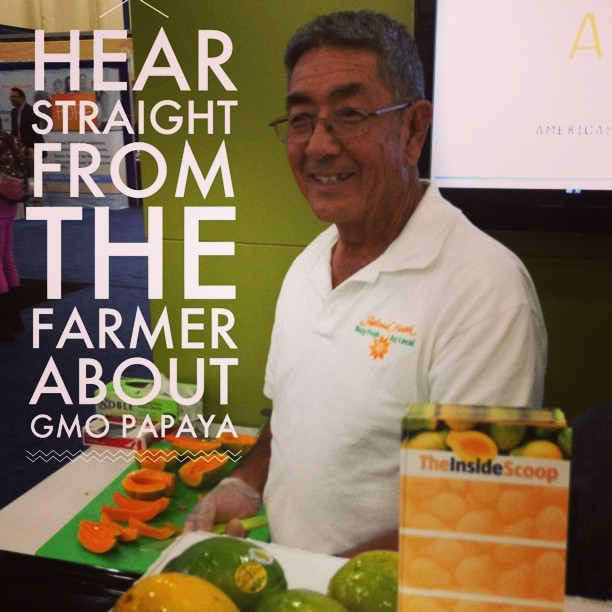
My brother is the third generation of Kamiya farmers to take over the farm.  As a eager young person, he had his own ideas of how the farm should be run and how he should do things.  My dad insisted on him learning the “tried and true” ways of doing things first but my brother decided to forge his own path, somewhat ignoring long timed learned lessons in farming.  Being the patient guy my dad is, he decided, “Okay, you can learn your own way and find out for yourself.”  Before long, after a short lived path of doing it “my way,” my brother came back to my dad and said it didn’t work.  My dad knew that it would happen like that because he himself did that with his dad.

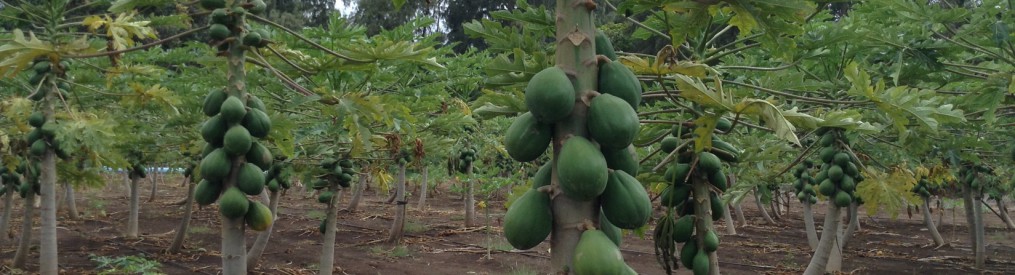
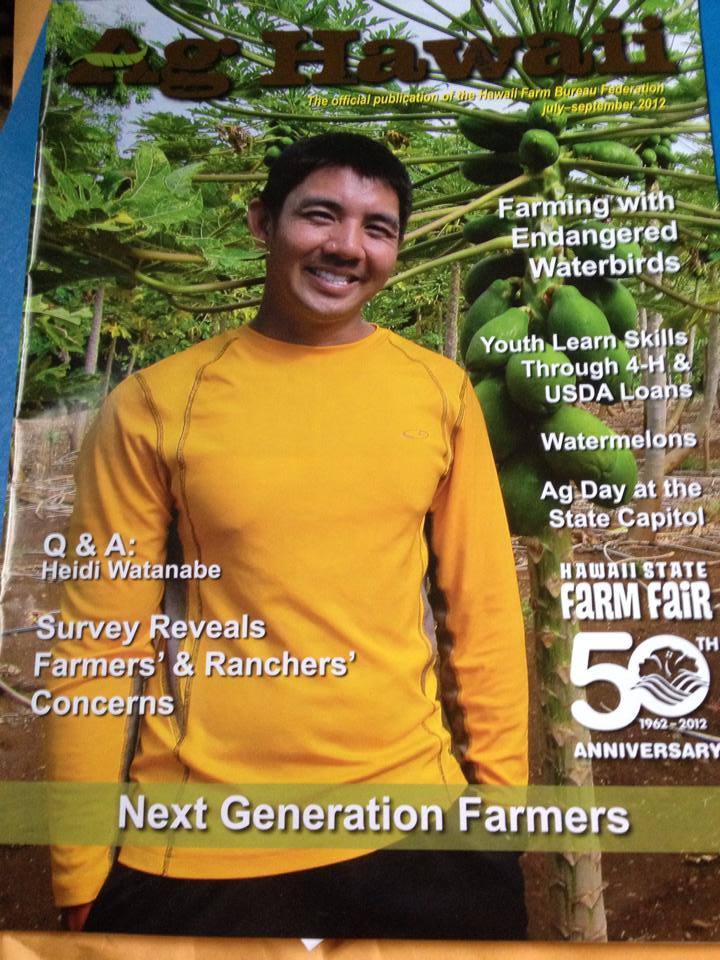
My dad is now widely known in our state as the papaya king of sorts because of all the expertise he has developed over the years.  He is also a respected leader in the community and serves on some agricultural advisory boards to help develop future practices for farming.  As I’ve had the chance to meet people who know him, they speak so highly of him and really respect him for his work and leadership.  He’s worked hard to get where he is and had a strong vision as a young farmer as to where he wanted agriculture to go in our state and beyond.  From his early days in his early 20’s to well into his 70’s, he’s still going strong as a leader and voice for agriculture in Hawaii.  I’d have to say that 50 years is a pretty sustainable career!

As I think back on that story with my brother and learning my dad’s story of his path, I can’t help but think that we really do need to know our roots to remember how we will make decisions for the future.  If we want to continue my dad’s legacy and leadership, we have to know him and what he has done.  The further I ponder this issue, I realize that this idea of being a great leader and carrying on the torch also means the leaders too must know those who came before them.  A leader that we should really take consideration of is the late Senator Inouye and how he shaped the Hawaii we live in now.

The people of Hawaii are deeply indebted to the late Senator Daniel Ken Inouye.  He was a visionary man that sought to keep our state at the forefront of our nation when it came to high technology, the military, agriculture, and astronomy, research and education.  He wanted Hawaii to be at the top of things when it came to these issues and sought to it that it would happen here.  He had a vision for our state and saw to it that it would become a reality.

When asked about what he wished for when it came to his successors, this is what he stated in a interview with Hawaii Business News back in 2009.

“To the extent possible, I hope they would carry out the programs I felt would be helpful in establishing a healthy economy in Hawaii,” he says. “Hawaii should be an important part of the national picture.”

On December 17, 2012, we lost this great leader and have not found that true successor to his legacy in the current environment.  We now have his appointed replacement, Senator Brian Schatz, making secession like statements of “home rule,” and Representative Tulsi Gabbard seeking to legislate a label against the very technology that Inouye sought to support in Hawaii.  On the lower level of governments, we have legislators like Representative Kaniela Ing, Representative Jessica Wooley, and Senator Russell Ruderman talking about home rule and fear mongering over biotech and leveling attacks against agricultural issues.  On the county level, Council members like Margaret Wille, Brenda Ford, Gary Hooser, Tim Bynum, and even Mayor Billy Kenoi enacting laws that ultimately hurt future research and agricultural advances in our state that will affect the very research center that was renamed after him.  Even his own party, there was talk of being anti-technology in their environmental caucus discussions.  I find it very sad that this is has all happened in just the two years that he passed away.  Have our leaders all forgotten the legacy of this man?

“I wanted to carry on activities that would bring all the Islands together.”

Senator Inouye was all about collaboration between entities and people.  He stated that he wanted to link the neighbor islands together and strengthen the ties within our state.  He focused on projects that helped to attain this with fiber optic links, the Maui super computer, star gazing facilities on Mauna Kea and Haleakala, and the Pacific Missile Range on Kauai.  I somehow wonder what he’d be saying if he started hearing the talk of “home rule,” the very thing that he worked against in our islands.  (Home rule was something that another great leader fought against, King Kamehameha.)

Great leaders with a clear vision are not subject to trends of the moments and activism.  Senator Inouye was not one of these leaders, which is why he was able to sustain his leadership and build the Hawaii he wanted.  Not everyone agreed with his programs and stances, however, he used best practices and researched where technology was going and stood his ground.  He stood up against the critics and carried on to achieve that goal he had in mind for Hawaii since he knew that is what needed to be done.  He neither pandered to voters either when it came to controversial issues.  Evidence, logic, and reasoning was his guide, not popular opinions.

In our current political scheme, I just don’t see the kind of visionary person or leader stepping into the big shoes of Senator Inouye.  Very few are able to create a vision of what they want for Hawaii and jump on the various issues without any clear goals or a direction to lead from, other than trying to win votes with the rhetoric of “I’m making Hawaii better.”  They will repeat that they see the “big picture” but talk from a minuscule position showing their ignorance of how every issue is interdependent on each other.  I’ve been taught my my dad to remember my roots as that will guide me for the future.  Our future leaders too must remember our Hawaii roots of who came before and lead in that same way if we are to know where we are going and how we will get there.
Grow to Know and Let the Real Farmers Farm

Grow to Know!

Several years ago, I decided to get into gardening.  Yes, gardening, not farming.  It started out as a hobby for me to grow my veggies here and there and a good thing to do with my kids.  My first project was trying out aquaponics, which seemed like a neat thing to start.

I asked my dad what he thought and he said, “Sure, go try it out.”  I figured it sounded cool to try and he said it would be good to do.  So I went ahead and decided to take a leap at this great project.

I spent about $300 for a small system with a 50 gallon tank, cinders, pump, PVC pipes and the fish.  It did great with my lettuce initially but I found that the growth rate was pretty slow for me.  I couldn’t get the nerve to kill those tilapias and eat them either because they stunk so much.  Those fish essentially became pets.  In frustration, I asked my dad, why does it grow so slow?  He told me that there wasn’t good control of nitrogen being delivered to the plants in these kinds of systems.  Aha!

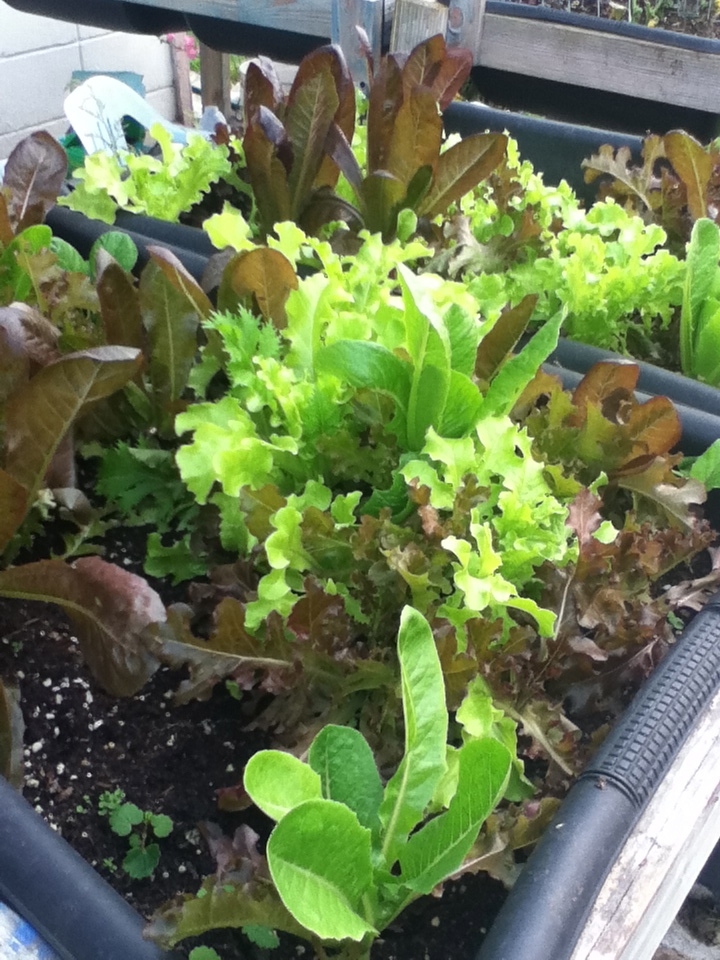
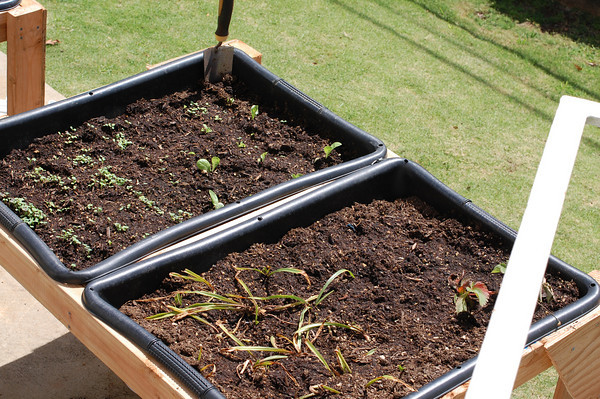
Being impatient and eager to grow something, I decided to start up regular dirt boxes that were raised to grow my garden.  I designed a stand and sawed up the lumber and put it together.  I filled it with regular potting soil from my favorite place, Yamashiro Hardware.  I also built it at standing level so that my grandmother could garden in it if she wanted to.

DSC_7645-M


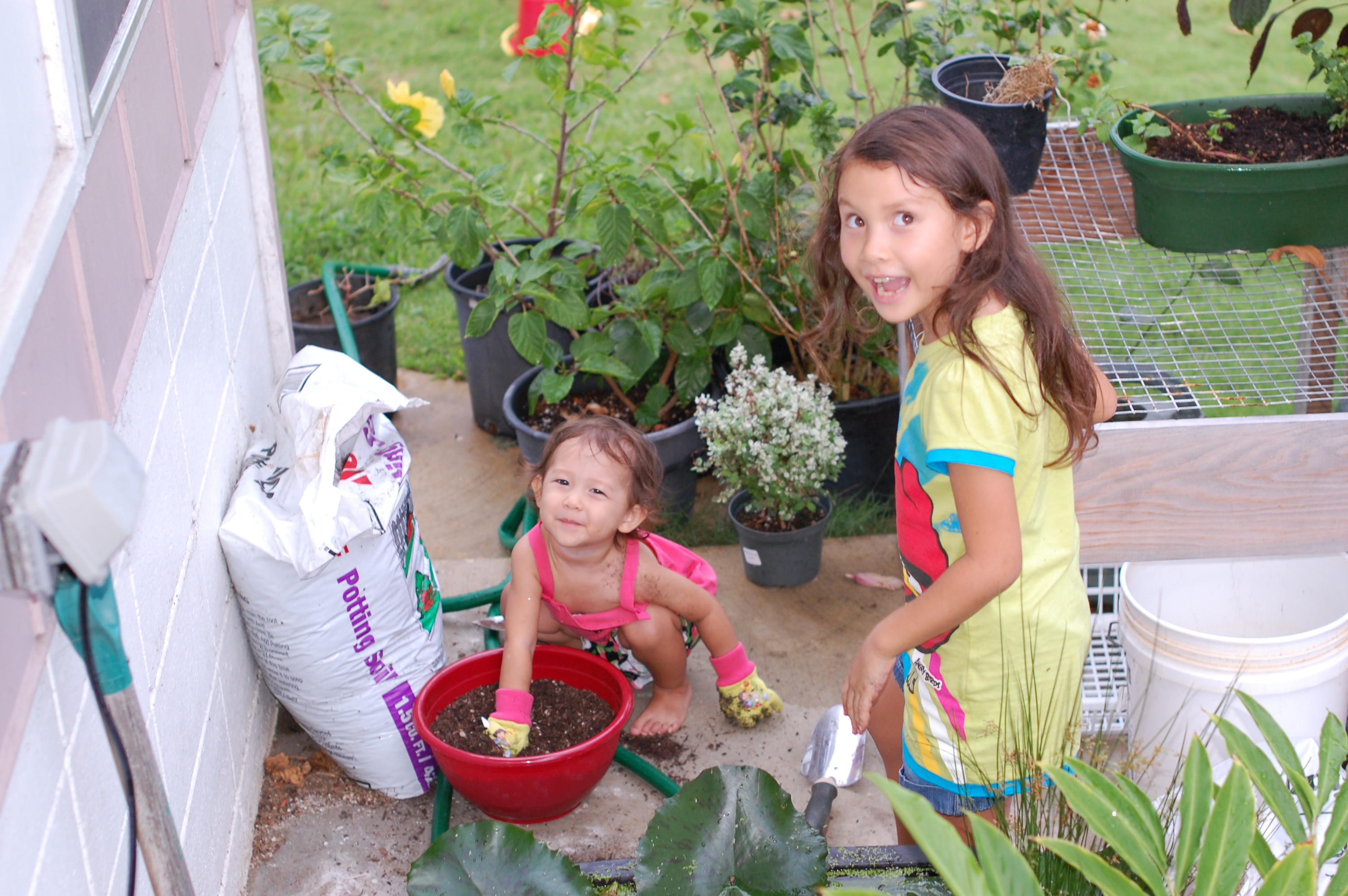
I had my two kids fill up the boxes with the potting soil and a mix of compost as I heard that there was this mix that was really good for gardening.  Well, the things just didn’t grow so well and I was stumped.  I had my dad, the plant doctor, take a look at what what going on.  He told me that it was most likely the compost product was not completely broken down.  The bacteria had not broken down the organic matter and was now stealing the nutrients that the plant needed.  I had to wait for a few months before I could start again.

DSC_0323

After about a few months later, I restarted my boxes up again with a nice fresh seeds.  Within two months, I really could see the difference in the health of the plants compared to the first generation.  I asked my dad again what should I do next and he said put some fertilizer periodically.  Sure enough my garden was beautiful!

IMG_0043


I was pretty darn proud of myself for getting my garden going.  Then nature took its course and the delicious, mild mesclun got some sunburn.  Despite watering it daily, one hot day, it dried out the soil just a a wee bit too much.  All of my delicious lettuces turned awfully bitter and it was ruined.  I asked my dad again what happened and he explained to me why it’s important to water lettuce or lose your whole crop.  Lesson learned again.  It isn’t that easy to grow things.

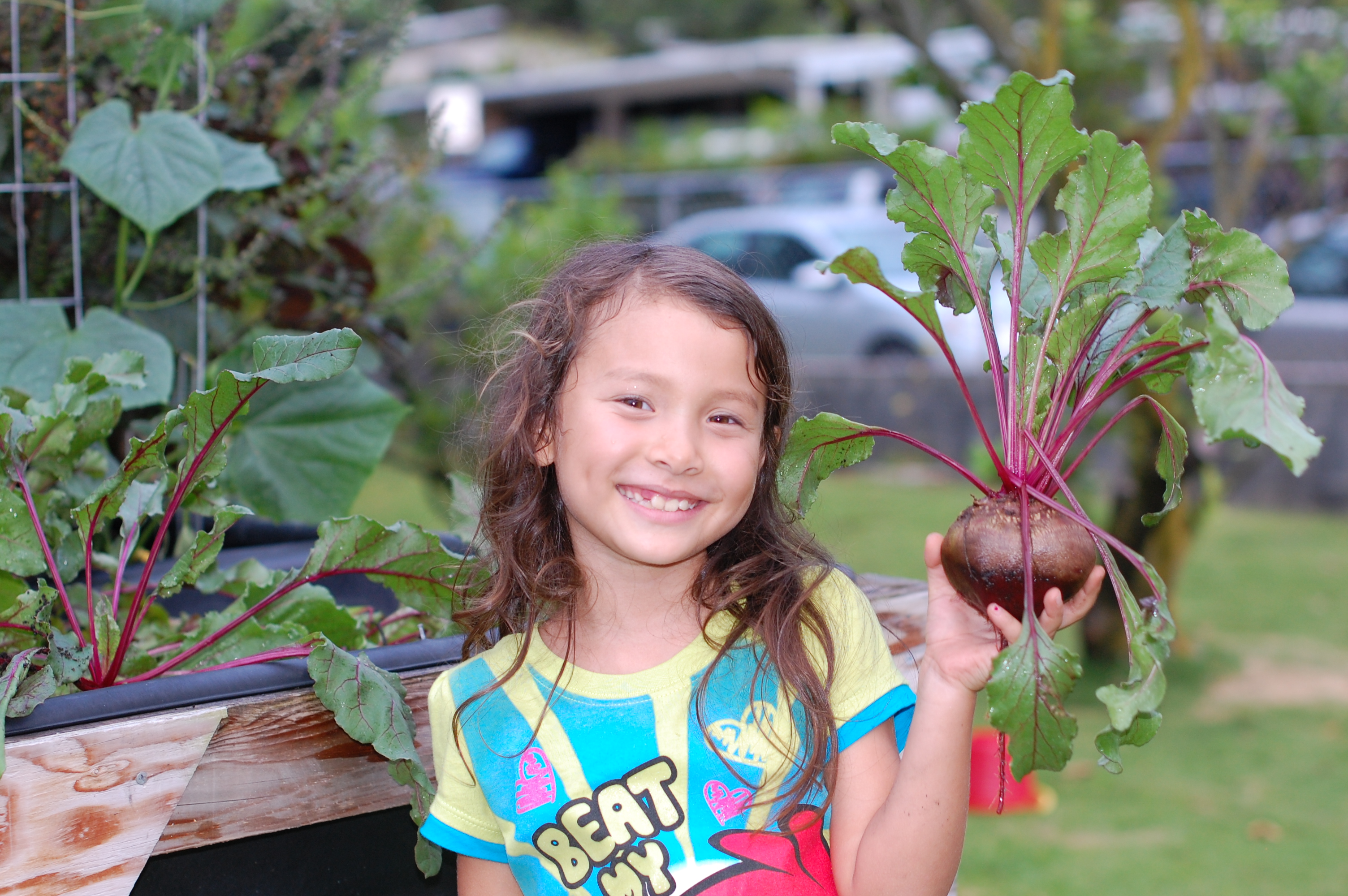
So much for the lettuce.  My next experiment was beets, as it was something that my mom loved growing on the side of my dad’s fields when I was a kid.  I had just seen something neat in a Yamashiro’s ad for an organic fertilizer that I wanted to try out.  The one pound bag of bat guano was pretty expensive at $11 which was more than the box of MiracleGro.  I did two boxes of beets and learned why the regular fertilizers worked better for the money.  My dad came by and asked me what I had put on the box of beets that were half the size of the thriving box.  I told him that I used bat guano and he just chuckled at me again.  “Did you learn something there?” he asked me.  I had to agree, yes, I did learn something again.

DSC_0336


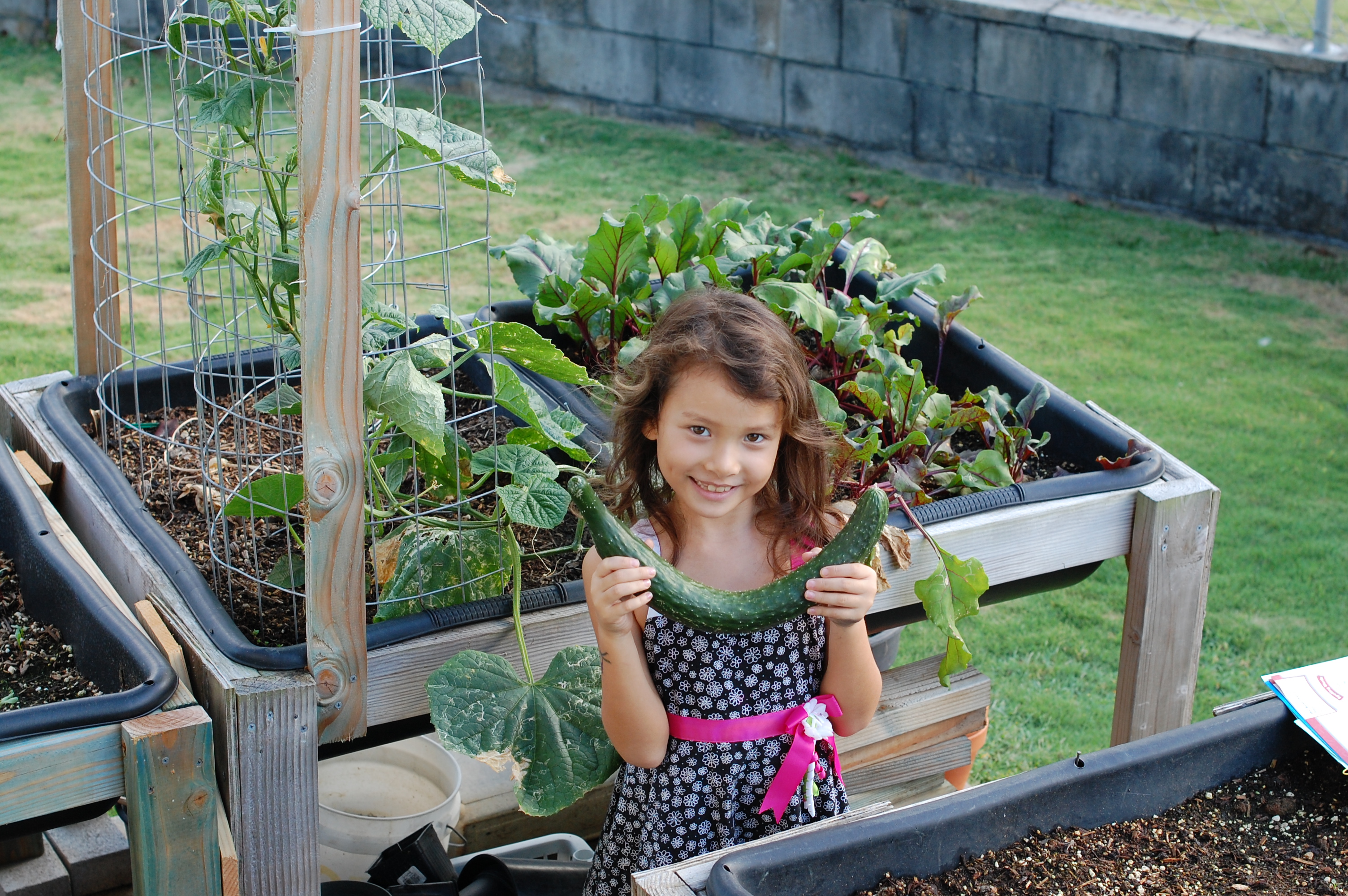
I was really starting to get the hang of this gardening thing after about a year of trial and error.  My next experiment was growing cucumbers, which was something my grandparents did on their farm.  I did the composting bit and waited a few months before I dropped in a seed from Fukuda seeds as my dad said buy the local seeds that are best suited for here.  I listened to him and did so.  The vine did beautifully as I had expected after learning from how many mistakes.  We got about 8 beautiful 2 foot long 3 inch diameter Japanese cucumbers.

DSC_0379

I was pretty proud of the first beautiful cucumber we got and kept seeing the flowers bloom, hoping for more.  That did not happen as expected because I did not pay attention to what nature was doing to my vine.  My dad did his weekly walk by my vine and said, “Hey, are you spraying your vine?”  I said, “Spray for what?”  He continued, “You got lots of bugs on there and you’d better take care of it soon, but it might be too late already.”  He went on to explain that aphids multiply exponentially and based upon what he saw, the population of aphids on my vines had already done that.  I listened to his concoction of what to spray which was some dish soap and water.  Sure enough, like a prophet, my vine was overrun by the bugs and I only got a single cucumber.  My cucumber was literally a mono crop, a single vine, yet it was decimated by bugs.

I can’t tell you how many lessons I learned from these few years of gardening and the expertise that is needed to understand what happens.  I started to have a greater appreciation for those farmers who are able to keep a stable supply of their produce filling our shelves week after week, year after year.  It takes a lot of education, observation, know how to grow food for others.  Just thinking about all the hard work my dad for all these years really made me have a greater respect for him and his knowledge base.  My dad is an amazing person that is unbelievably dedicated to his life’s work and passion, which is growing food for people.

Yardeners are NOT Farmers!

For me being his daughter and seeing what is happening in our state with farmers has really affected me.  When people started joining the bandwagon of the “right to know” movement to label my dad’s fruit, it got me mad.  On one hand, they’d say then have this fundamental right, and then on the other side of the coin I see them making blatant lies and wearing gas masks carrying papaya trees.  I also hear people saying how his trees are poisonous and that he is destroying the a’ina because he isn’t organic and grows GMO.  How can that be if he can grow his crops for 40 years now?  It’s utterly saddening when lawmakers also jumped on this trendy activism also and attempted to pass such a law against farmers like my dad.

I saw how much time and effort was spent by my brother and my dad to go down to the legislature to defend their life’s work.  He couldn’t get to that broken plow, nor could he fix his truck, the fields had to wait to be planted, scheduling in testimony time between deliveries, and so many more tasks had to be put off.  Then the anti-GMO county laws started yet another onslaught of legislation that had repercussions that would trickle down and affect his farm once again.  More work had to be put on the side to deal with more regulation that was being incited by these two faced people.

The 99% was making demands because they never took the time to actually come and learn from a farmer themselves about how food was grown.  They had gone to some community seed exchange event and learned some misinformation being perpetuated about the seed issue by groups like Hawaii SEED and others.  Yes, they could grow things without pesticides and that empowered them with this false knowledge that if they can do it, so can the average farmer.   That garden they were growing was testimony that they can grow without “bad” chemicals so everyone else should do it too. Even images across the social media touting organic farming is better for you and so on bombarded people’s minds of farming.  They became “experts” since they read a meme that organic is a economically viable and sustainable way to farm.  So many false images and information gave people this idea that if a farmer wasn’t organic or GMO, they were bad people for choosing such a way.

Most non-activist local people and some level headed legislators saw through all of this and worked through to fight for the farmers rights, only to be impeded by ones who have never ever fulfilled a farmer role ever.  The ones who choose to align with the gardeners and their “rights” don’t have the full picture but are the ones making laws, which is misguided.  They contribute to the problem of why we can’t produce enough food by creating this fight.  If we as  a state really want to have more local food, it’s not just the farmer’s job to speak up and educate people, the local people wanting their food also needs to speak up for them.

It’s hypocritical of the “gardeners turned farmers” crowd to say they want local food but then lead attacks against the long time farmers who clearly demonstrate what that buzzword sustainability really is about.  It’s also hypocritical to hear groups like the Center for Food Safety and Earthjustice state things that they support sustainable local food and then launch the “right to know” platform.  If these so called activists, gardeners, surfers, bikini clad chics, and environmentalists truly wants a sustainable local food supply, they’d get out of the way and work together with people.  What we are seeing is that their intentions are far from being genuine, and they choose to contradict every word they say by each action they fuel and instigate based in fear and not facts.  These people apparently forgot the old adage, “Actions speak louder than words.”


Sustainable Agriculture Doesn’t Mean Only Organic

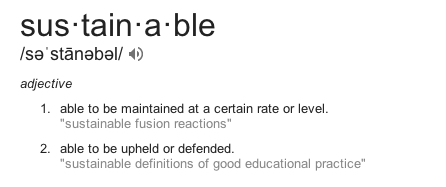
Thanks to the disinformation campaign of the organic lobby, people have really started to bumble up what the word sustainable means.  There are a lot of people who think that being environmentally friendly automatically means organic and that it also means “sustainable.”  What does sustainable really mean to begin with?

Screenshot 2014-03-22 09.39.04

This definition clearly shows that we can’t equate sustainability to mean organic.  I would have to say that working the lands for 40 years and still growing fruit is definitely sustainable.  Farmers that grow know this.  They use all methods of farming to keep them going.  Being able to farm year after year is indeed sustainable.  It would have to be my dad and all the other multi generation papaya farmers across our state are definitely doing something sustainable!

Dad farmer

Honolulu City Council Wants to Burden the Farmers

I was really disappointed to learn that there is yet another proposed bill on the books that is going to affect Oahu farmers.  The West Oahu Soil & Water Conservation District met a couple of days ago and discussed that the Committee on Zoning & Planning.  Honolulu City Council will hold a hearing on Thursday April 24, 2014 at 9 a.m. to hear Bill 34, introduced by Ikaika Anderson.  This bill will have a devastating effect on farmers and soil conservation efforts.

Bill 34 will remove the exclusion from the County grading ordinance, grading by farmers under approved Soil Conservation plans with a Soil & Water Conservation District for any project of more than 50 cubic yards of material.

If this bill becomes law, for any project of more than 50 cubic yards of material, farmers will need permits, will need to pay fee and will need to bond the project.

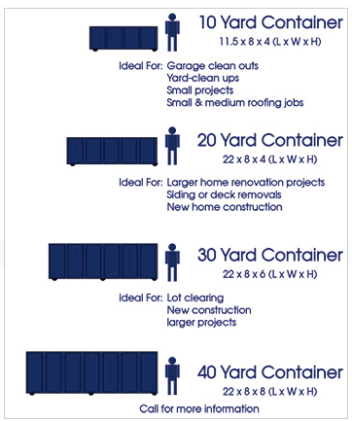
Let’s put some perspective into this law that puts yet another burden on farmers.  What does 50 cubic yards of material look like?

Image


If you take a look at the above picture, 50 cubic yards is basically one large container and a small one.  The law is seeking to remove the exemption from farmers for moving material.  Is that really a whole lot of material being moved?  I don’t think so and the number is so arbitrary.  What really is the purpose of removing the exclusion of farmers?  Is it to make farming a more attractive business for others to go into?

It’s just really disappointing that our lawmakers come up with this kind of shortsighted laws with no real rationale or idea of the consequences of such actions.  It’s funny how the state is talking about how Hawaii supports agriculture and yet propose these kind of actions.

The truth is that we must prefer importing foods because we are going to essentially tie the hands of the people who feed us.  If you love local food, say goodbye because it is going to get that much harder for farmers to get it on our tables.


The Right to Know Should be Pay Attention Instead!

Scarlet, my 15 year old GMO eating dog who is still alive!

Scarlet, my 15 year old GMO eating dog who is still alive!

Let’s face it that the GMO war in Hawaii is still raging on with Maui on the hit list right now by the anti-GMO activists.  The mainland funded SHAKA Movement is going full force over there trying to do the same thing that happened on Kauai.  The pictures and the videos are still posted on the social media documenting the so called “outrage” of the people.  It is really amazing to me that people really don’t pay attention to the things in their daily lives that is created by this GMO technology that they feel is poisoning them so much.

I decided to pay attention and take a look at my own life and see where I actually use GMO products.  I bet that many of these protesters live quite similarly to me.  I get my household stuff from Ross, Macys, Sears, and the local Longs CVS.  I went room to room and around my home to see where I could find those pesky GMO things!

I started off in my bedroom.  I went through my drawers and picked out my clothes for tonight.  I found a nice cotton pajama top and bottom along with cotton underwear.  I can’t afford organic nor would want to buy it.  My GMO cotton night clothes came straight from Macy’s where it was surrounded by tons more of it.

The nice sateen cotton sheets that I sleep on is made from GMO cotton too.  The bed sheets as well as the comforter that tops my bed is all GMO derived and made in India or Pakistan.  Even the cotton mattress pad is GMO!

I’ve learned from Farmer Ravi, and Indian cotton farmer, that he appreciates the Bt cotton seeds since he no longer has to buy highly toxic pesticides to grow it.  He also told me how the pesticide companies there were fighting the agribusiness companies trying to bring in this technology there.  The pesticide companies are different than the agribusiness companies and aren’t the same entities.  I’m happy knowing that some farmer in India didn’t have to expose themselves to old highly toxic chemicals to grow the very textiles I use in my daily lives.

When I peeked into my husband’s dresser drawers, I found that even his clothes are all mostly cotton.  We’ve never bought anything organic as we can’t find it here and it’s likely out of our price range.  From his underwear to his undershirts, it’s all GMO cotton!

Next I went into my kids’ dressers and found the same thing.  Nearly all of their clothing is cotton and all GMO too!  Some are made in the US and some across the world from us.  The farmers that grew it didn’t have to use excessive amounts of pesticides to grow it, which is a wonderful earth friendly though really.

I walked to my bathroom and once again find GMO cotton everywhere!  From my fluffy white towels from Costco, to my shaggy floor rugs from Ross, to my facial cotton pads and my mommy diapers as my kids call it, everything is cotton!

As I look closer to my Herbal Essence shampoo, it too has some form of GMO in it.  There is corn silk extract listed as one of its ingredients.  Wow, GMO shampoo that smells great and washes my hair clean.

My deodorant also has cornstarch as one of its ingredients to keep me fresh and dry.  I am putting GMO right in my pits!  This is amazing!  I’ve been using this for years and really had no clue until I took some time to read the label today.

My dogs get a little night time treat so I took a minute to look at the ingredients of their treat boxes and sure enough, there’s some corn meal listed in it.  I’ve fed it to them for years and they are fine and happy to receive it.  My rescued dog, who has been fed GMO her whole life, has reached the ripe old age of 15 human years this year with no problems at all.  She still runs around the yard like a puppy and is as happy as can be.  I’m lucky that this GMO has kept her healthy and my vet bills low.

I stopped by my kid’s mouse cage to feed their beloved pet, Pip.  Pip’s been alive nearly a year eating GMO corn and healthy as ever.  He looks nothing like Seralini’s frankenrats at all.  I still feed him his GMO feed everyday and toss in a few GMO treats that he takes happily.  He is free of any lumps!

My two cheeky lovebirds, Papaya and Charlie, are snuggled together in their GMO cotton sling bed that I made them and are perky and cheery as can be.  They love it when I put in some GMO sweet corn as a treat.  Papaya is 15 human years old and Charlie is 3 human years and are peppy and sassy, even with all of the GMO treats.

I then stopped by my kitchen and took a closer look at what I have in the cupboards.  Sure enough I have plenty GMO food in there from Spam for my musubis to my favorite Hawaiian Hula GMO papaya seed salad dressing mixes.  I also have GMO corn tortilla chips for nachos this week along with GMO chymosin cheeses of all sorts from Costco.  I have GMO canola oil for making salad dressing under my sink.  I keep a nice stock of GMO condensed sweetened milk to make my heavenly seven layer bars with some chocolate chips that likely have some GMO sugars in it.  I even have non-GMO flaked coconut that’s dusted in some GMO sugar that tastes great toasted.  My cupboard and refrigerator is chock full of GMO food items.

I tidied up the kitchen and saw what I can use to do the job and found Mrs. Miwako’s GMO kitchen towels and Williams Sonoma dishcloths that are all GMO cotton.  My Japanese cotton steaming cloth is GMO cotton and great for making my favorite sticky rice dish, sekihan.  I still can’t see how GMO is so bad and evil as everyone makes it out to be!

I took a look at the containers of fish food and found that it too contains GMO corn meal and some soy in it.  My fish that I got from the farm fair last year is still alive despite consuming it for the majority of its  life.  My goldfishes are also thriving on the GMO fish food and seem to be surviving attacks by our crayfish all along.

I checked on my grandma this evening and discovered that she has vials of GMO right in the refrigerator.  She uses GMO derived insulin to help treat her inherited form of diabetes and has been injecting it for years.  She probably would have had her toe amputated or blinded by the disease if it weren’t for this GMO insulin.

I thought I’d load up my car for tomorrow and realized that there’s GMOs being burned in my daily commute to drop kids off and pick up my grandma from day care.  I washed my car too and used the GMO cotton rags to polish it to a nice sheen with synthetic chemicals that do the job.  I used a lot of chemicals from headline polish, tired shine spray, Rain X, window cleaner spray, resin car wax, back to black spray, WD40, silicone spray, and Armour All spray.  I know that there’s a lot of drift from these chemicals and I breathed it in once a month to keep my car clean, since I do like a clean car inside and out.

I found some cans of paint in my garage too and lo and behold, there’s GMO soy in some of them.  The left over newspaper kept from my guinea pig’s cage also has GMO soy ink on it.  Mr. Pig’s cage has been lined with GMO soy ink paper for years and he’s doing just fine with this exposure.  Heck, I’ve been touching this GMO stuff for years every morning when I read the paper.  The paper itself might even be GMO!

I’m not jumping up and down or making a protest about GMOs anytime soon.  It is everywhere and it really has made those farmers across the world have an easier job growing it for us to use.  The farmers here in the US also have benefitted from GMOs and we are the beneficiaries of their ingenuity and hard work, like it or not.  We’re pretty darn lucky if you ask me.  I can’t understand how people can say this GMO is okay but this one isn’t.  How does one pick and choose which type is better than the other?

Stop and look at the world you live in.  Is it as bad as you really perceive it to be?  I don’t think so when you can have plenty of time to march because a farmer clothed and fed you.  The seeds that grew those products had its roots planted here in Hawaii and I really think it’s a neat thing to realize.  What I am protesting is this right to know should really be my right to ask you to pay attention to what’s around you!


What’s Missing is the Farmer

Joan Conrow made a great point in her most recent blog post the other day when she asked the question of why we are not growing more food.

What’s missing are farmers. Though many love the rhetoric associated with farming, fewer are willing to embrace it as a livelihood.

She goes on to point out that farming seems very idyllic but that there is harsher reality with actually living it.  Some people who farm are able to do it because of other streams of income, while for others it is their sole source of income.

When most people think of farming, they get the impression that it is getting your hands in the land and growing something.  Farming is much more than that indeed.

A farmer is not only a steward of the land, but also a business person.  In order to make it a livelihood, he needs labor which means hiring people and taking care of them.  The farmer has to take care of labor law compliance, benefits, workmans’ compensation, safety laws, payroll management, and knowing the tax laws also.

The farmer also has to be a mechanic and heavy machine operator.  Some one has to teach the hired help how to drive and fix the tractors and how to get them around the field safely to harvest fruit.

Not only does the farmer have to take care of business and run the equipment, he also has to have a good knowledge of pests and diseases, so that his crop won’t be lost.  He teaches his workers how to recognize and care for the crops and when to take care of pests.

Another duty that a farmer has to do is take care of his customers and follow up to be sure that his product is up to par.  He spends his time talking with customers to make sure that they are happy with his produce.  It’s about building and maintaining relationships and partnerships to support each other.

Joan really hit the nail on the head with her blog post.  As much as Hawaii wants to have a sustainable food supply, we can’t if no one wants to actually do it.  It’s easy to sit back and want to have more local products and local foods but if no one is going to actually do it, it won’t happen.

We’ve got to support the farmers now so that the future is brighter for the next generation to pursue it.  If our leaders truly want to walk the talk, they’d be looking out for what’s in the best interest to preserved farming and the farmers.  Stop with adding a “home rule” burden and take a look at what really needs to happen.

The GMO Label Will Do Nothing to the Right to Know Movement

Once again, Hawaii legislators have decided to take up the GMO labeling laws again.  Here’s some of the activists’ reasoning why they are demanding such a law.

-It’s poison.

-We’re lab rats.

-It causes every single disease on earth.

-GMOs=pesticides.

-There are no safety studies that they like.

-We are crossing and changing genes and creating frankenfood.

-Monsanto is responsible for the chemtrails and are poisoning us.

-I need to know what I’m putting in my body, even though I should know organic is GMO free, well for the most part.

-We can’t trust the FDA, EPA, USDA, and other governmental agencies as it is all a conspiracy.

-I have the right to know.

The list will go on and on as to why they need a label.  The last two statements need to be delved into more because it shows the irony of the whole “right to know” issue.

First of all, for many of these activists, including the Babes Against Biotech, when offered information about GE technology, they instantly condemn it.  How many people have tried to provide some facts and evidence to much of their claims, only to be banned on their page?  The same goes for the GMO free pages also when truly offered the evidence.

On Kauai, when Dr. Steve Savage and Dr. Kevin Folta went to offer their expertise on the issues with biotech, they were shunned by the crowd.  If the answer didn’t fit their views, they immediately accused both of being paid shills.  If it really is about the right to know, wouldn’t these groups demanding it allow for some dialogue?  Nope.

The other interesting issue to note is this government conspiracy and that the Federal government can’t be trusted.  No matter what tests have been done or regulations put in place, these activists have no trust for any of the information.  These people don’t even trust the state for that matter.

The state did how many tests and inspections with the ag companies to insure safety in the communities.  These people refused to believe it, and forged ahead to pass laws on their own because the state had supposedly failed them.  I find it very odd that they are now asking the very entity that they never trusted, to now label GM foods.  Are these activists suddenly going to become trusting of the state once this label is passed?  I highly doubt it.  That’s not the true motive behind all of this.

Certain lawmakers are sold on the emotional buying point that they have to protect people’s so called rights.  By appeasing the activists, it appears as if some politicians are hoping that they will get them off of their backs.  Fat chance.  These activists are about taking, taking, taking with nothing to give for farmers or ag.  In reality, it is far from being someone’s right, but an industry’s ploy to create unnecessary fear against this technology and taking advantage of people’s ignorance and gullibility.  They complain about the greedy corporations but their underlying motive is the same thing they condemn.

They rely on peoples’ weaknesses and it works like a charm as we all can see.  Fear works wonders on an ill informed public, far removed from the growing of food let alone the science behind it.

Hawaii Leaders: Let’s Work Collaboratively in Agriculture

My mind is always thinking about things, reading, learning about what’s going on, etc.  It’s always busy.  I even dream about some of the issues that go on in Hawaii.  The other night, I had a crazy, innovative thought that might really solve a lot of problems with agriculture in Hawaii.  Read on…

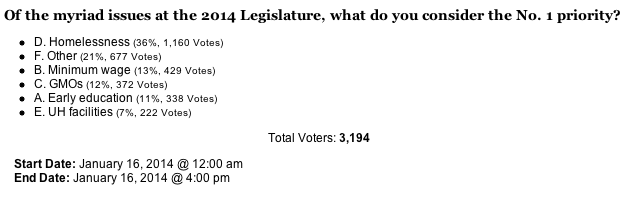
Remember this poll on the Star Advertiser a few weeks ago?

Screenshot 2014-02-06 22.34.11

Note that these polls aren’t too reliable for multiple reasons, but the fact that homelessness is a top priority on the minds of the voters is telling.  No one can ignore the fact that there are homeless everywhere throughout our entire state and it’s an eye sore as well as saddening.

In the practice of occupational therapy, we know that by engaging in meaningful activity, we can restore well being physically and mentally.  As I watch many of these folks, they appear to be functionally doing pretty well.  I see them lowering themselves down to the sidewalk, laying down on it and getting up with ease much of the time.  Some of them can pace back and forth on highway medians begging for money for hours.  Others are able to squat down for hours outside of public places looking for handouts.  There is a lot of meaningless human energy here being wasted that could really be converted into meaningful work like being on a farm and growing food.  Voila!

Why not create a community based program that combines these two issues: growing food and homelessness. For one, you’d get people off of the street and into some form of meaningful activity and work.  They could work on a farm growing food as well as have a roof over their heads.  These people will be able to receive treatment for their conditions as well as not be an eyesore in public places.  They would also be doing something good for others and themselves by growing food.  That’s beautiful to me and I know it works based from my own experiences.

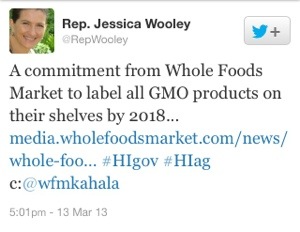
As a Star Advertiser Off the News post today said, we should end the food fight, and they are right.  Rep. Jessica Wooley wants more people to grow food and to keep agricultural lands in farming, while others want to take care of the homelessness problem here.  Let’s give Rep. Wooley her farms and walk the talk by doing what she proposes to do with it.  Then other’s like Rep. Tom Brower don’t have to get frustrated with the carts and homeless people all over his district.

Screenshot 2014-02-07 23.09.24

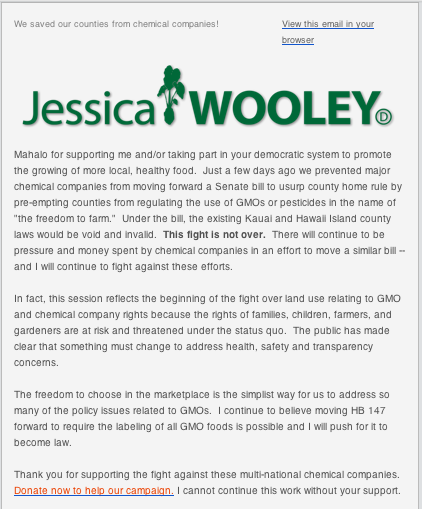
From an email sent out by Jessica Wooley’s camp showing how she thinks biotech is only about the agribusiness companies.  Note that HB147 is about firearms and not about GMOs.

We all know that Rep. Wooley isn’t a local person when she only stands for the activists and their demand to only go organic.  Local style is to take all sides and work together and come to an understanding and a plan.  As she states in her letter, she doesn’t like the “status quo.” You might not like how we do things here, but you can’t just come in and tear our livelihoods apart the way your activists demand.  It’s also too bad that other locals like Rep. Kaniela Ing have jumped on this fighting attitude.  That’s not the way we do things local style.  This is our Hawaii as much it is yours, but to point a finger at us law abiding family farms is basically standing on our yards telling us how to farm.  I don’t like this and many others too.  Your letter refers to fighting, and we don’t like to fight but are forced to.

Let the farmers farm, and go start up your small sustainable farms in the country.  Do your job for agriculture and work collaboratively for the sake of everyone involved.  Be creative in your plan, not just worried about your way or the highway attitude.  Take care of people too, including the homelessness by coordinating with other committees and do it.

The farmers have had enough of your activists attacks and here’s a way to give them what they want.  The attitude needs to change from “only organic” to “how can we solve this problem together.”  I ask that we end the fight now and actually do something purposeful with your talks about growing food and be that leader to stop the attacks against the biotech farmers big and small.  The bottom line is that we need all forms of agriculture.

IMG_4473-XL

Live, eat, and drink farming rather than continuing to legislate what you don’t know on, and see a whole different side of the picture.  Take the path that will lead to helping people based upon evidence for it is better than leading us into a war.  That’s what a true leader would do.  Can you be that true leader and work with everyone?

There Is Real Harm in Misinformation

Image

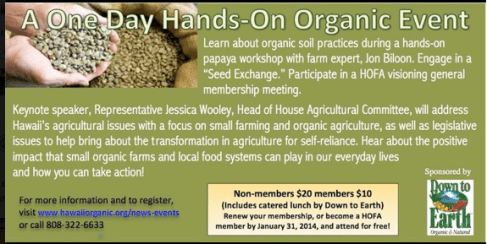
It is good that there is an effort to teach people how to grow food in their own gardens and possibly start up their own farms.  What is quite disturbing to me to hear that the Hawaii Organic Farming Association in alignment with Representative Jessica Wooley are touting that only organic is the way to go to doing this.  There is a major problem with this and papayas.

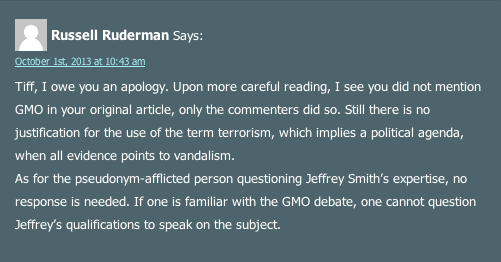
As much as people would like to think that there is no papaya ringspot virus around and that organic methods will prevent this, they are far from the truth.  No amount of dirt that Senator Russell Rudeman proposed as  a solution to this problem is going to solve it.  Nor is Jeffrey Smith coming up with any solutions either to deal with this.

Screenshot 2014-02-05 14.49.37

It’s even sadder when a senator continues to perpetuate myths that harm his very own constituents on his own island.  He doesn’t even support his own papaya farmers in Puna!

Screenshot 2014-02-05 14.31.09

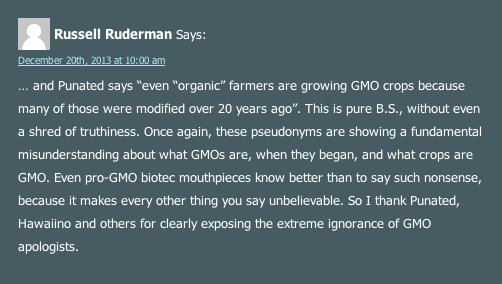
What he fails to realize is that every single thing we eat is a result of some form of modification.  We humans have been tampering with nature since the beginning of civilization.  Genetic modification is just another form of plant breeding.  So technically, yes, Senator Ruderman, we are all eating a form of genetically modified food for thousands of years, regardless of how it was grown.

20131220-081917.jpg

While Ruderman and Wooley, both of whom are not farmers, keeping harping their organic wheels of misinformation, there are those who believe this campaign.  Those are the people who have the learn things the hard way.  You can ask any long time farmer, not yardener, if one can grown GMO free papayas here on Oahu.  Most will tell you that it is hard because the virus is still around.  Piling soil on the roots isn’t going to prevent the papaya from getting a disease spread by aphids.  Learning the hard way doesn’t hurt the yardeners much but it could do harm to those investing in growing the fruit for an income.

IMG_0564arrow

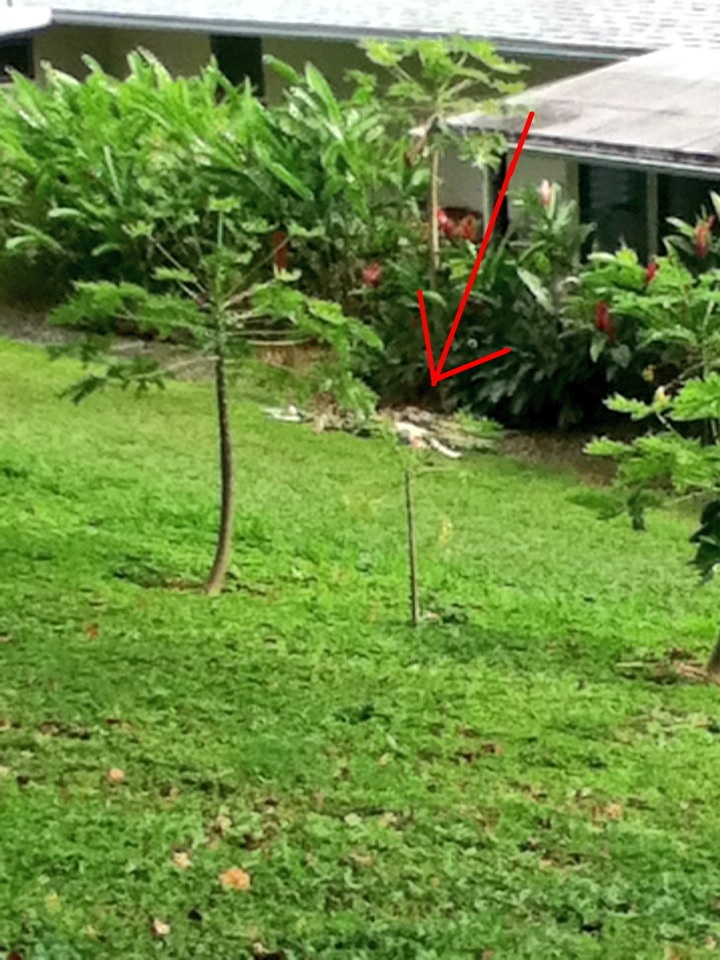
Example of a non-GMO papaya tree infected by the virus next to a transgenic variety that remains unaffected. Trees were grown on the Windward side of Oahu.

Why would you knowingly grow a crop that is known to be at high risk for disease?  No farmer would ever risk their livelihoods for that, which is why they are fortunate to have the choice to grow such crops, and provide fruits to their customers year after year.  Misinformation against this choice hurts every farmer and every farmer to be.  Of course, it isn’t Jessica Wooley’s or Russell Ruderman’s investments that are being harmed, so they really don’t care and it’s glaringly obvious.

Why We Need the Hawaii Right to Farm Bill

Some thoughts about Hawaii Right to Farm Bill… It’s not just about the Monsantos, Syngentas, Dows, BASFs, or Pioneers. It’s about the family farms like Hamakua Country Spring Farms, Tropical Flowers Express, Kahuku Farms, Kamiya Farms, Ho Farms, Fat Law Farms, Sugarland Farms, Aloun Farms, Ska Tropicals, Nalo Farms, Kuahiwi Ranch, Parker Ranch, Ponohono Ranch, Belmes Farms, and so many more.

The farms are all a part of a system that works and runs together. The big farm companies lease lands and maintain the ditches and dams that bring water over the mountains. They pay to maintain this infrastructure that was built upon the cane and pineapple days. (You know the industries that brought us local folks together?) On those lands that they lease, they sublease it, ready to farm, to the small farmers that grow the bulk of the produce here. These small farmers could never afford to pay to maintain these lands and get rates subsidized to start their farms. That’s where our food is grown.  (Not many people actually want to do that unfortunately.)

The big farms use a lot of supplies and equipment that other farms can use. With more people needing farm stuff, the companies that bring it in can offer it at lower prices since there is a greater demand for it. Other farmers can get their fertilizers, potting soils, and other supplies much more affordably as a result.  This puts equipment dealers and other farm suppliers in business.

Not only does the big farms and small farms need supplies but they also need many other businesses. That includes construction workers to build sheds and processing places for their produce. Drivers and delivery workers to get their goods out to the market. Mechanics might be needed too for fixing equipment. Even plumbers, pipe layers, and an engineer or architect for designing a new building. Fence and iron workers might be needed for putting up fences and gates. A mason worker would be needed for building that foundation for the sheds and driveways. The farmers also need health care companies to work on providing insurance to their workers.  Doctors and dentists are needed to care for their workers to also.  Accountants are needed to help keep the books in order also.  Produce and seeds need to be shipped places by shippers, whether it be by air or cargo.  These are things that farmers need others for, which create more jobs in our communities. No farmer could do this alone.
What legislators like Wooley, Gabbard, Green, Ruderman, and Thielen are attempting to do is tear apart this system that covers more than just the farms itself. They want their Californian utopia of small little farmers growing food. Who’s gonna pay for maintaining the infrastructures in place? The state? No. They need companies that can absorb those costs and be reliable tenants to the state and other landowners.  This in turn creates jobs for the displaced ag workers, who relied on the plantations, which includes skilled workers to scientists.  If you tear out this component of the system, the entire system would collapse.  Do you think that is a good alternative for Hawaii? Hawaii was built on this system and relies on interdependence of all the parts.
So when you sit on the fence and don’t know whether or not to support the Right to Farm bill, you might want to think about it more, because it may spell the end of those nice little farmers’ markets across the islands, as well as impact others who don’t even farm.  Who would want to farm anymore when more and more laws are added on your back to make your business even harder? No one.
Support the farmers and it means all of them!